Kaifil
Etched, laser-cut or electroformed screens
Choose a precision-screen process by feature geometry, sheet thickness, alloy and handling needs.
Compare the feature
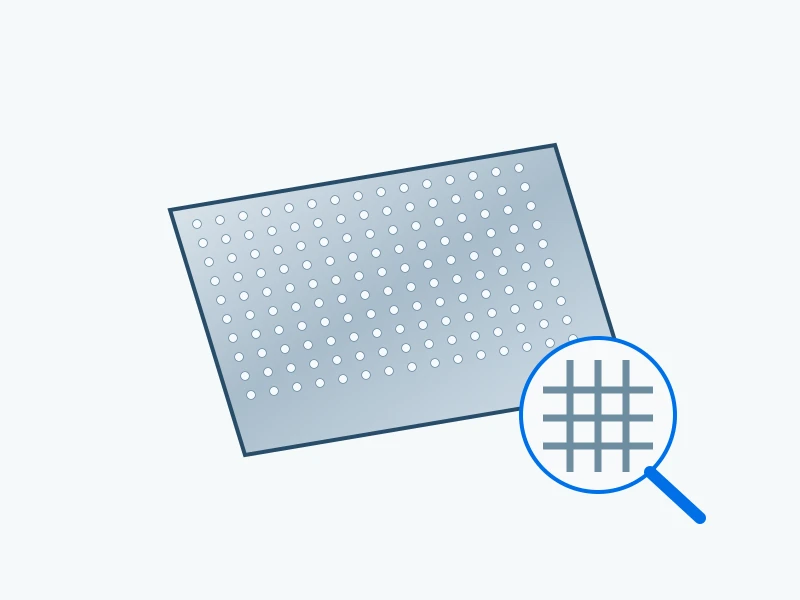
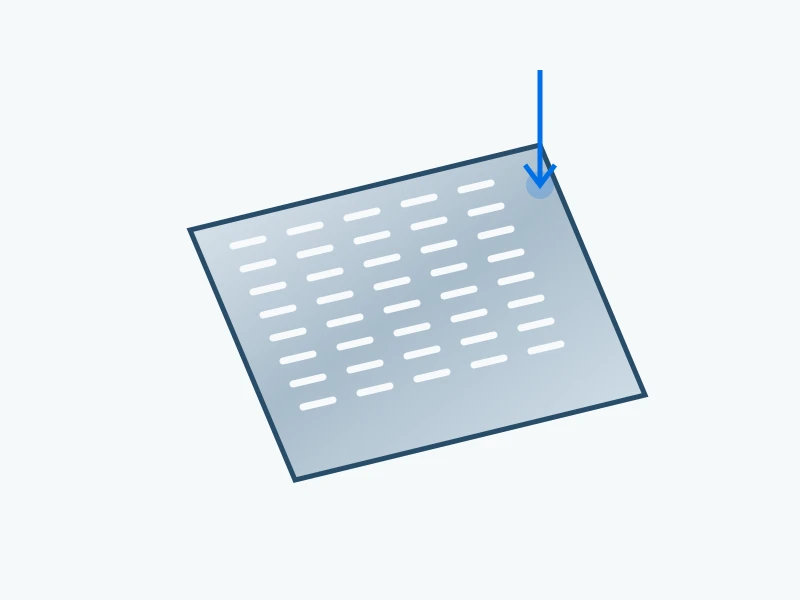
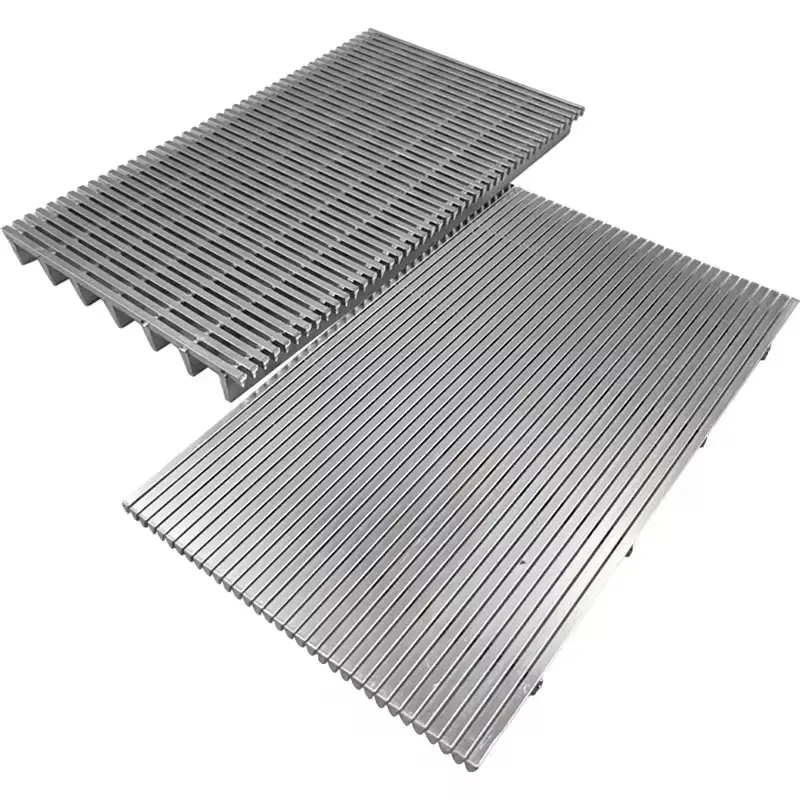
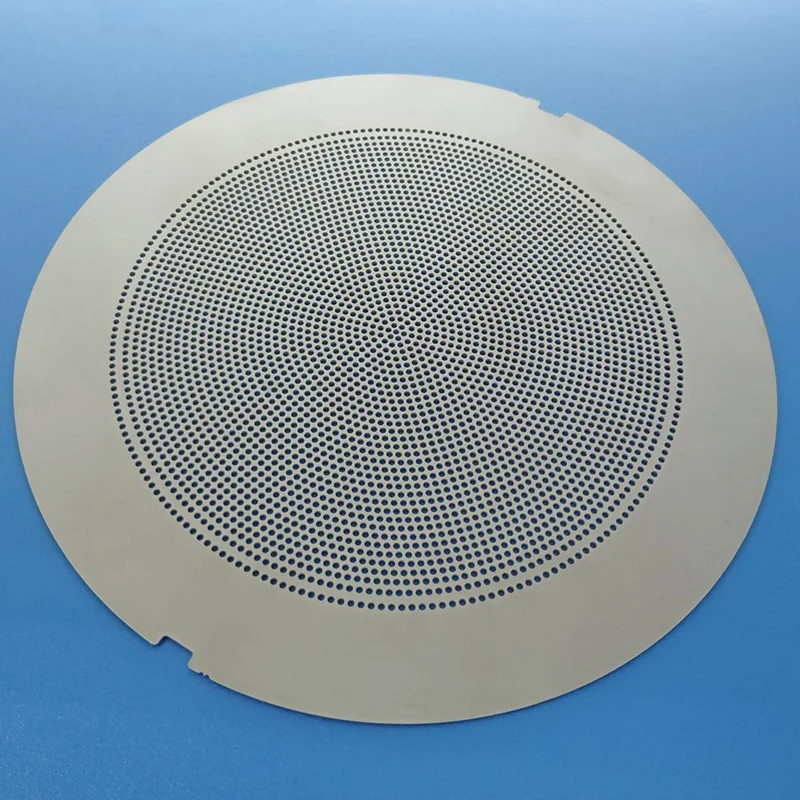
Photo-etching can produce many small apertures in thin sheet; laser cutting suits programmable holes and slots in a wider range of sheet forms; electroforming builds thin precision nickel patterns.
Account for edge and thickness
Etched openings may taper through thickness. Laser-cut edges may need deburring. Electroformed foil may need a backing frame. A drawing should specify the acceptable edge condition.
Prototype before substitution
These processes have different support, flatness and cleaning behaviour. Test the installed screen when replacing woven or perforated media in a demanding duty.
Specification checklist
| Parameter | Specification / example | Why it matters |
|---|---|---|
| Feature geometry | Aperture, pitch, aspect ratio | Narrows viable process |
| Substrate | Alloy and thickness | Affects edge and tolerance |
| Assembly | Frame, handling, cleaning | Determines installed performance |
Practical questions
What should I send when requesting etched, laser-cut or electroformed screens?
Send the drawing or installed-part dimensions, the media or opening requirement, process conditions, quantity and the acceptance test you need.
Can a sample replace a drawing?
A physical sample is useful for fit and construction review. Dimensions, material grade and performance requirements still need written confirmation before production.