Contents and formats
Four data groups and a composite-structure guide
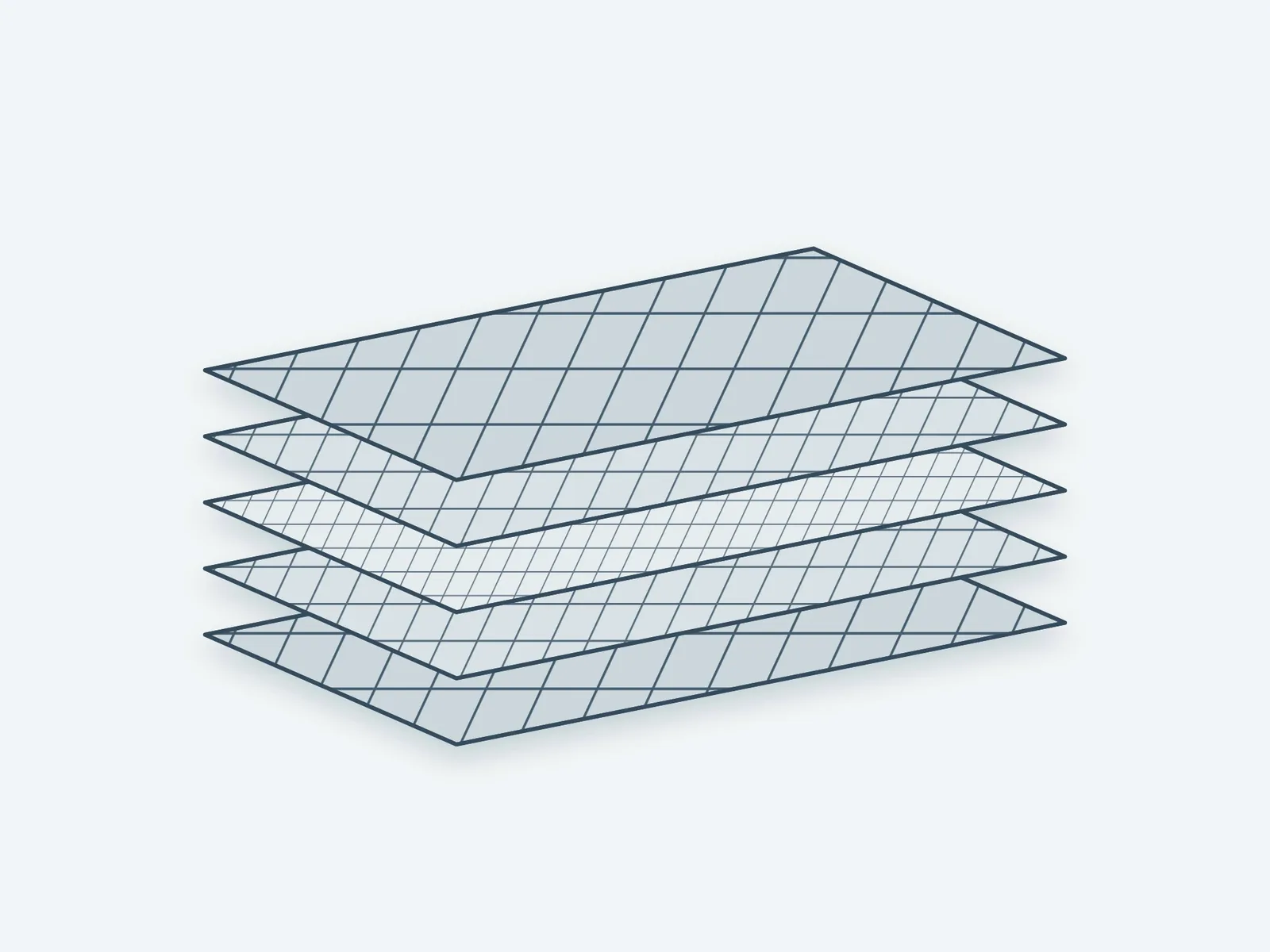
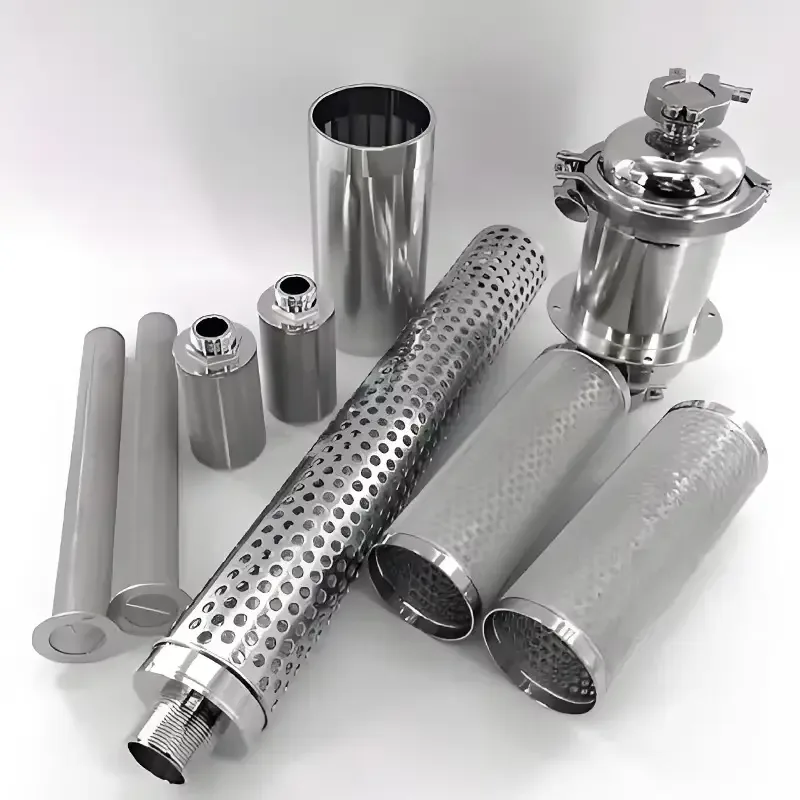
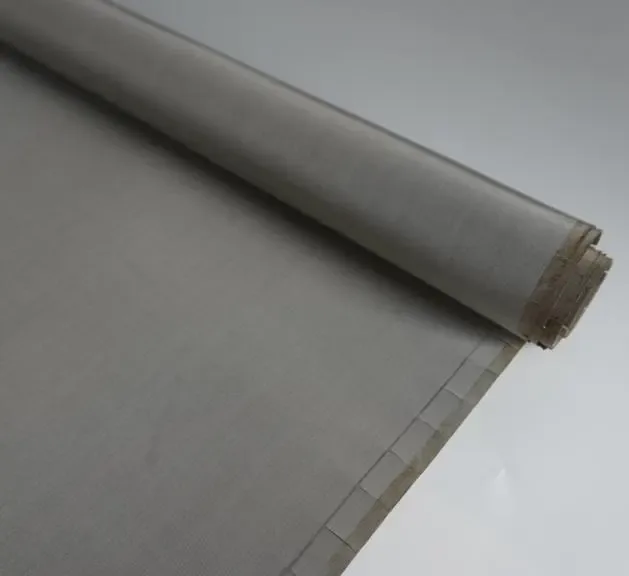
The package contains 11 five-layer grade/flow pairs, nine fiber-felt performance rows and five six-layer sheet formats. The composite guide separates square-mesh and perforated-plate backing from standard five-layer construction. S04 adds three sheet formats for the 316L perforated-plate composite. Mesh layers are bonded to the plate backing; specify plate thickness and the filtering-layer sequence for the finished component.
XLSX: separate construction sheets with filters. CSV: one field per record, linked by series and row ID. PDF: readable complete tables and definitions.
Field definitions and units
Nominal grade is in µm. Air permeability is volume flow per area in L/(min·dm²), with the pressure difference in Pa. Porosity is %. Dirt-holding capacity is mg/cm². Bubble pressure is a separate integrity-related quantity; wetting fluid and procedure belong in the acceptance specification.
CSV uses UTF-8 with BOM, a comma delimiter and a decimal point. XLSX stores individual dimensions and measured values as numbers. Paired designations and ranges remain text. Empty cells mean no value is assigned for that construction.
Keep the series code and row ID with every selected specification. Values sharing a row describe the same construction; a material branch and a geometry series retain their own definitions.
Construction and test conditions
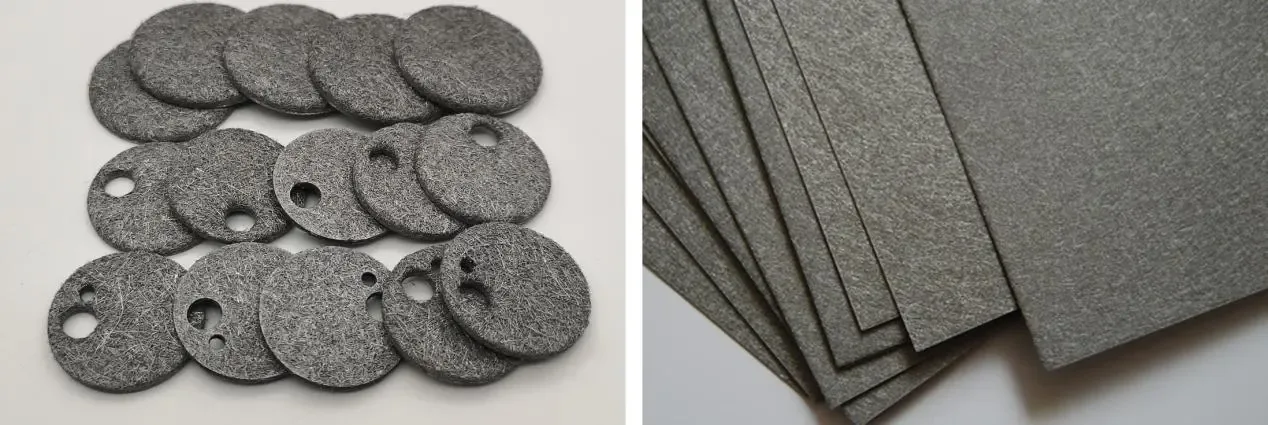
S01 is a 1.7 mm 304/316L five-layer series using air at 1000 Pa. S02 is a 0.5 mm stainless fiber-felt series using air at 200 Pa. S03 describes a six-layer laminate with an additional square-mesh support. Its 1–300 µm range and sheet dimensions define that reinforced construction. S04 adds three sheet formats for the 316L perforated-plate composite. Mesh layers are bonded to the plate backing; specify plate thickness and the filtering-layer sequence for the finished component.
How to use the tables
1. Select laminate or felt by solids and support needs. 2. Compare air permeability at the same medium, differential pressure and specimen construction; select filtration grade by its grade and acceptance definition. 3. Define active area, fluid viscosity, service temperature and pressure difference. 4. Specify backing, seams, seals and cleaning, and measure clean-flow recovery at consistent conditions.
At 10 µm, the five-layer series lists 310 L/(min·dm²) at 1000 Pa, while the felt lists 100 L/(min·dm²) at 200 Pa. Keep each flow with its stated pressure difference. For unit conversion only, 1 L/(min·cm²) equals 100 L/(min·dm²).
Questions when specifying a filter
Can I compare every listed air-flow number directly?
Compare values at the same fluid, pressure difference, area unit and medium construction. Use the paired conditions when requesting the required process flow.
How do reinforced and composite media change the specification?
An extra support mesh, square-mesh layer arrangement or perforated backing changes the layer sequence and finished thickness. Define those layers and the supported active area on the part drawing.