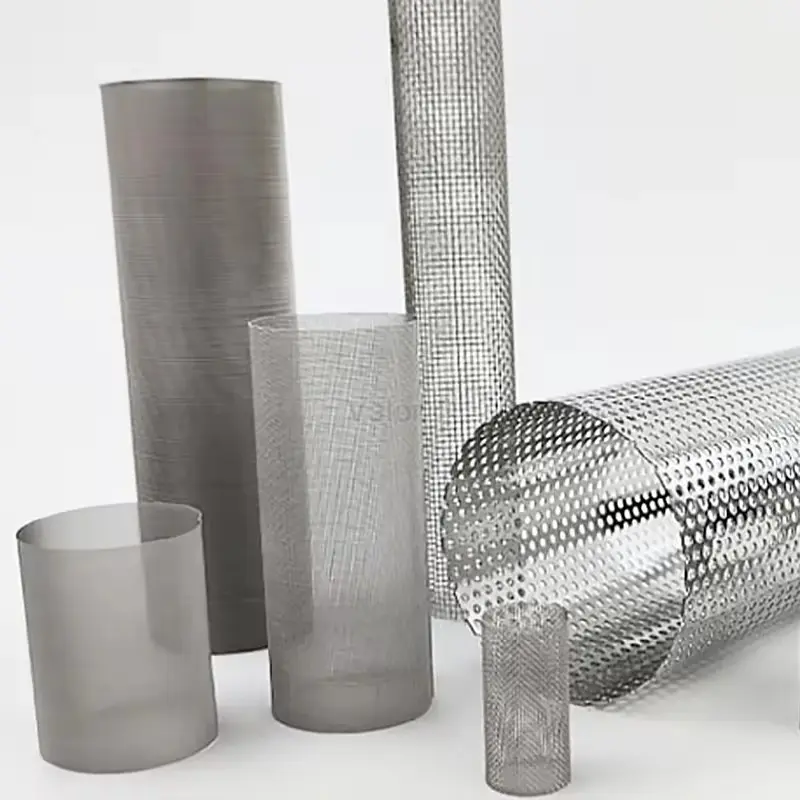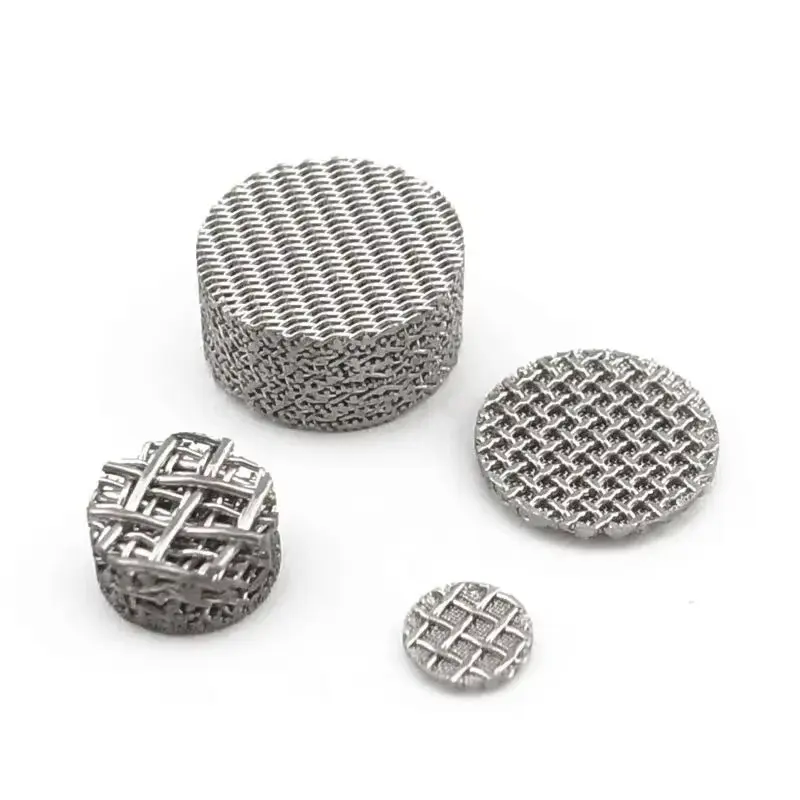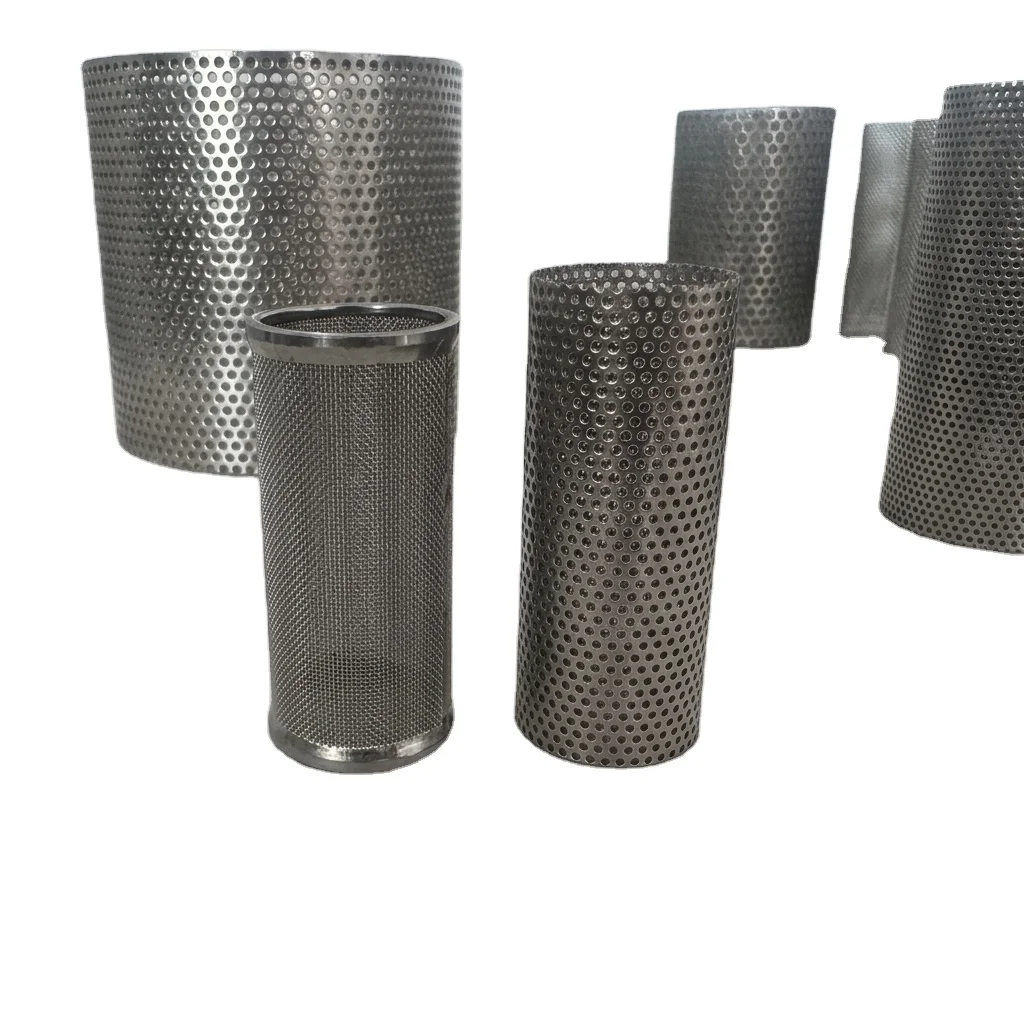
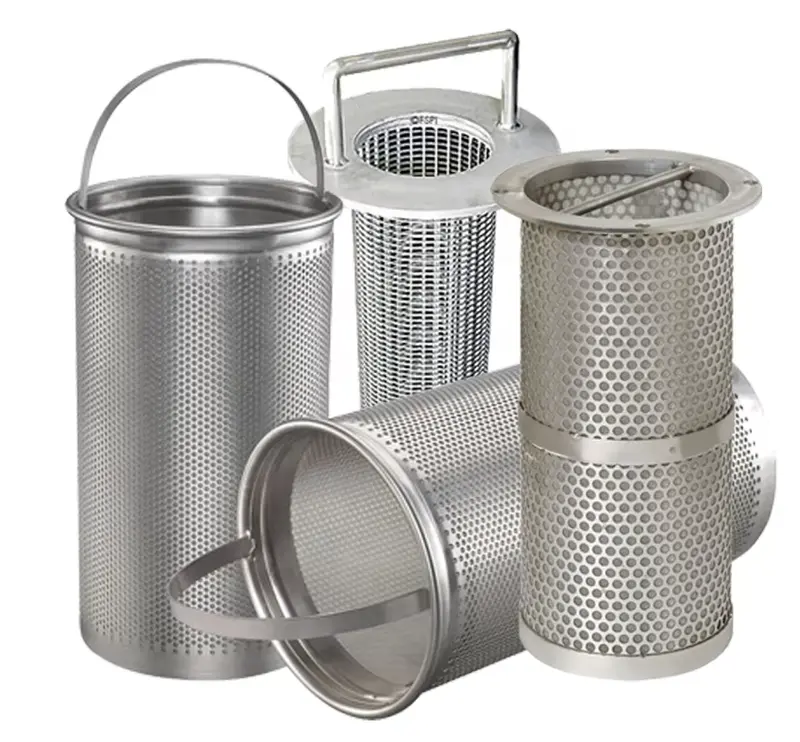
Mesh-lined strainer baskets
A mesh-lined strainer basket combines a rigid perforated body with a finer wire mesh filtering layer.
Product detailsDrawing-based manufacturing
Punched sheets, support tubes and strainer parts with round, square or slotted holes. Hole diameter, pitch, thickness and solid margins balance open area against stiffness.
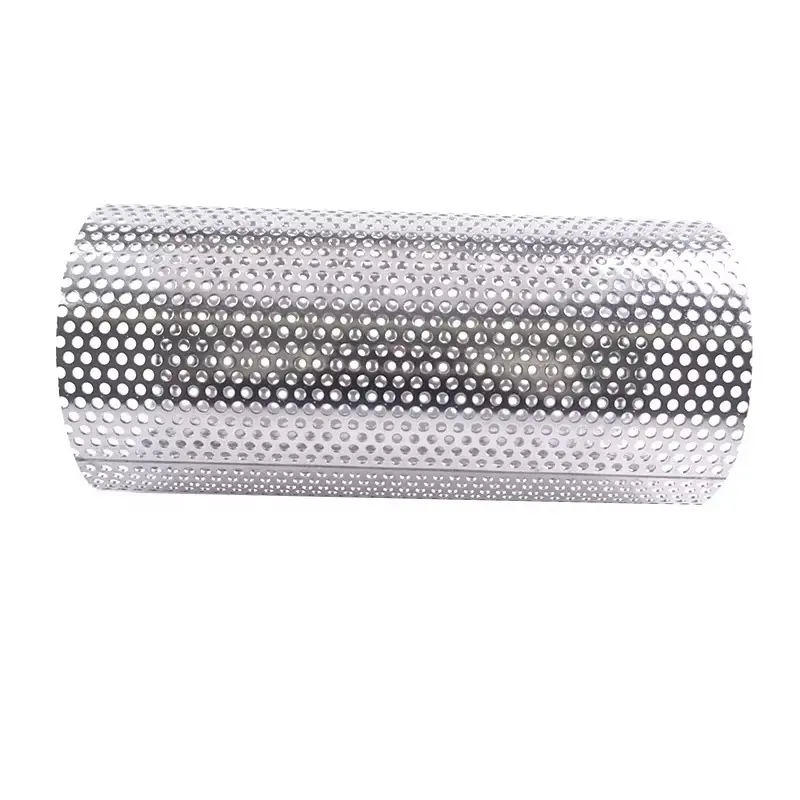
Choose by finished geometry
Define the finished form and structural role before selecting hole geometry, pitch, margins and sheet thickness.
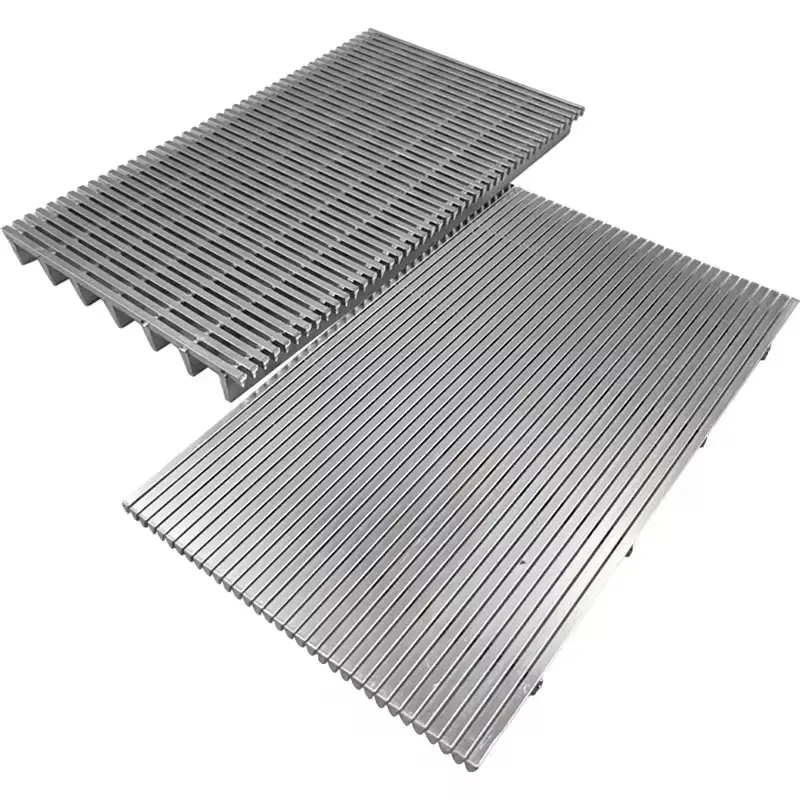
Flat perforated blanks for screening, guarding and flow distribution.
View matching products →Rolled perforated cylinders used as structural supports or coarse screens.
View matching products →Formed perforated bodies for solids retention and removable straining.
View matching products →Perforated sheets integrated with frames, supports or mounting features.
View matching products →Perforated metal screens
8 products
A mesh-lined strainer basket combines a rigid perforated body with a finer wire mesh filtering layer.
Product detailsA perforated filter support core is the load-bearing and drainage structure behind a flexible or pleated filtering medium.
Product details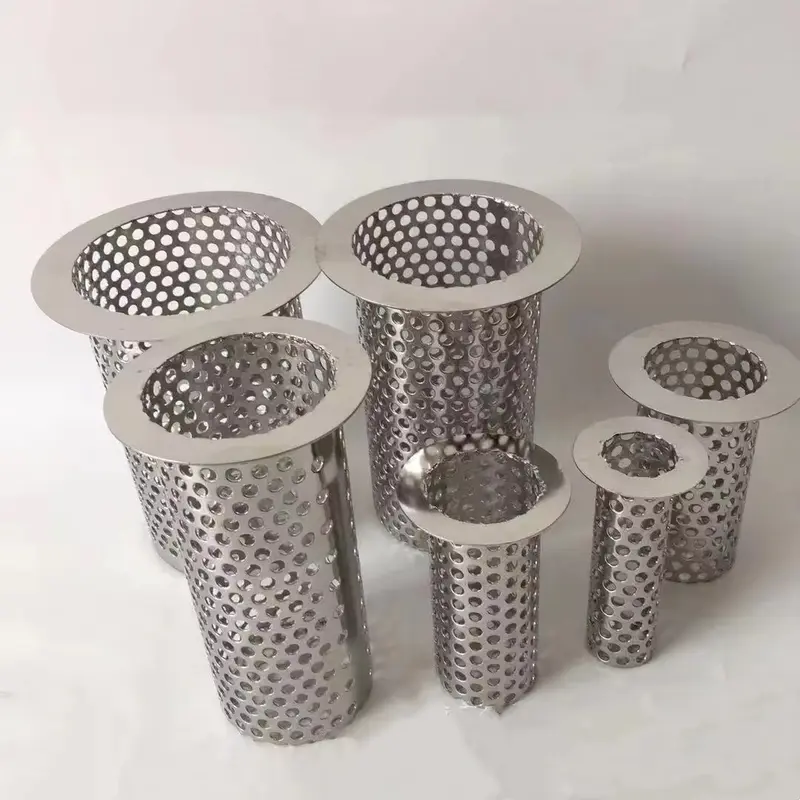
A flanged filter insert combines a cylindrical or basket-shaped filtering body with a flange that locates, seals and retains the element in equipment.
Product details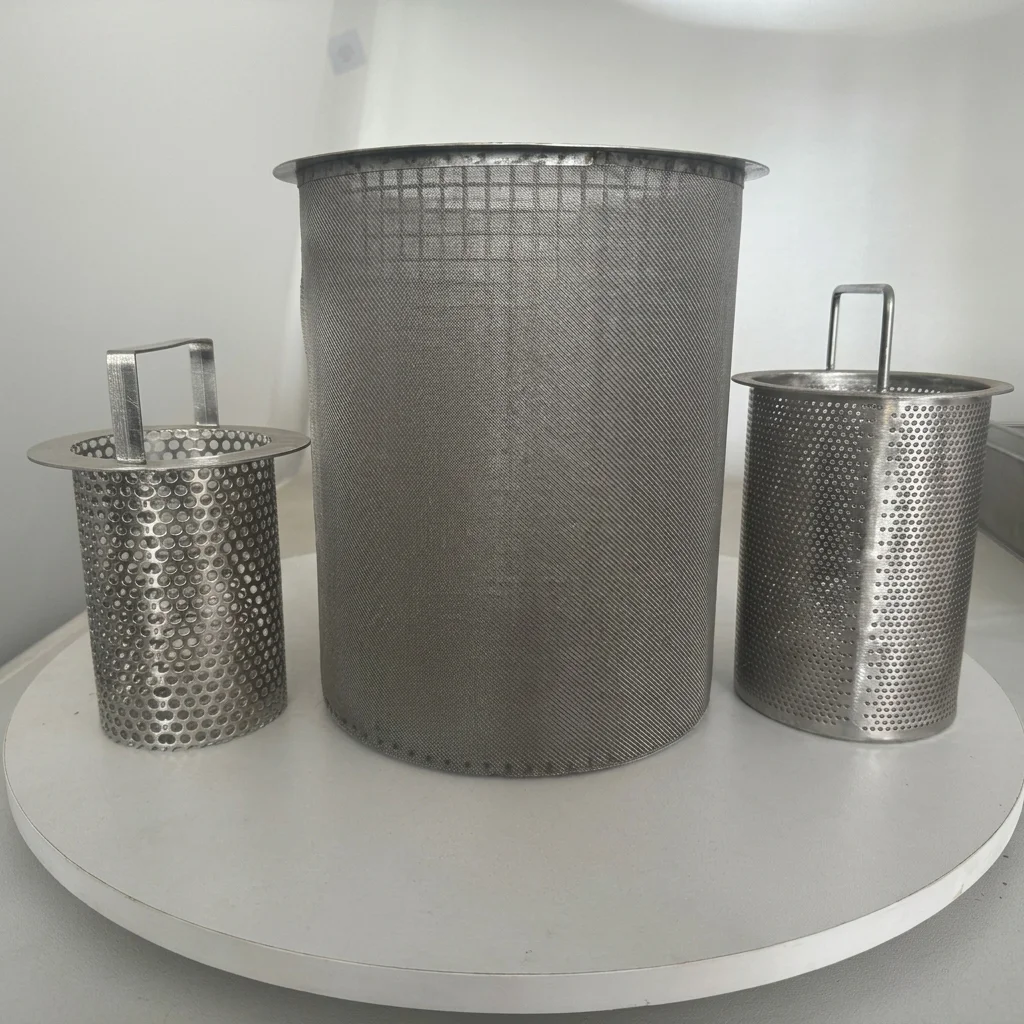
Removable perforated basket with optional fine mesh liner.
Product details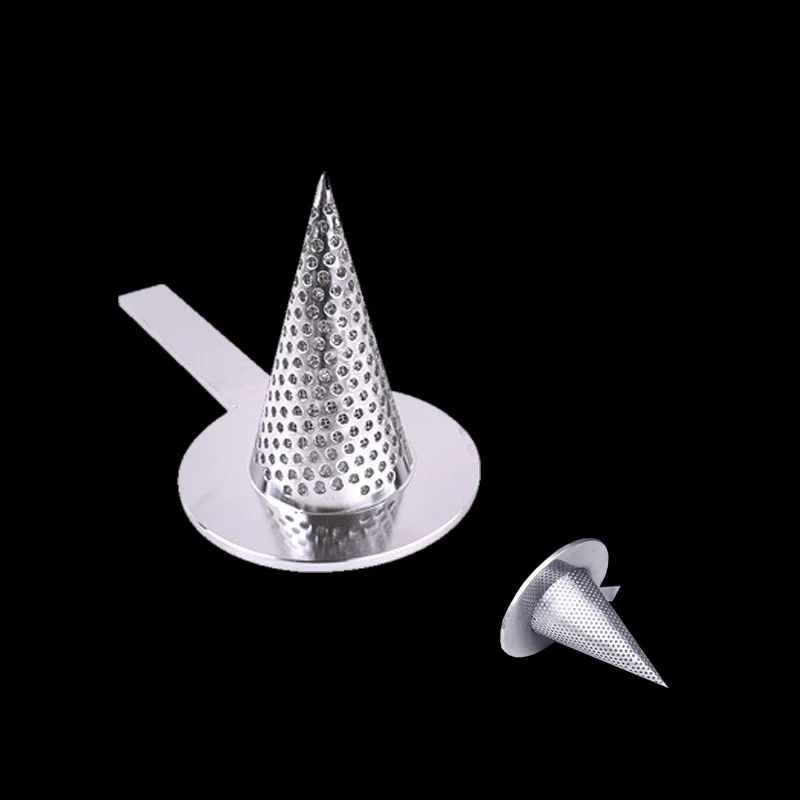
Conical commissioning strainer installed between pipe flanges.
Product details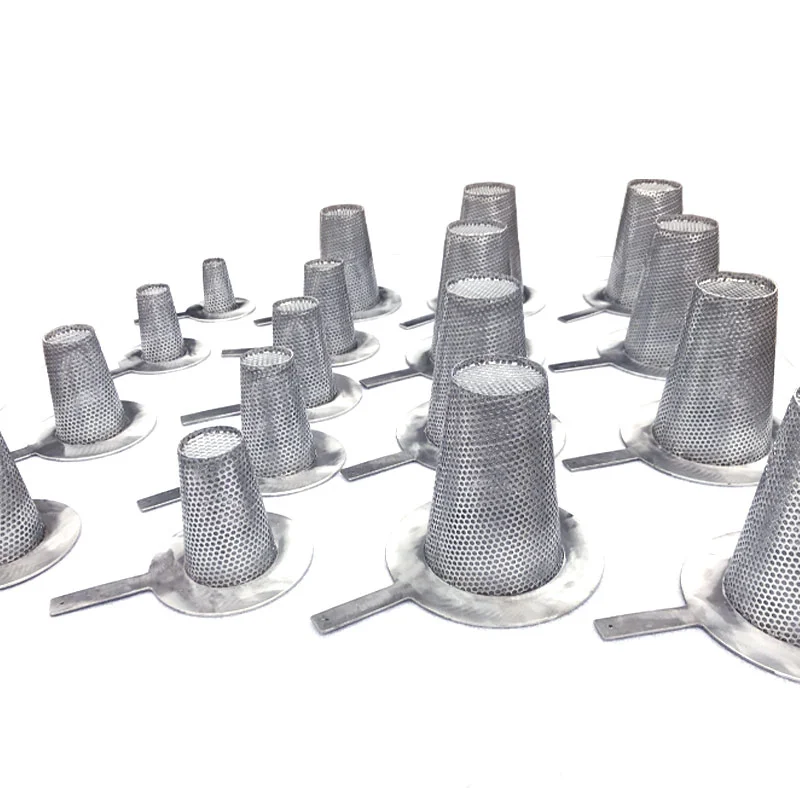

Flat perforated plate or mesh-lined screen fitted at a flange joint.
Product details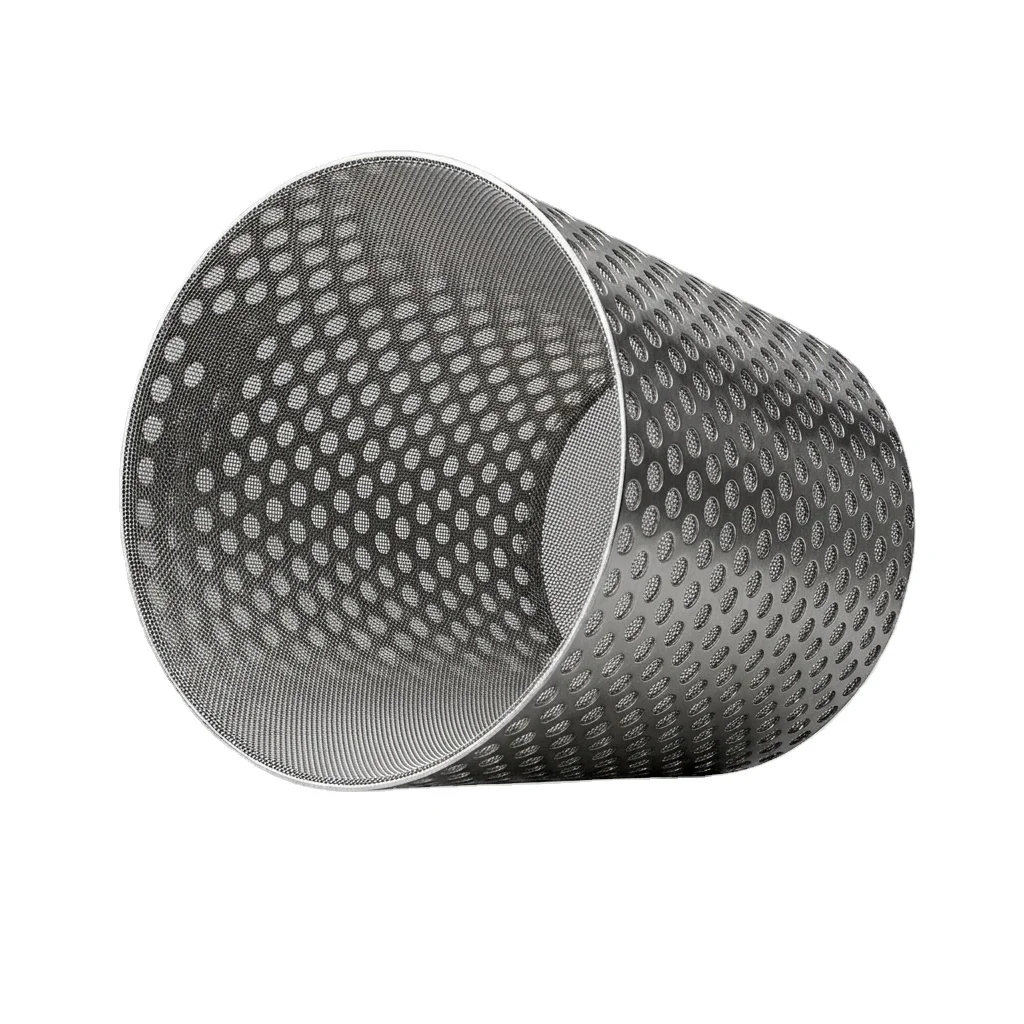
Clear filters
An open-area percentage without a pattern is incomplete.
Defines the opening
Establishes open area and ligaments
Affects strength and fabrication
Supports joining and installation
Guides forming and structural review
Defines finish and handling
Construction
An open-area percentage without a pattern is incomplete.
| Construction | Application and fit | Confirm first | Find a product |
|---|---|---|---|
| Flat perforated screens | The component remains flat in the installed assembly. | Outline, hole pattern, thickness, margins, flatness and edge. | Filter matching products |
| Perforated support tubes | The component needs a cylindrical structural or drainage wall. | Diameter, length, wall, seam, perforation and pressure direction. | Filter matching products |
| Perforated baskets | The screen must collect solids in a removable body. | Seat, body geometry, hole pattern, bottom, handle and clearance. | Filter matching products |
| Framed perforated panels | A larger perforated screen requires a defined frame or supports. | Panel, frame, clear opening, fixing points, pattern and load. | Filter matching products |
Perforated metal screens
Perforated metal acts as coarse screen or structural backing.
Inner supports and protective sleeves beneath finer media.
Rigid walls with or without mesh liners.
Coarse screens with mounting margins and repeatable hole patterns.
Perforation and forming need separate dimensional checks.
Perforated metal screens
Calculate theoretical opening area, then check ligaments, support spacing and installed coverage.
Read guide→Specify a basket or cone strainer from debris duty, available area and planned cleaning access.
Read guide→Perforated metal screens
No. Larger or more numerous holes leave less metal to carry load. Thickness, ligament width, curvature and support spacing determine usable stiffness.
No. It is the percentage of surface occupied by openings. Hole size describes geometry; particle-removal efficiency requires additional information.
The thickness-to-opening ratio affects punching or laser feasibility, edge condition and remaining ligament strength. Specify thickness, hole pattern and deburring requirement together.
Define the dimensions, media, joints and inspection records before confirming the order.