
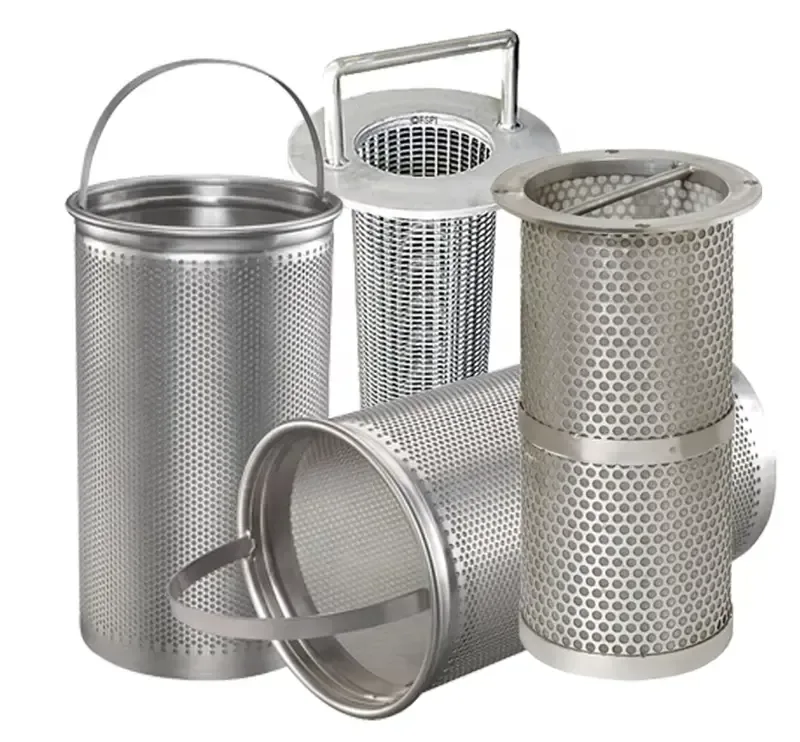
Mesh-lined strainer baskets
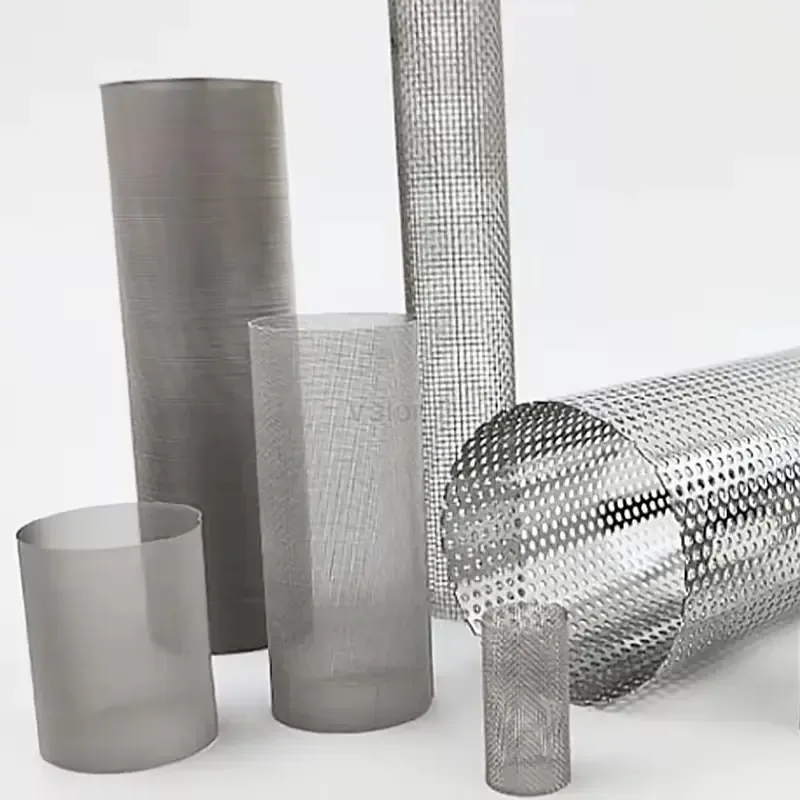
Perforated baskets with fine woven liners, defined seam continuity and retaining rings.
Product detailsDrawing-based manufacturing
Custom strainer baskets with perforated, woven-mesh-lined or wedge-wire walls. Match the seating rim, basket body, closed bottom and removal handle to the housing; select the filtering surface and support for the process fluid and flow direction.
Choose by housing interface
Define the seat, body shape, solids-holding volume and removal method before selecting the screen construction.
Cylindrical baskets for housings with a parallel body and defined seat.
View matching products →Basket bodies joined to a flange, collar or mounting ring.
View matching products →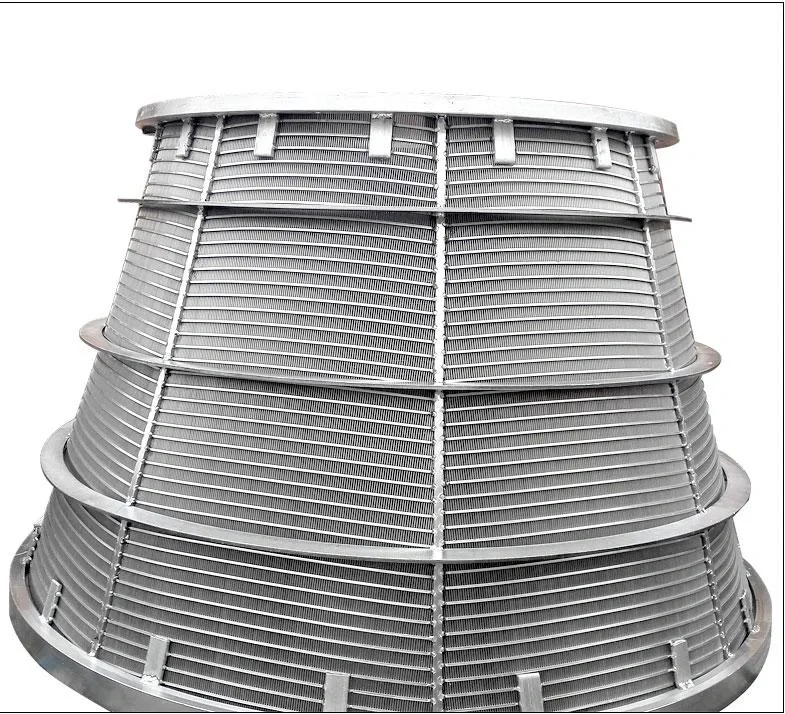
Wedge wire centrifuge screen baskets provide cylindrical or conical screening surfaces for centrifugal dewatering. The basket geometry, mounting joint, slot direction and rotating assembly are specified together.
View matching products →Strainer baskets
5 products
Perforated baskets with fine woven liners, defined seam continuity and retaining rings.
Product details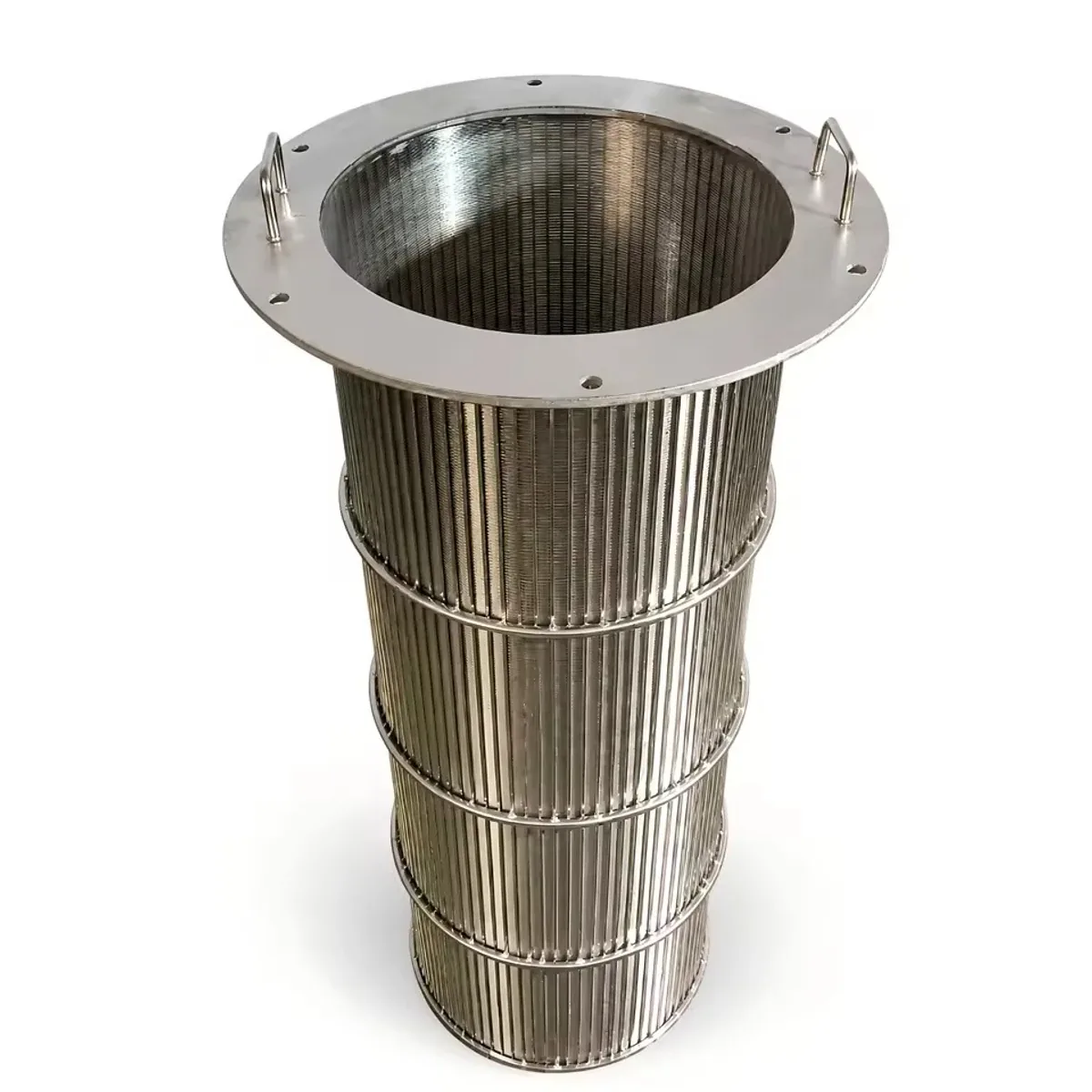
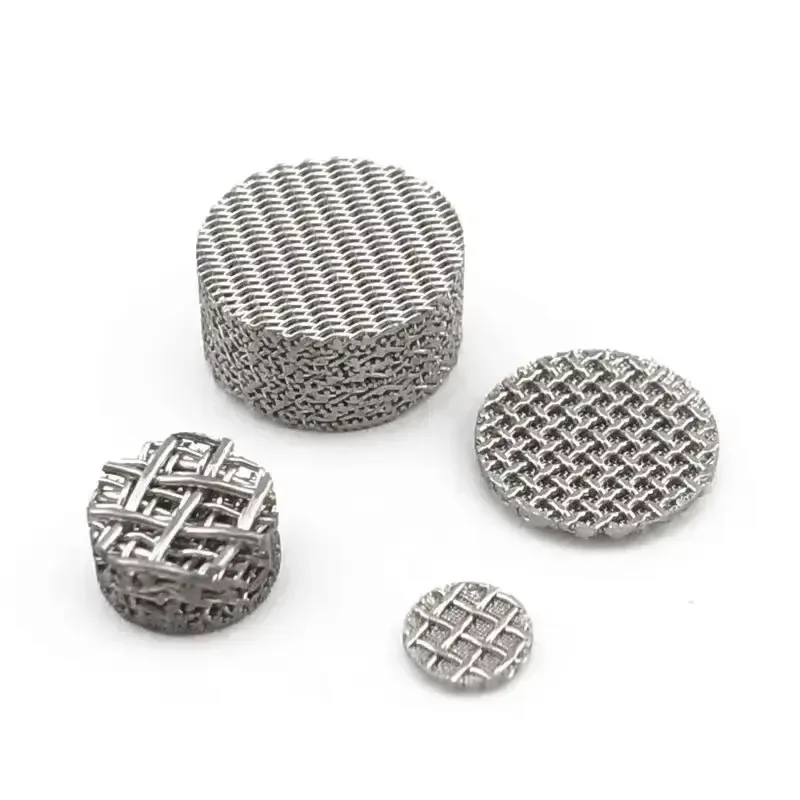
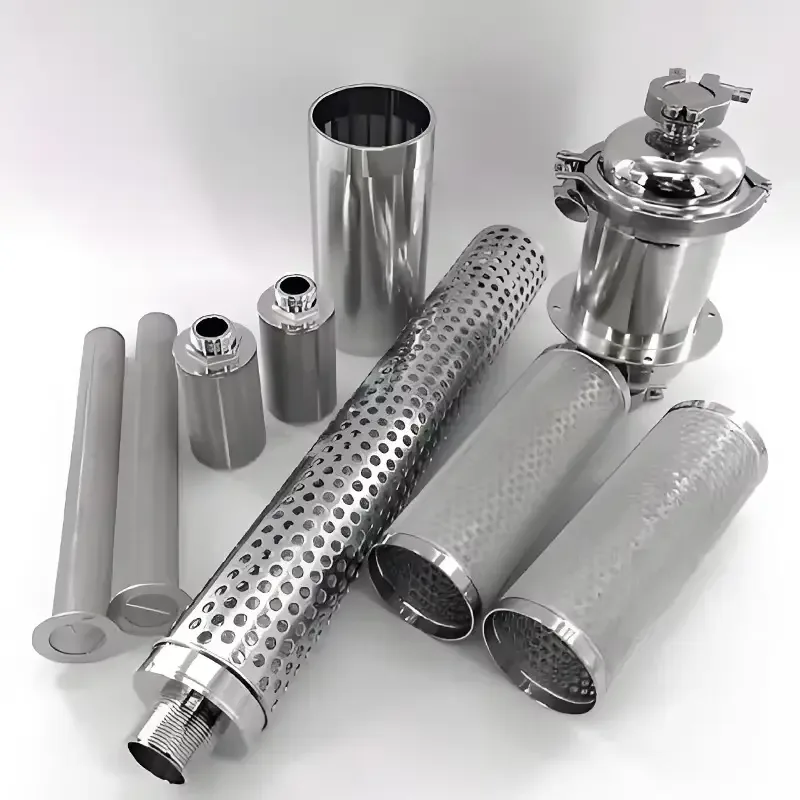
Kaifil manufactures stainless steel flanged filter cartridges with wedge wire, woven mesh, sintered mesh, perforated metal or pleated filtering bodies.
Product details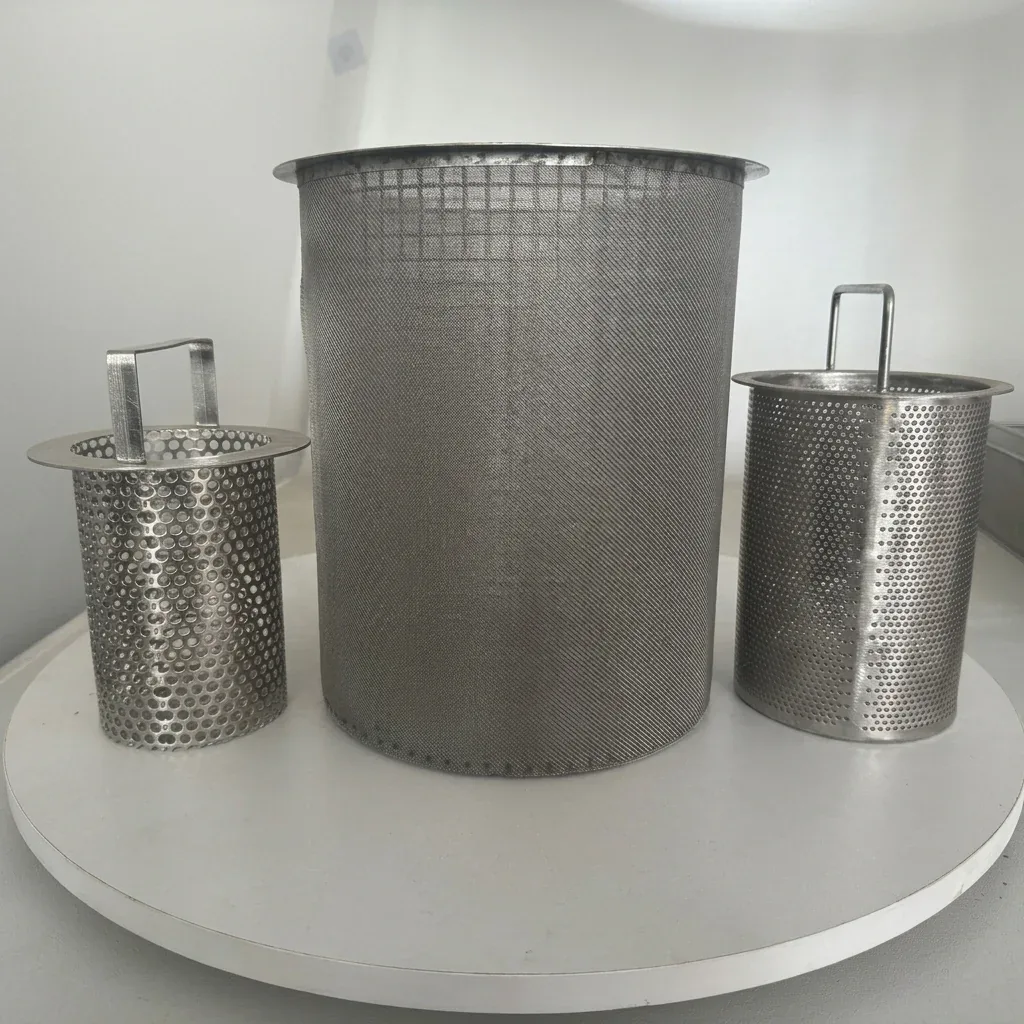
Removable stainless steel baskets combine a perforated shell, closed bottom, seating rim and lifting handle.
Product detailsStatic wedge-wire baskets with defined slot orientation, support rods, bottom closure and seating flange.
Product detailsWedge wire centrifuge screen baskets provide cylindrical or conical screening surfaces for centrifugal dewatering.
Product detailsClear filters
The links filter the product list by basket form. Perforated, mesh-lined and wedge-wire constructions can then be compared with the second filter.
| Construction | Application and fit | Confirm first | Find a product |
|---|---|---|---|
| Straight-sided baskets | The housing accepts a parallel cylindrical basket. | Seat, OD, length, bottom form, clearance and handle. | Filter matching products |
| Flanged baskets | The basket is retained by a flange, collar or bolted interface. | Flange face, bolt pattern, gasket, projection and handle. | Filter matching products |
| Centrifuge screen baskets | Wedge wire centrifuge screen baskets provide cylindrical or conical screening surfaces for centrifugal dewatering. The basket geometry, mounting joint, slot direction and rotating assembly are specified together. | Match the basket to the machine interface and its solids-transport mechanism. Choose cylindrical or conical geometry from the actual inlet and discharge arrangement. | Filter matching products |
A usable enquiry defines both the separation surface and the way the basket seats, carries load and comes out for cleaning.
Controls seating and removal
Prevents bypass at the opening
Divides retention and load-bearing duties
Supports safe maintenance
Affects area and cleaning strategy
Guides open-area and strength review
Use the finished basket and its housing seat as the common measurement reference.
| Assembly feature | What it does | Drawing information | Finished-part check |
|---|---|---|---|
| Seating rim | Locates and supports the basket | Seating diameter, thickness, step and contact face | Fit at the housing seat and rim flatness |
| Basket wall | Combines screening with structural support | Perforations or slots, liner position and flow arrow | Wall shape, opening and support continuity |
| Bottom and liner joint | Closes the solids-retention boundary | Bottom shape, seam and retaining detail | Continuous attachment and access for cleaning |
| Handle and extraction | Allows removal and emptying | Handle position, attachment and clear lift path | Attachment condition and housing clearance |
Construction
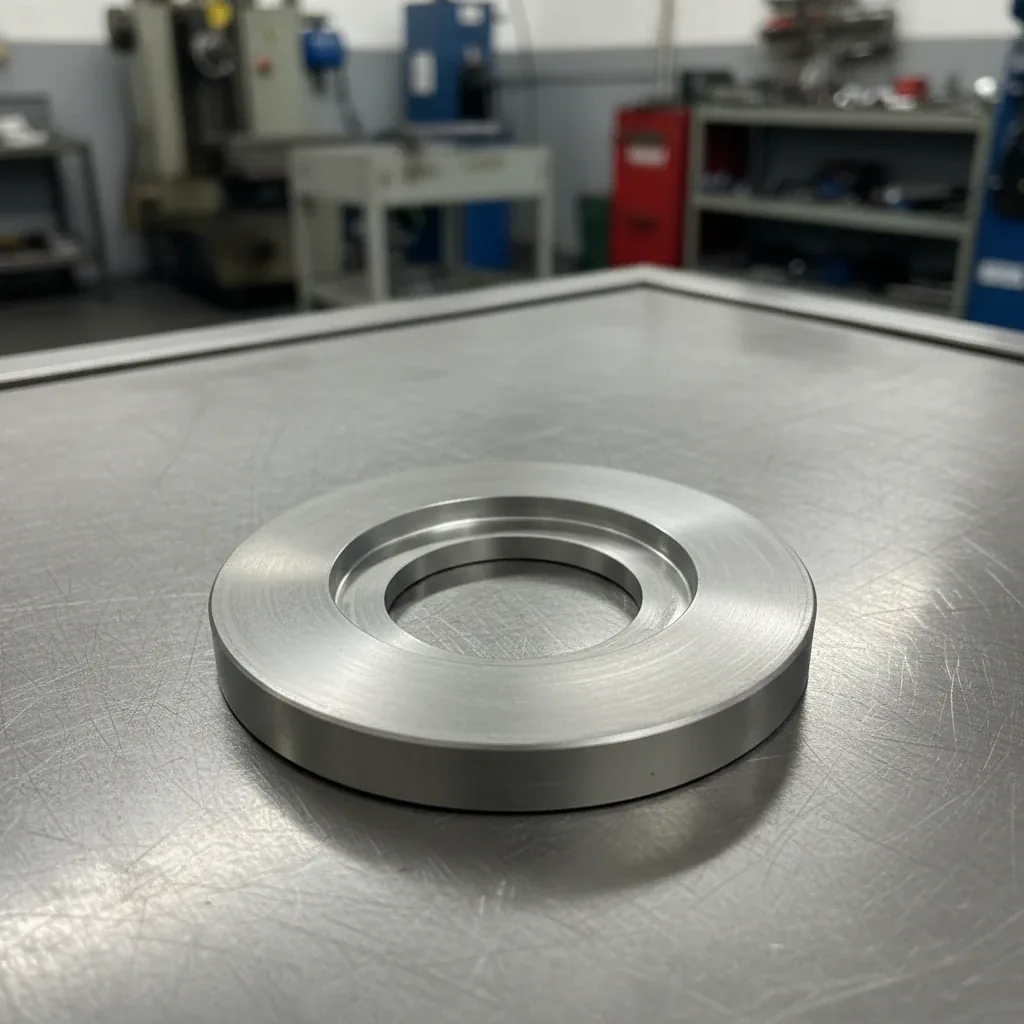
The rim locates the basket in its housing and establishes the seating boundary. Define its outside diameter, thickness and any step or flange together with the mating seat. Measure basket depth from that datum. This separates the length available for collecting solids from the overall length needed for fitting the handle and closing the housing.
A perforated body provides a rigid wall and a drainage path. In a mesh-lined construction, the woven liner supplies the finer opening while the perforated wall supports it. Identify the liner side, seam, bottom closure and retaining ring on the assembly drawing. For wedge wire, identify the working face and slot direction with the supporting rods; the slots and supports form one screening structure.
The handle needs a clear extraction path above the open housing. Include the full body, the handle in its removal position and space to discharge retained material. A hinged or folding handle changes the transport envelope; its attachment and load path belong on the drawing alongside the rim and bottom.
Cleaning access follows the liner construction. A captured liner, a removable liner and an unlined perforated wall expose different seams and recesses during cleaning. Specify the surfaces to inspect after washing, the way the bottom is reached and the positions where the liner is secured. Replacement orders then reproduce both the seating geometry and the complete filtering boundary.
Strainer baskets
The basket form and screen construction change with debris loading, cleaning access and the equipment that needs protection.
Intercept debris before pumps, valves or heat exchangers.
Removable baskets allow periodic inspection and washdown.
Retain the existing housing and inlet interface while replacing the worn basket.
A supported coarse screen catches debris before rotating equipment. Confirm allowable suction-side pressure loss, basket area and the dirty-basket condition.
Captured solids add weight as well as flow resistance.
Check flange contact, positioning and bypass paths.
Inspect seams, unsupported gaps and the base transition.
Check handle joints and whether loaded lifting is part of the design.
Check rim fit, basket depth and handle clearance against the housing. Inspect the liner seam and the wall-to-bottom junction around the full circumference.
Strainer baskets
Relate effective basket area and fouling to pressure drop and the planned cleaning interval.
Strainer area, pressure drop and maintenance→Plan a cleaning trial around contaminant, media construction and joint integrity before declaring a metal element reusable.
Read guide→See how a sea-chest replacement basket is specified from its seating and housing dimensions.
316 Stainless Sea Chest Strainer Basket Replacement→Connect basket wall construction and cleaning access to food and beverage process duties.
Metal strainer elements for food and beverage processing→Match pressure-screen baskets, black-liquor drums, coating screens, sieve bends, centrifuge baskets and pulper plates to their place in the pulp and paper process. Compare screening duty, flow path and machine interfaces.
Screening Components for Pulp and Paper→Strainer baskets
High differential pressure, blocked area, inadequate supports or heavy collected solids may overload the wall or base. More sheet thickness alone may not solve a poorly distributed load.
Often, but it reduces open area and can increase pressure loss. Check attachment, clearance, backing and cleaning frequency.
Allow at least the basket withdrawal length plus handle and cover clearance in the installed housing. Confirm this against the actual vessel drawing before finalizing depth.
Record the housing seat, rim diameter and thickness, basket outside diameter, depth from the seating face, bottom shape and handle position. Include the filtering wall and any liner-retention details so that the replacement reproduces the complete assembly.
Show the mesh construction, liner side, top retaining ring, longitudinal joint and bottom attachment. Define the removal sequence and the surfaces that remain accessible for washing and inspection.
Define the dimensions, media, joints and inspection records before confirming the order.