
Kaifil
Materials and alloys for filtration components
Compare common stainless steels and specialist alloys by corrosion exposure, welded construction and availability as wire, mesh, sheet or porous media.
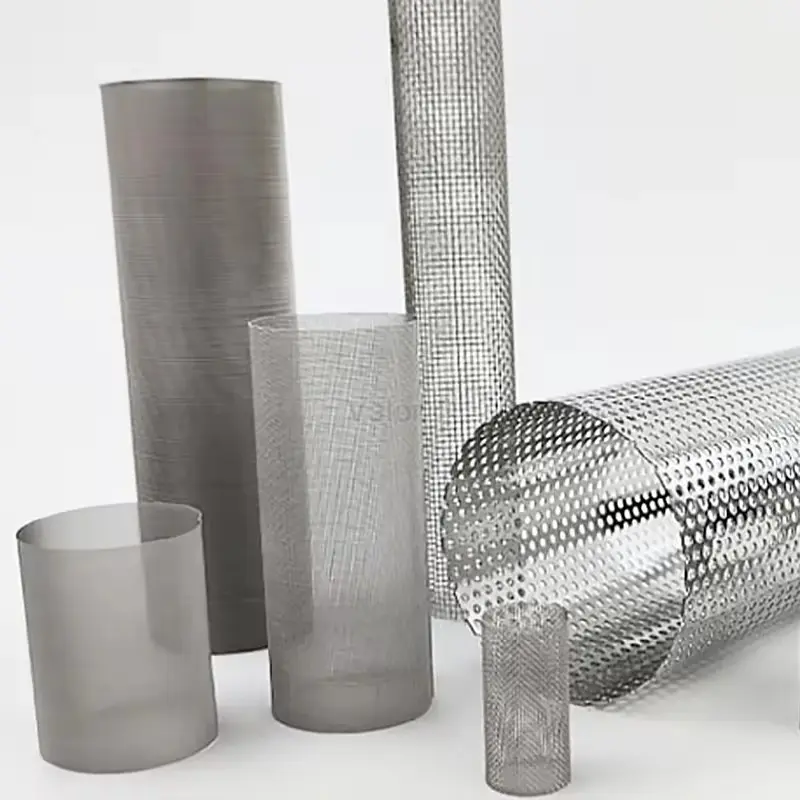
| Alloy | Alloy |
|---|---|
| Temperature | Temperature (°C) |
| Gas and liquid conditions | Gas and liquid conditions |
| Cleaning method | Cleaning method |
304, 304L, 316 and 316L are different specifications
304 is the general-purpose chromium-nickel grade. The low-carbon 304L and 316L grades are useful for welded fabrication. Molybdenum in 316 and 316L improves resistance to localized corrosion compared with 304, but does not make them immune to warm chlorides or crevice corrosion.
Specify the whole wetted component
The filtering layer, support, wire, end fitting and weld filler can have different material designations. List each one where it matters. Include cleaning chemicals and temperature as well as the process fluid; cleaning can be more aggressive than normal operation.
Material identity and procurement
Common references include 304 / EN 1.4301, 304L / EN 1.4307, 316 / EN 1.4401 and 316L / EN 1.4404. State the required standard and grade on the order, since a familiar trade name is not a material certificate. Special alloys are reviewed in the required media form; they are not presented as universal stock items.
Material comparison
| Material | Typical reason to select | Check before specifying |
|---|---|---|
| 304 / 304L | General industrial screens, supports and welded parts in suitable service | Fluid, chloride exposure, cleaning chemistry and welding |
| 316 / 316L | Molybdenum-bearing stainless for more demanding corrosion exposure | Chlorides, temperature, crevices and the complete cleaning cycle |
| Duplex stainless steel | Higher strength and corrosion resistance for selected duties | Exact grade, mesh or sheet availability and welding route |
| Nickel alloys | Chemical or elevated-temperature duties beyond common stainless grades | Alloy designation, corrosion data and joining compatibility |
| Titanium | Selected corrosive process environments | Fluid compatibility, available wire or porous form and fabrication |
| Carbon steel or other specified metals | Support or screen applications where the service permits | Corrosion protection, contact with dissimilar metals and service life |
Grade references are common correspondences, not permission to substitute standards. Material selection remains specific to the fluid, temperature and fabrication condition.
Material selection questions
Is 316L always the best choice?
No. It is often a useful step up from 304 for corrosion resistance, but temperature, chlorides, crevices and chemicals can still make another material necessary.
Does the L grade change filtration fineness?
No. L denotes a low-carbon stainless grade. Filtration geometry comes from the weave, aperture, slot or porous-media structure.
Can the support and filter layer use different alloys?
They can, but welding compatibility, galvanic effects and the service environment must be considered. Identify the alloy for each wetted part on the drawing.
Explore Kaifil
Related products and guidance
Technical enquiry
Define the dimensions, media, joints and inspection records before confirming the order.