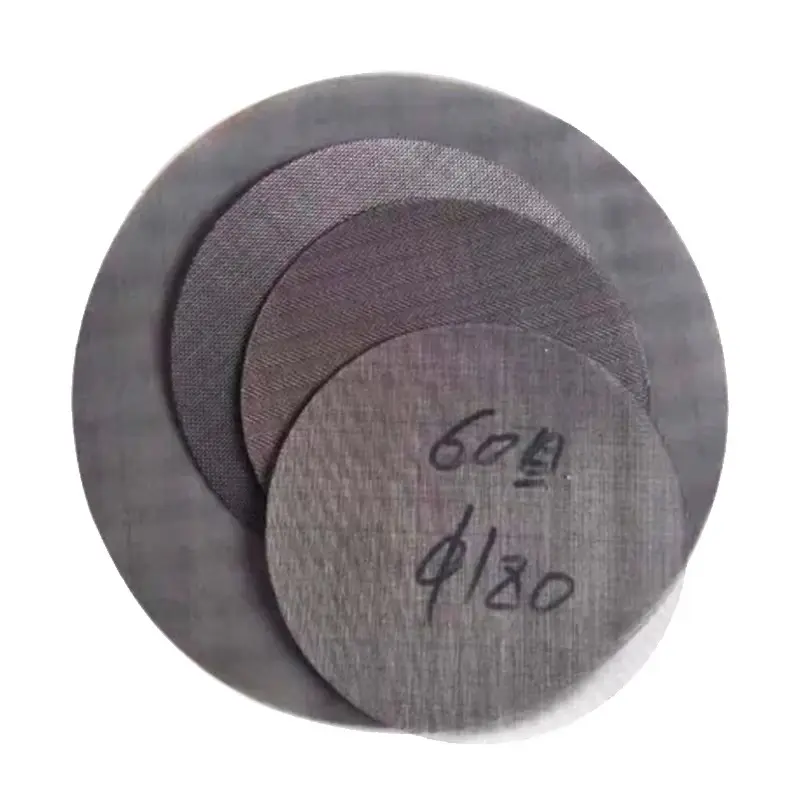
Multilayer screen packs
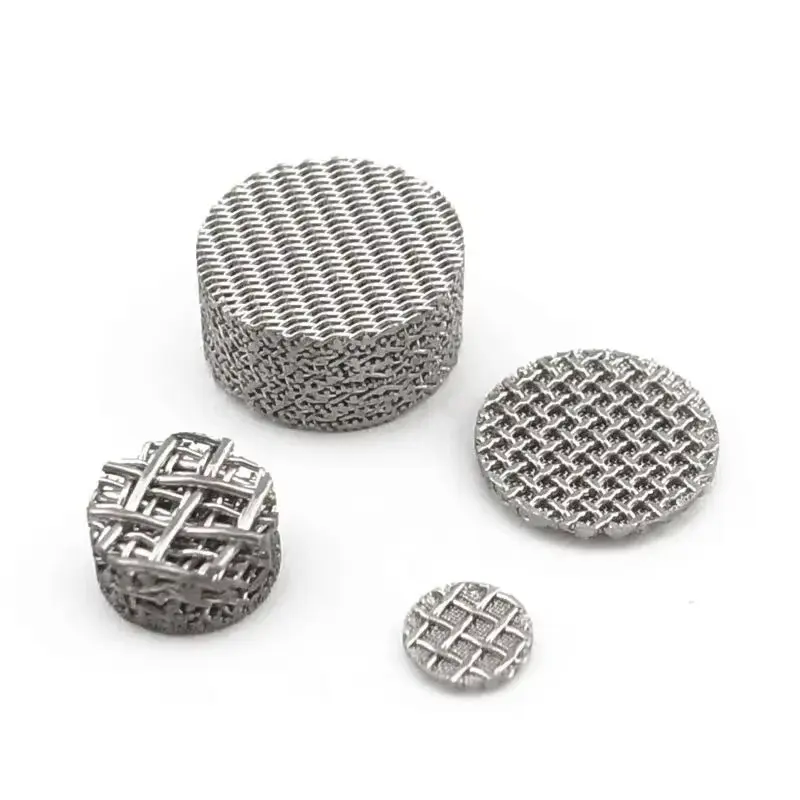
Multilayer screen packs combine a filtering mesh with selected support and drainage layers in one installable assembly.
Product detailsDrawing-based manufacturing
Multilayer extruder screens with loose, spot-welded or rimmed edges. Round, annular and kidney-shaped packs combine a fine separation layer with support layers that fit the breaker plate or screen changer.
Choose by installed outline
Start with the cavity shape and changer interface, then define layer sequence, support and joining method.
Screen packs
3 products
Multilayer screen packs combine a filtering mesh with selected support and drainage layers in one installable assembly.
Product details
Non-circular multi-layer pack for kidney-shaped breaker-plate seats.
Product detailsClear filters
More layers do not automatically mean finer filtration.
List each layer from upstream to downstream: weave, mesh count, wire diameter and material.
Provide outside profile, centre hole, seating land and maximum finished stack height.
Include polymer, recycled content, throughput in kg/h, melt temperature and contaminant type.
Record differential pressure at clean start and at changeover at comparable throughput and temperature.
Construction
Multilayer extruder screens with loose, spot-welded or rimmed edges. Round, annular and kidney-shaped packs combine a fine separation layer with support layers that fit the breaker plate or screen changer.
| Construction | Application and fit | Confirm first | Find a product |
|---|---|---|---|
| Round screen packs | The installation uses a round cavity and defined outside diameter. | OD, layer sequence, orientation, support and thickness. | Filter matching products |
| Kidney and oval packs | The screen changer uses a kidney, oval or similar cavity. | Controlled outline, orientation, layer sequence and locating features. | Filter matching products |
Screen packs
Screen-pack design follows the polymer line and changer.
Retain contamination that causes film defects while controlling melt pressure.
Use pressure trends to distinguish loading from a change in melt viscosity.
Match the changer cavity and stack support to stable melt delivery.
Layer identity and order are as important as the outer profile.
Screen packs
A polymer melt screen pack removes unwanted solids or gels from the melt and supports stable operation through the breaker plate or screen changer. The pack must fit the equipment, survive the pressure and temperature conditions, and provide the required balance between retention, throughput and change interval.
Read guide→Select wire diameter and clear opening together; mesh count alone does not define either aperture or flow area.
Read guide→Screen packs
Use the approved upstream-to-downstream layer schedule. A coarse upstream protective layer and a downstream support layer have different jobs; copying a stack without flow direction can reverse those jobs.
Contamination loading, a colder or more viscous melt, reduced open area, an incorrect stack or restricted breaker-plate flow can all contribute. Compare temperature and throughput before changing the mesh.
No. Each layer should have a purpose: separation, protection, drainage or support. The changer and melt duty determine the stack.
List each layer from upstream to downstream with mesh grade and diameter, or send an approved physical stack. Include breaker-plate dimensions and the retention method.
Define the dimensions, media, joints and inspection records before confirming the order.