
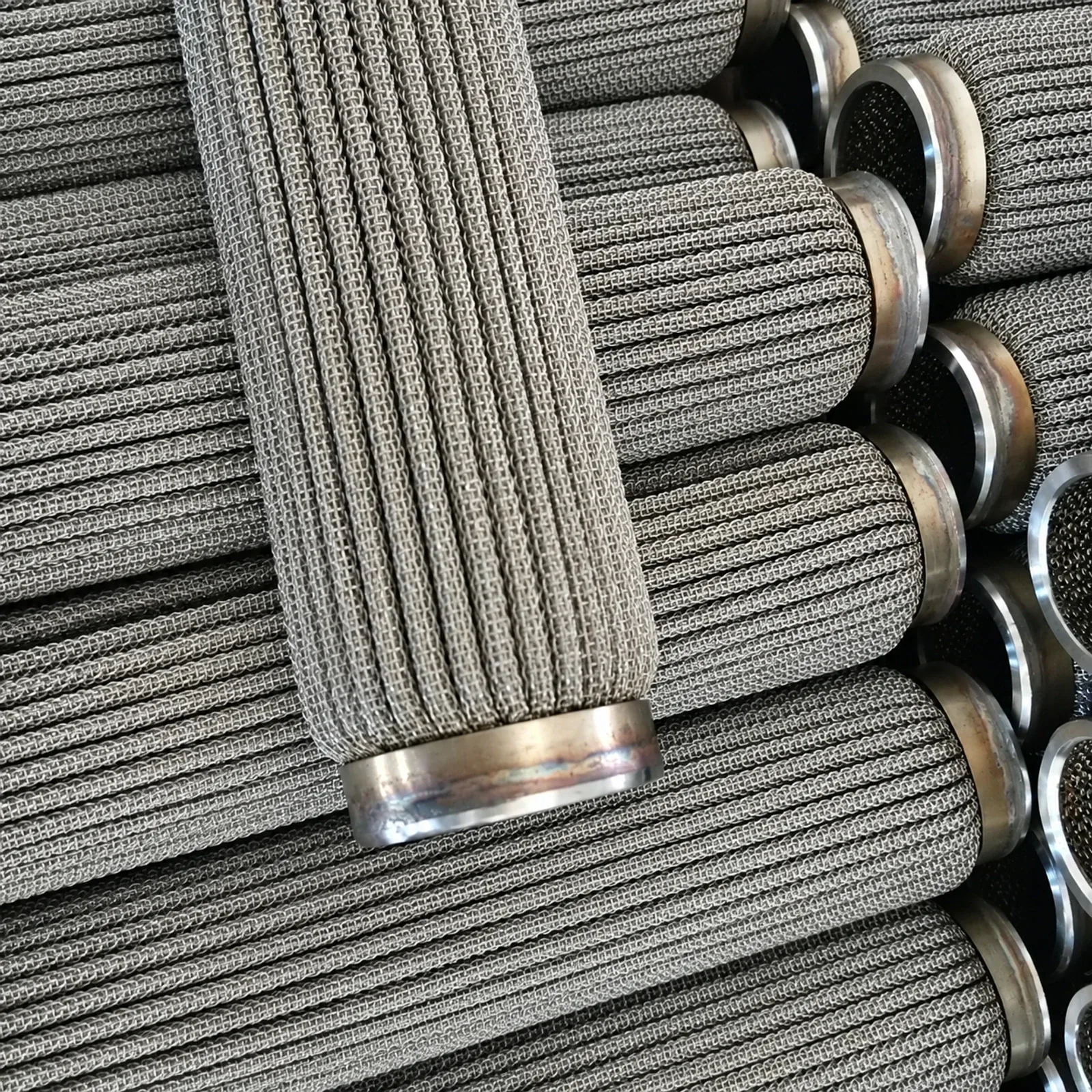
Pleated stainless steel wire mesh filter cartridges
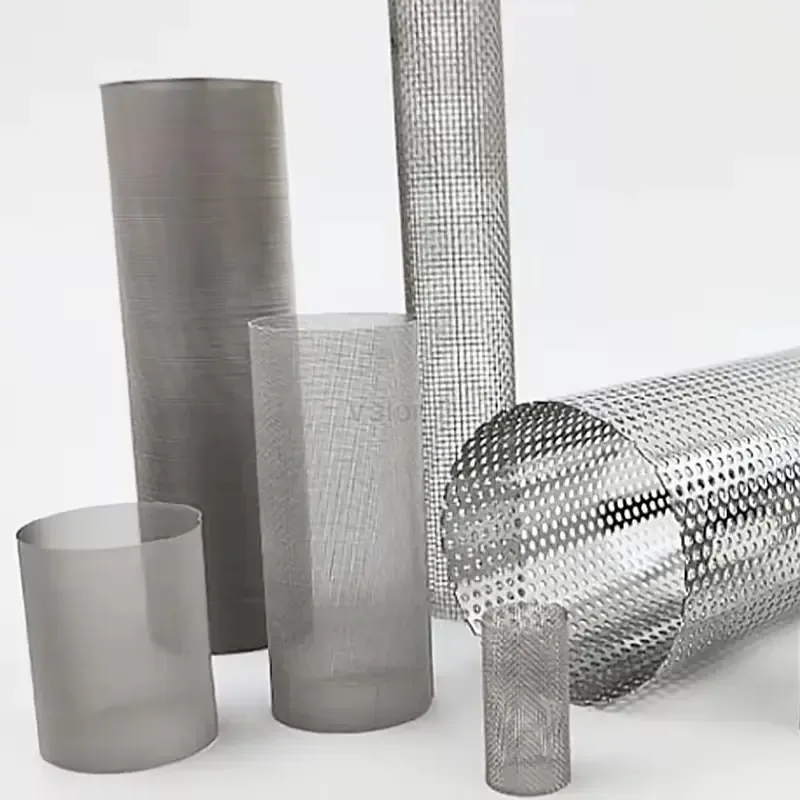
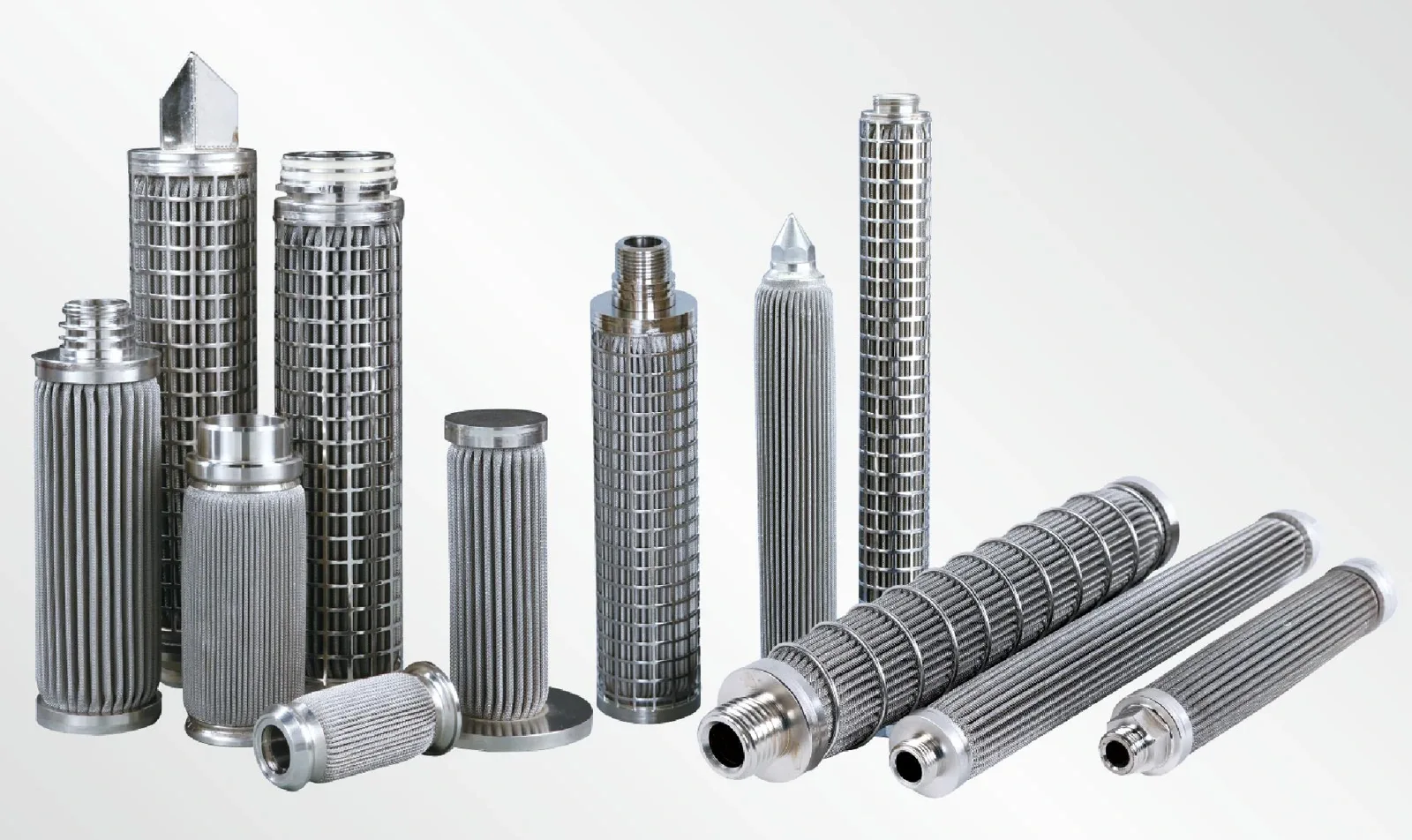
Kaifil manufactures pleated stainless steel wire mesh cartridges with multilayer support, perforated cores and optional outer guards.
Product detailsDrawing-based manufacturing
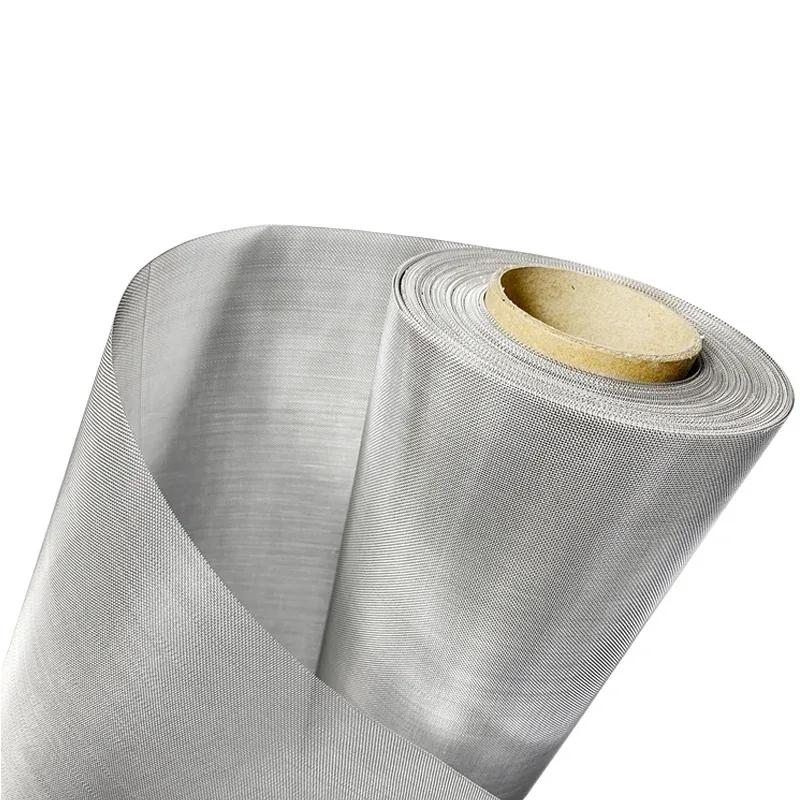
All-metal filter cartridges in pleated woven mesh, bonded sintered mesh and sintered metal fiber felt. Stainless-mesh configurations cover 2–840 µm and nominal lengths of 4⅞–40 in, with DOE, 222, 226 or threaded ends. Media construction, support and end sealing are specified together for the housing and cleaning cycle.
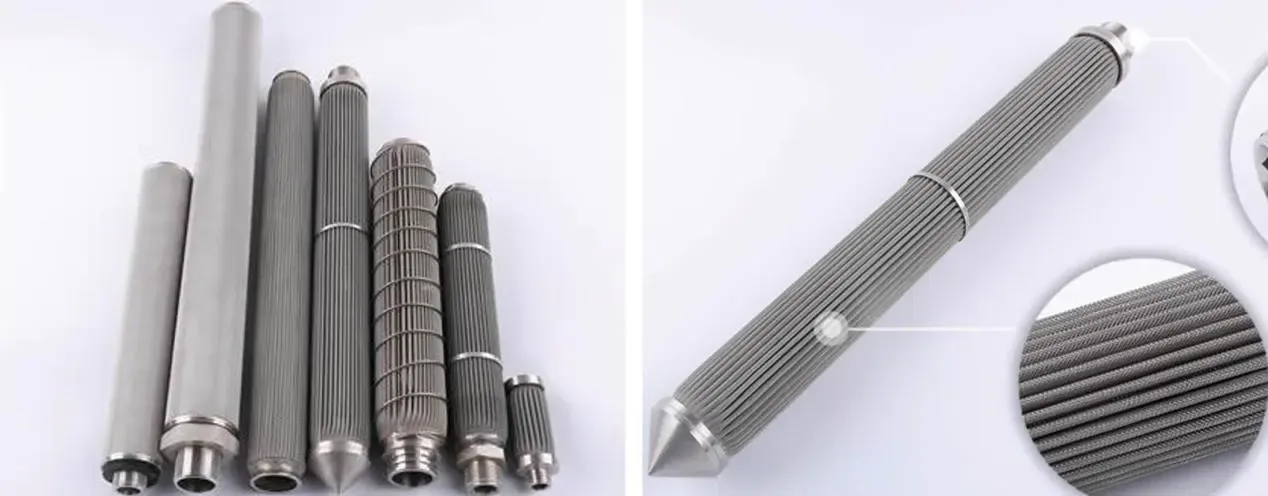
Removable metal filter elements with pleated mesh, rigid sintered mesh or metal fiber felt. Choose the medium for retention and cleaning, then match the end connection, seal and load direction to the housing.
| Construction | Application and fit | Confirm first | Find a product |
|---|---|---|---|
| Double-open-end cartridges | The housing seals and retains an element that is open at both ends. | OD, ID, length, seal location and flow direction. | Filter matching products |
| Single-open-end cartridges | The housing requires one closed end and one defined open connection. | Overall length, open-end geometry, closed-end form and seal. | Filter matching products |
| Flanged cartridges and inserts | The filter element mounts through a flange or fixed plate interface. | Flange pattern, face, gasket, projection and removal clearance. | Filter matching products |
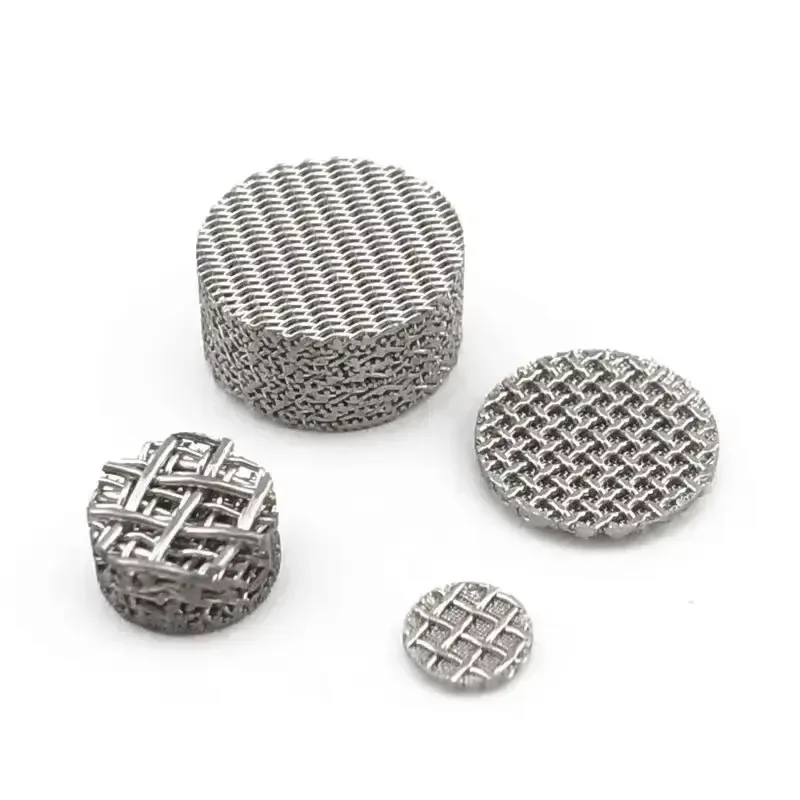
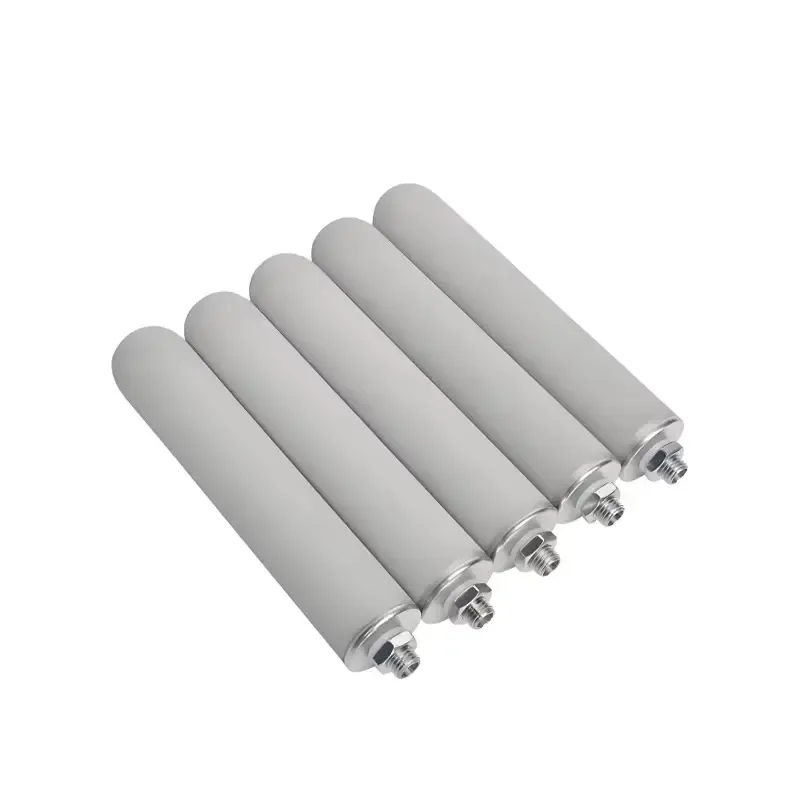
| Porous metal elements | Rigid porous metal tubes, cups and discs made by compacting and sintering metal powder. Select 316/316L stainless steel, bronze or Nickel 200 with a defined media grade, wall geometry and mounting connection. | Use a powder body for the specified three-dimensional pore network; compare woven laminates and fiber felt as different media. Pair the grade and test method with the fluid, flow rate, wall thickness, exposed area and allowable pressure drop. | Filter matching products |
Choose by housing interface
Start with the end connection and installed envelope, then compare the filtration medium and supporting construction.
Open at both ends for housings that provide the sealing and retention arrangement.
View matching products →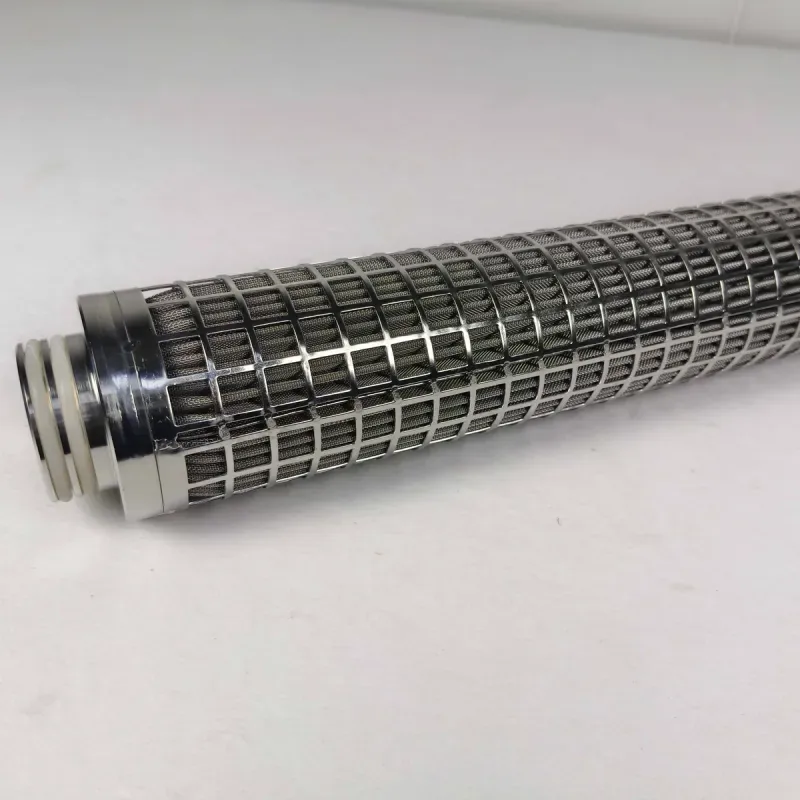
One closed end and one housing-specific open connection for controlled installation.
View matching products →Filter elements integrated with a flange or mounting plate for an equipment interface.
View matching products →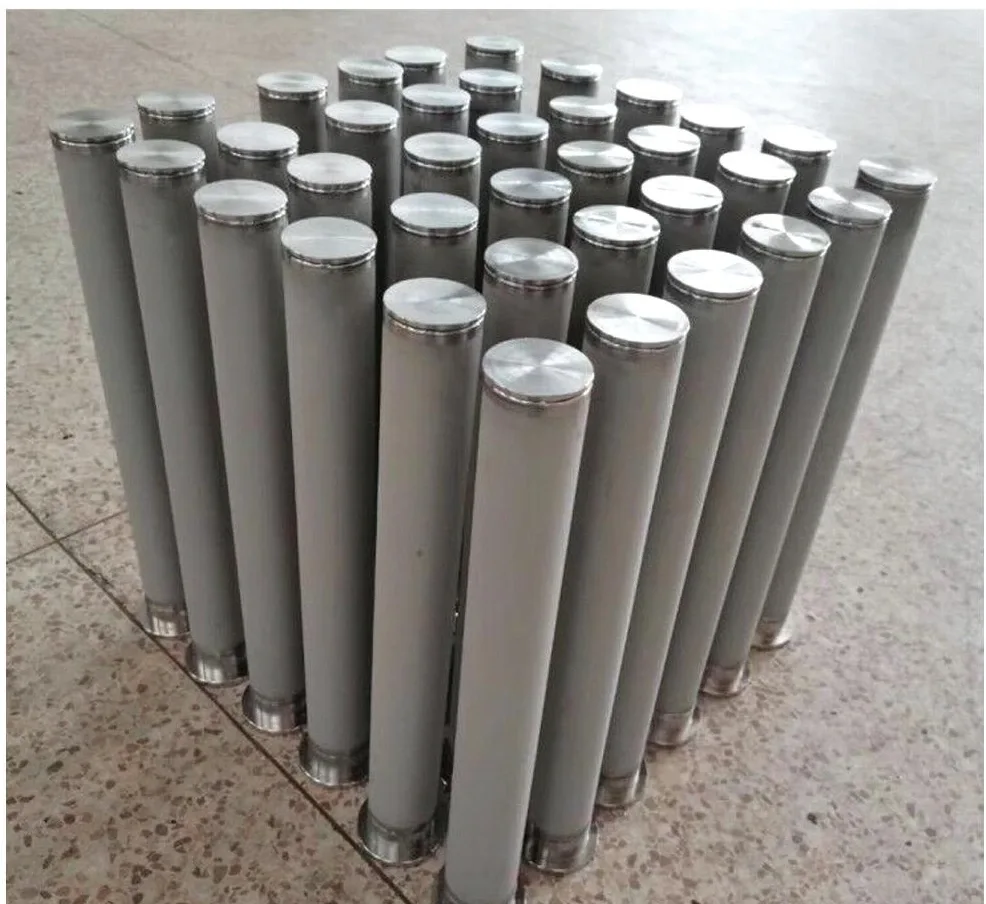
Rigid porous metal tubes, cups and discs made by compacting and sintering metal powder. Select 316/316L stainless steel, bronze or Nickel 200 with a defined media grade, wall geometry and mounting connection.
View matching products →Metal filter cartridges
6 products
Kaifil manufactures pleated stainless steel wire mesh cartridges with multilayer support, perforated cores and optional outer guards.
Product details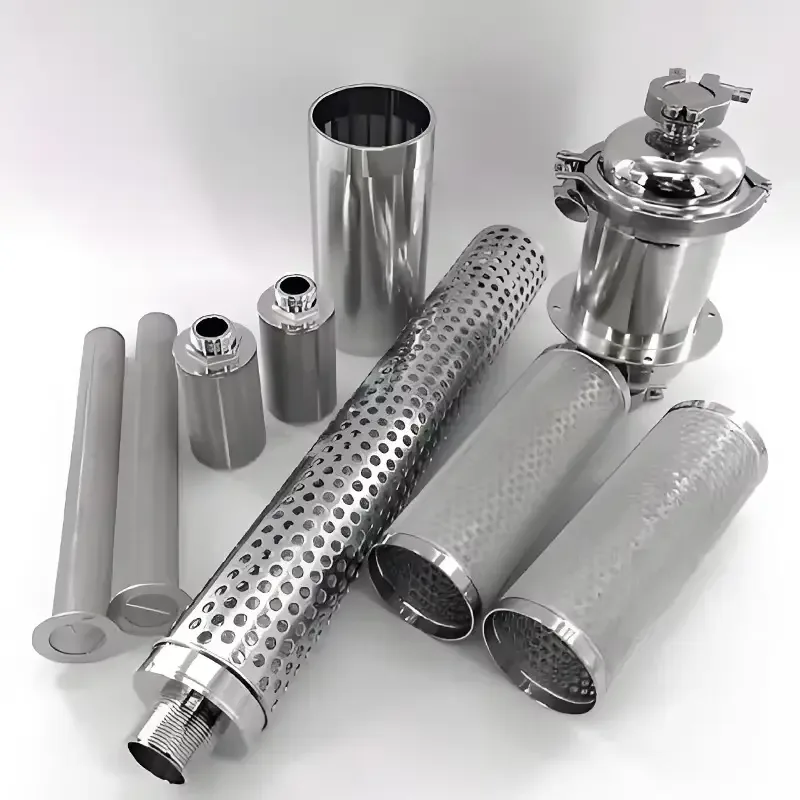
Kaifil manufactures reusable stainless steel sintered mesh cartridges with rigid bonded media, welded seams and threaded, plain-end or O-ring connections.
Product details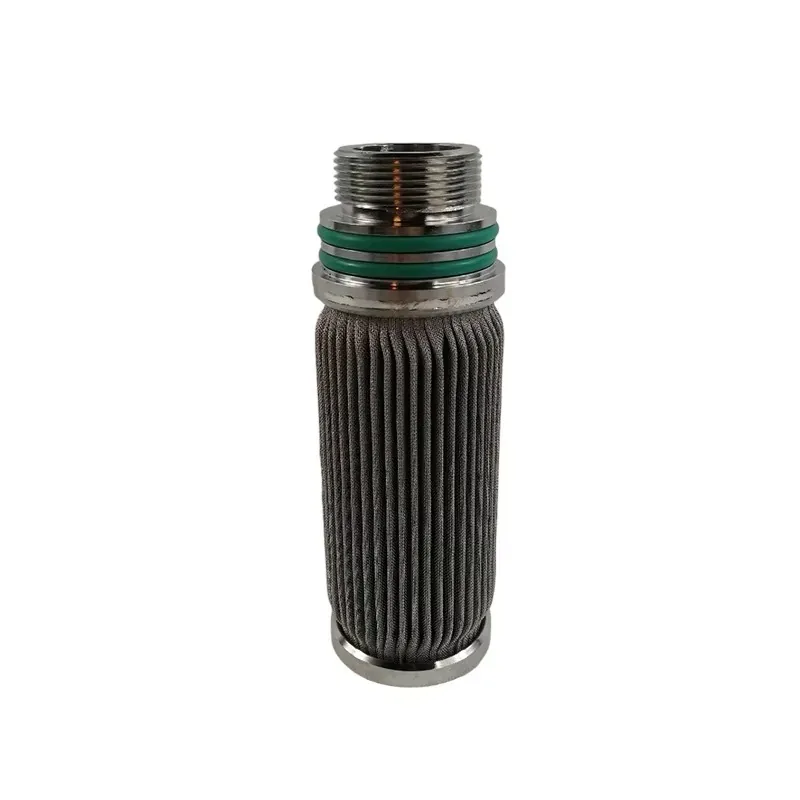
Kaifil manufactures pleated and cylindrical sintered metal-fiber felt cartridges.
Product details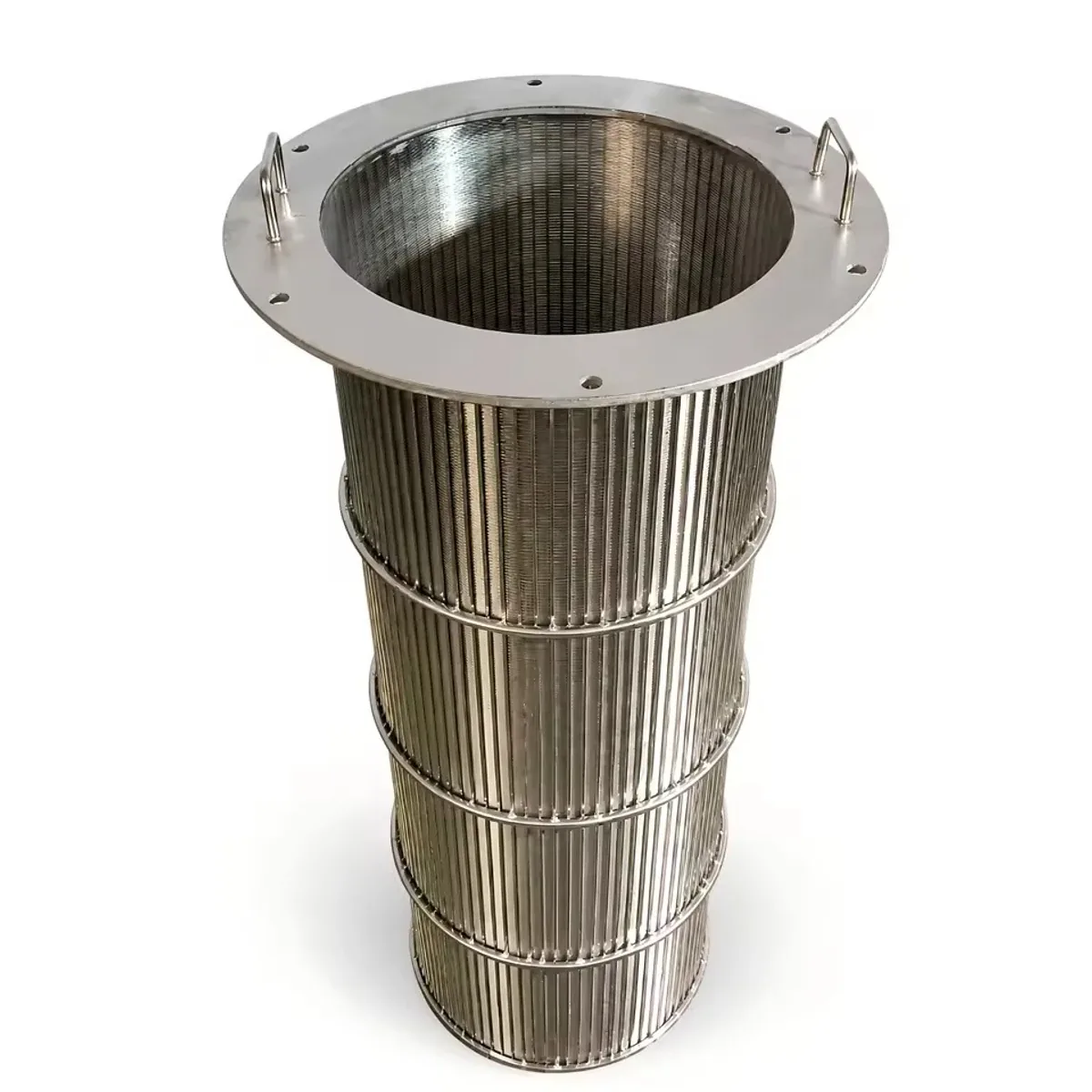
Kaifil manufactures stainless steel flanged filter cartridges with wedge wire, woven mesh, sintered mesh, perforated metal or pleated filtering bodies.
Product details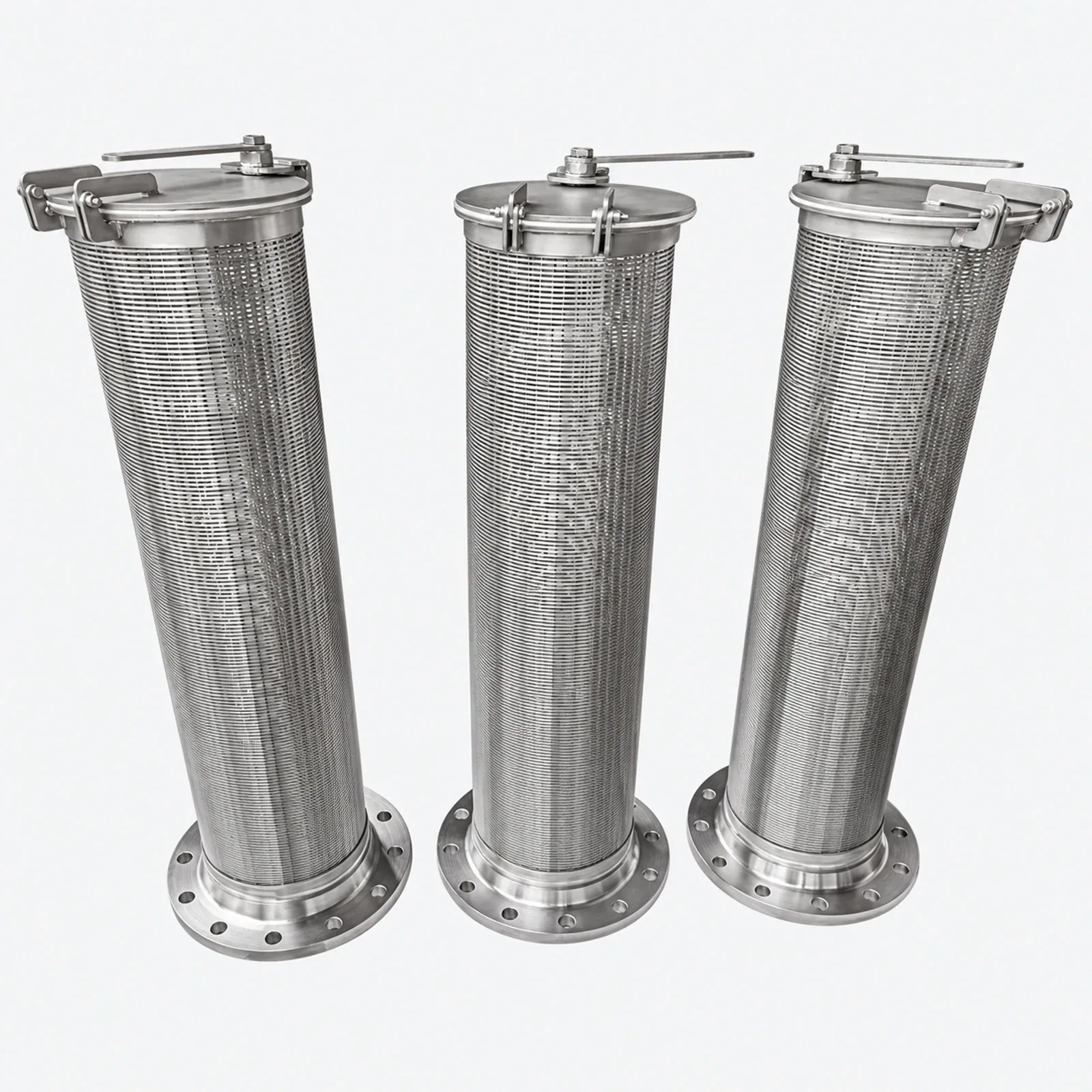
Kaifil manufactures removable wedge wire cartridges with a bolted mounting flange and quick-open access cap.
Product detailsRigid porous metal tubes, cups and discs made by compacting and sintering metal powder.
Product detailsClear filters
Construction
Installation dimensions define the housing interface: overall length, mating diameters, end connections, insertion depth and seal location. Active dimensions define the exposed filtering length and the surface remaining after end-cap lands and covered regions. Structural dimensions describe the core, protective cage and media-to-cap joints. Recording all three groups reproduces the complete cartridge.
DOE ends seal against the housing arrangement; an SOE cartridge has one closed end and a defined open-end connection. For 222 and 226 interfaces, record the spigot, O-ring engagement and locating features. Threaded and flanged ends use their own seating surfaces. The filter-to-housing joint and the joint between medium and end cap both form the separation boundary.
In a pleated cartridge, drainage spaces between folds and the supporting core make the media surface accessible to flow. In a sintered-mesh tube, the bonded wall and its supports define a rigid filtering body. Fiber felt provides a fibrous porous structure and is supplied with the support arrangement of the selected cartridge. Compare these constructions with the same fluid, temperature and operating flow.
Include normal filtration, contaminant removal and the return to service in the specification. The cleaning method must reach the dirty-side surface and remove deposits from joints and folds. Record forward and reverse flow directions, the corresponding supports and the inspection of media and end-cap joints after cleaning. The cartridge is then defined through its full operating cycle.
Specify media type, retention, end connection, housing bore and differential pressure together to define a complete cartridge.
Give aperture plus wire diameter for woven media, or a tested rating for porous media.
Compare usable pleat area, excluding end-cap bands and blocked regions.
Provide seal diameters, groove dimensions, thread designation and insertion depth.
Separate line pressure from differential pressure across the element; include cleaning reversal.
Pleated woven mesh · five-layer sintered mesh · metal fibre felt
Stainless-steel mesh configurations for liquids: 2–840 µm. Specify gas-service grades with their own test conditions.
Use these groups when preparing a drawing or comparing a replacement sample.
| Dimension group | What to record | Purpose | Assembly check |
|---|---|---|---|
| Housing fit | Overall length, mating diameters and end connection | Locates and retains the cartridge | Seat, insertion and removal space |
| Active medium | Filtering length, pleats or porous wall and covered lands | Defines exposed filtering surface | Medium identity and accessible area |
| Support and drainage | Core, cage and flow paths between layers | Supports the medium through the flow cycle | Position and continuity of supports |
| Sealing boundary | Seal position, cap joint and media seam | Separates clean and dirty sides | Joint continuity and seal engagement |
Metal filter cartridges
All-metal cartridges serve where temperature, differential pressure or chemical attack rules out polymer elements.
Removable elements for oil, resin and chemical liquids; material and seals follow actual chemistry.
Match the temperature conditions of the metal medium, joints and seals to define the assembled cartridge for hot-gas or vent service.
Match the original flow direction and end connection before comparing media grades.
Inspect the complete filtration boundary from media joints to the housing seal.
Check mating diameters, thread fit and seal location.
Check media identity, pleat spacing and core continuity.
Inspect longitudinal and cap joints; specify an integrity test when the duty requires one.
Inspect the media seam, cap joints and sealing interface together. Record the active filtering length, support position and fitted dimensions against the cartridge drawing.
Delivered a French 10-inch, 40 µm SS316 replacement cartridge project with double-open ends and Viton seals, using an existing part number as the fit reference.
A delivered water-treatment replacement project addressed regularly consumed 5 µm and 20 µm Big Blue cartridges with a reusable stainless design, raising fit and cleanability questions.
Metal filter cartridges
How to compare woven openings, porous-media claims and test-rated filter elements without treating every micron number as equivalent.
Read guide→Plan cleaning access and inspect the filtering surface and joints before returning the cartridge to service.
Cleaning reusable metal filter elements→Define DOE, SOE, 222, 226, threaded and flanged interfaces with their sealing and locating features.
Metal Filter End Connections: DOE, SOE, 222, 226, Threads and Flanges→Compare the structure of mesh laminates, fiber felt and powder before selecting a cartridge medium.
Sintered Mesh, Fiber Felt and Metal Powder: Structure and Selection→Metal filter cartridges
It usually provides more media area, but ports, internal core, viscosity and housing losses may still limit flow. Compare pressure loss at the same fluid, temperature and contamination condition.
Backwashing needs media support in the reverse direction and joints that tolerate the cleaning cycle. A collapse rating in normal flow does not establish the reverse-pressure limit.
A rigid porous wall can simplify cleaning and support in some duties; a pleated mesh construction increases surface area within the same envelope. Compare retention, differential pressure and cleaning method at the required flow.
Provide the mating housing or its interface drawing, normal flow direction, cleaning method and the required filtration definition. Record the medium construction as well as the external dimensions so that the replacement retains the same functional layout.
Identify the exposed pleat length, fold geometry, end-cap coverage and available drainage paths. The active area belongs to the assembled cartridge with its supports and end connections.

Define the dimensions, media, joints and inspection records before confirming the order.