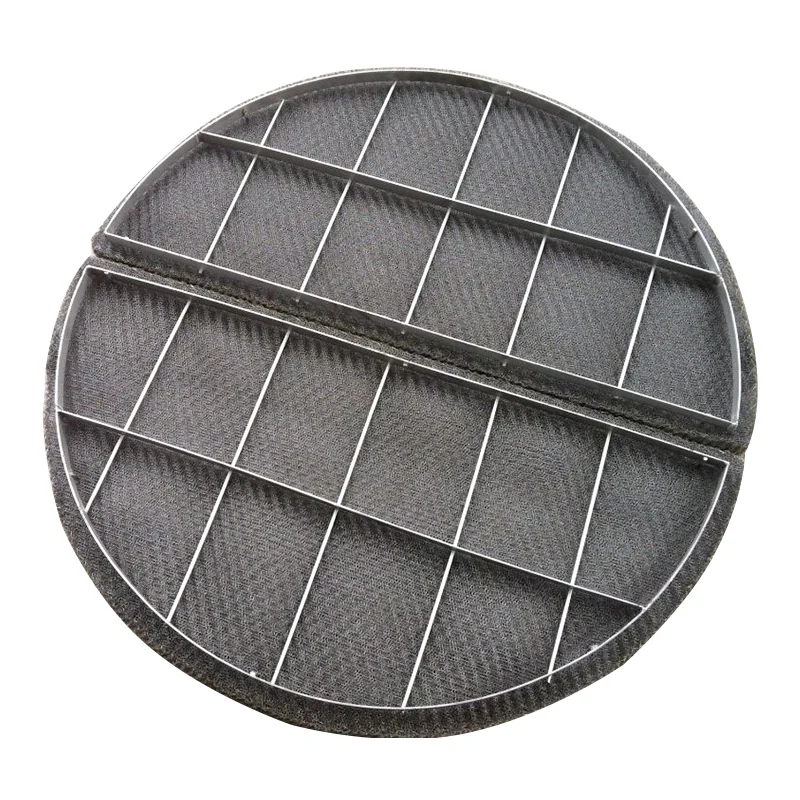
Knitted wire mesh demister pads
Circular or rectangular knitted mesh pad for entrained droplet removal.
Product detailsDrawing-based manufacturing
Knitted wire-mesh pads separate entrained liquid droplets from gas by impaction and coalescence. Pad density, gas velocity and drainage govern performance; a demister is not specified by a particle-filtration micron rating.
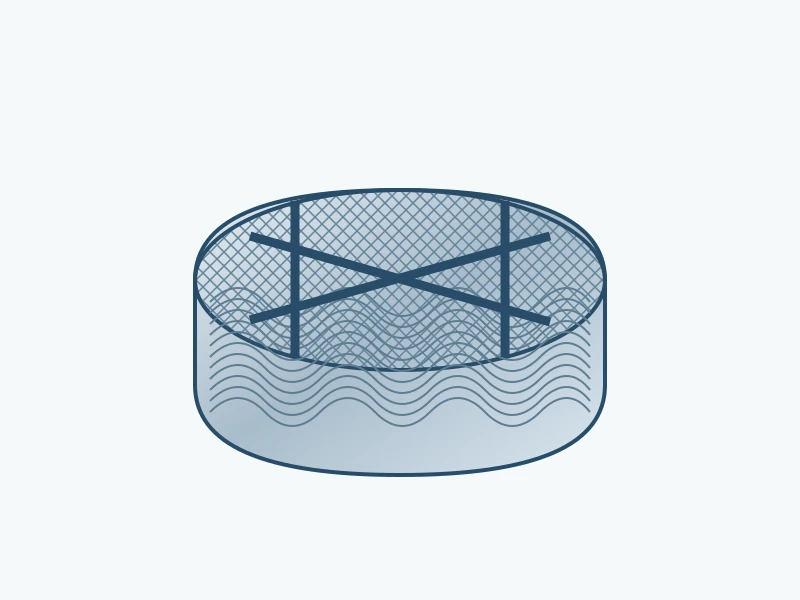
Choose by vessel installation
Define vessel geometry, access and gas-liquid duty before selecting pad density, segmentation and support.
Round pads for vertical vessels, columns and separators.
View matching products →Multi-piece pads sized to pass through a restricted access opening.
View matching products →Compact shaped blocks for local separation, silencing or equipment inserts.
View matching products →Demister pads and mesh blocks
3 products
Circular or rectangular knitted mesh pad for entrained droplet removal.
Product details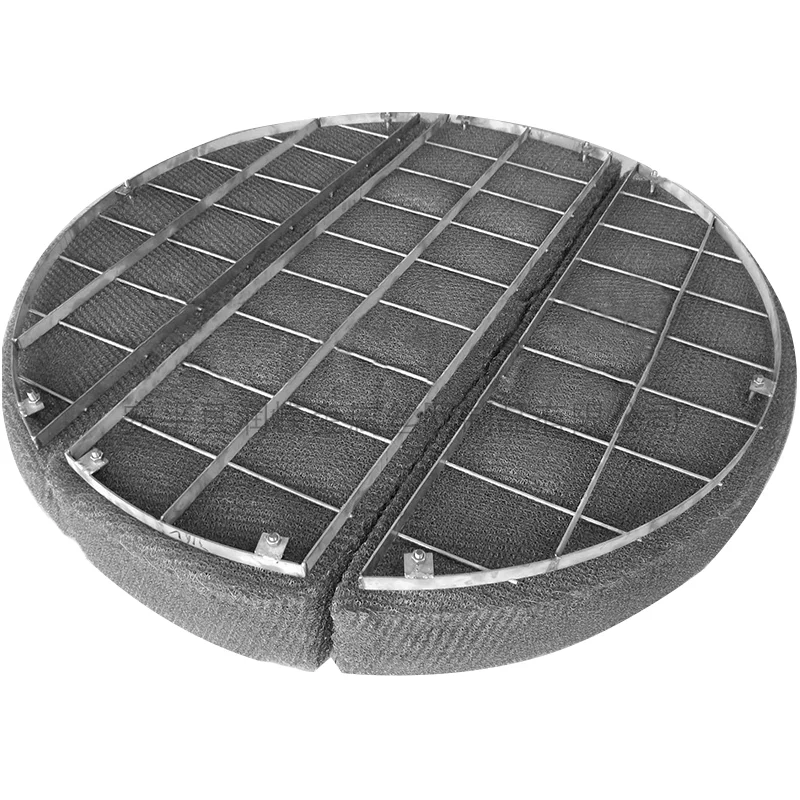
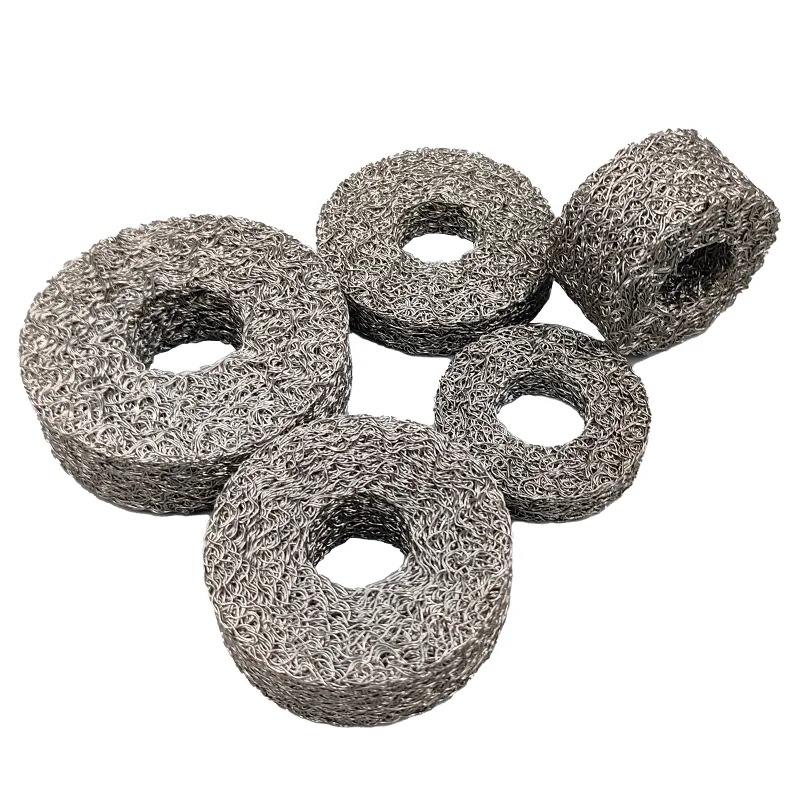
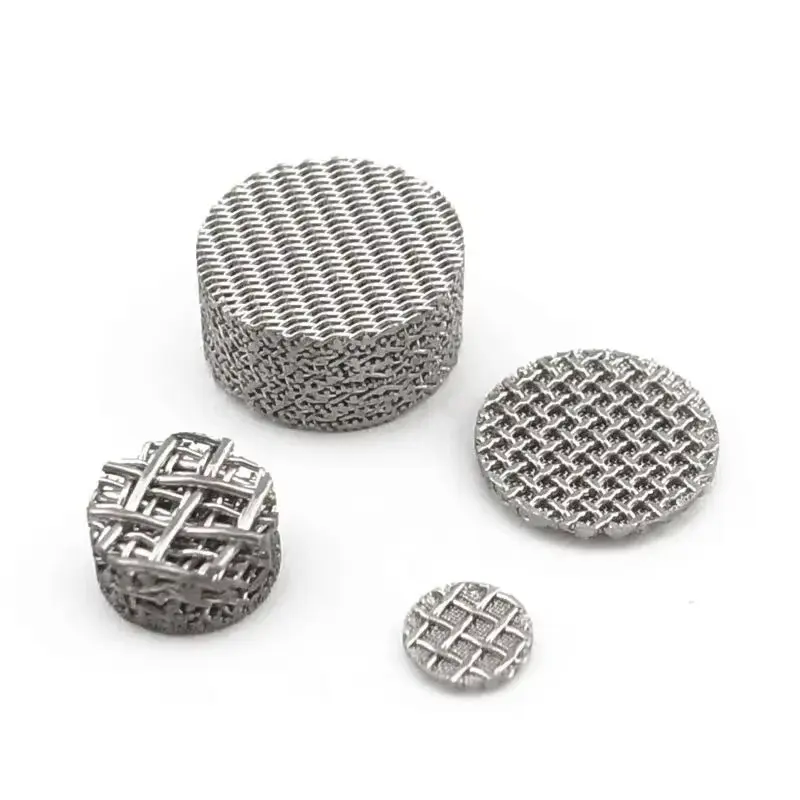
Dense formed knitted-mesh block for packing or gas-liquid service.
Product detailsClear filters
Vessel diameter and pad thickness alone are not a process specification.
Controls shape and segmentation
Supports separation review
Defines the operating window
Affects mesh and fouling risk
Guides wire and support selection
Prevents movement and bypass
Construction
Vessel diameter and pad thickness alone are not a process specification.
| Construction | Application and fit | Confirm first | Find a product |
|---|---|---|---|
| Circular demister pads | The vessel uses a round cross-section and full-width pad. | Vessel ID, pad thickness, support, retention and access opening. | Filter matching products |
| Segmented vessel pads | The pad must pass through a manway or limited access opening. | Segment layout, joints, installation order, retainers and vessel ID. | Filter matching products |
| Knitted mesh blocks | The application uses a compact block rather than a full vessel pad. | Block size, density, compression, wire, support and containment. | Filter matching products |
Demister pads and mesh blocks
For gas-liquid separation rather than particle filtration in liquids.
Reduce entrained liquid carryover in vapor streams.
Collect droplets downstream of gas-liquid contact.
Retain residual entrainment where gas and liquid loading suit knitted pads.
Geometry, wire identity and drainage are component checks; they do not establish a removal-efficiency guarantee.
Demister pads and mesh blocks
Record the process conditions needed to specify knitted-mesh mist eliminator pads and their support grids.
Read guide→Plan a cleaning trial around contaminant, media construction and joint integrity before declaring a metal element reusable.
Read guide→Demister pads and mesh blocks
No. Droplet removal depends on gas velocity, droplet size, liquid properties and knit construction. The wire opening is not an equivalent particle-retention rating.
More wire adds collecting surface but may restrict drainage or foul faster. Flooding and re-entrainment can outweigh the increased surface area.
Not necessarily. Compressed knitted blocks can serve damping or cushioning duties. They need a separate process design before any demisting performance is assigned.
A segmented pad passes through a smaller manway and can be assembled on the vessel support grid. Segment layout, joint overlap and orientation should be shown on the installation drawing.
Define the dimensions, media, joints and inspection records before confirming the order.