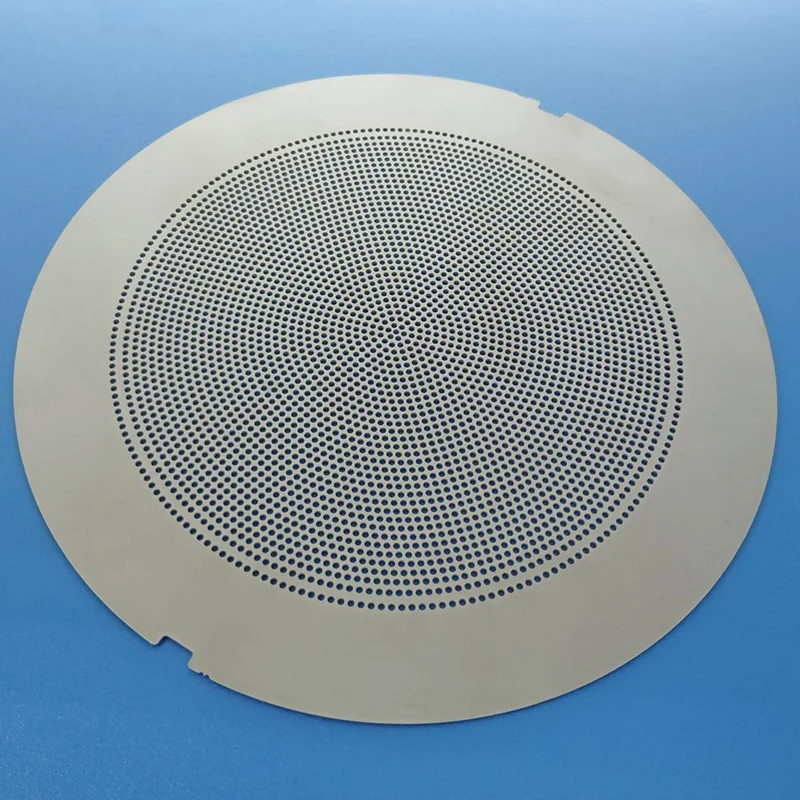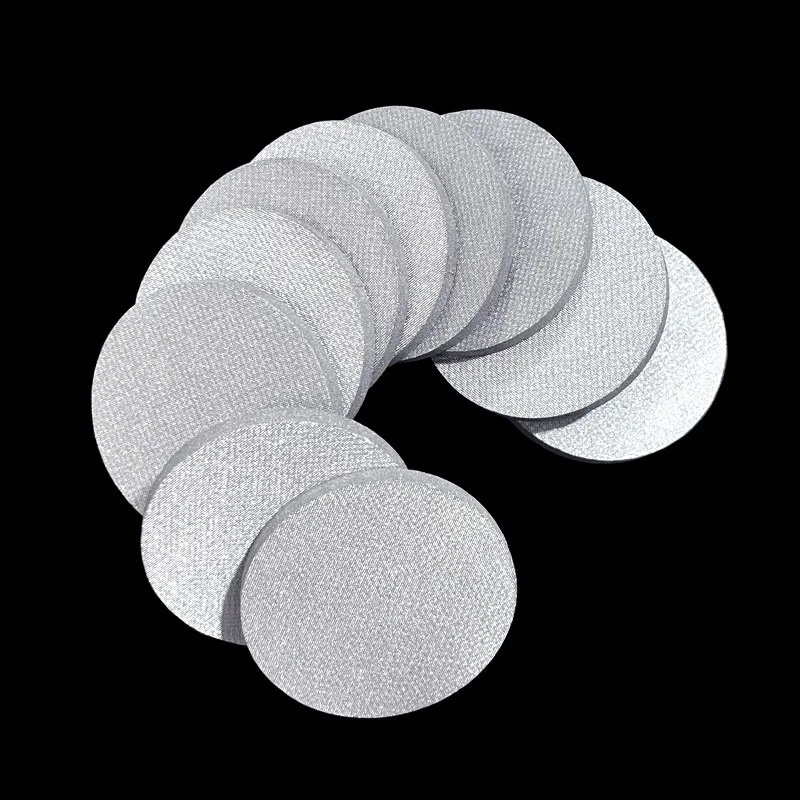
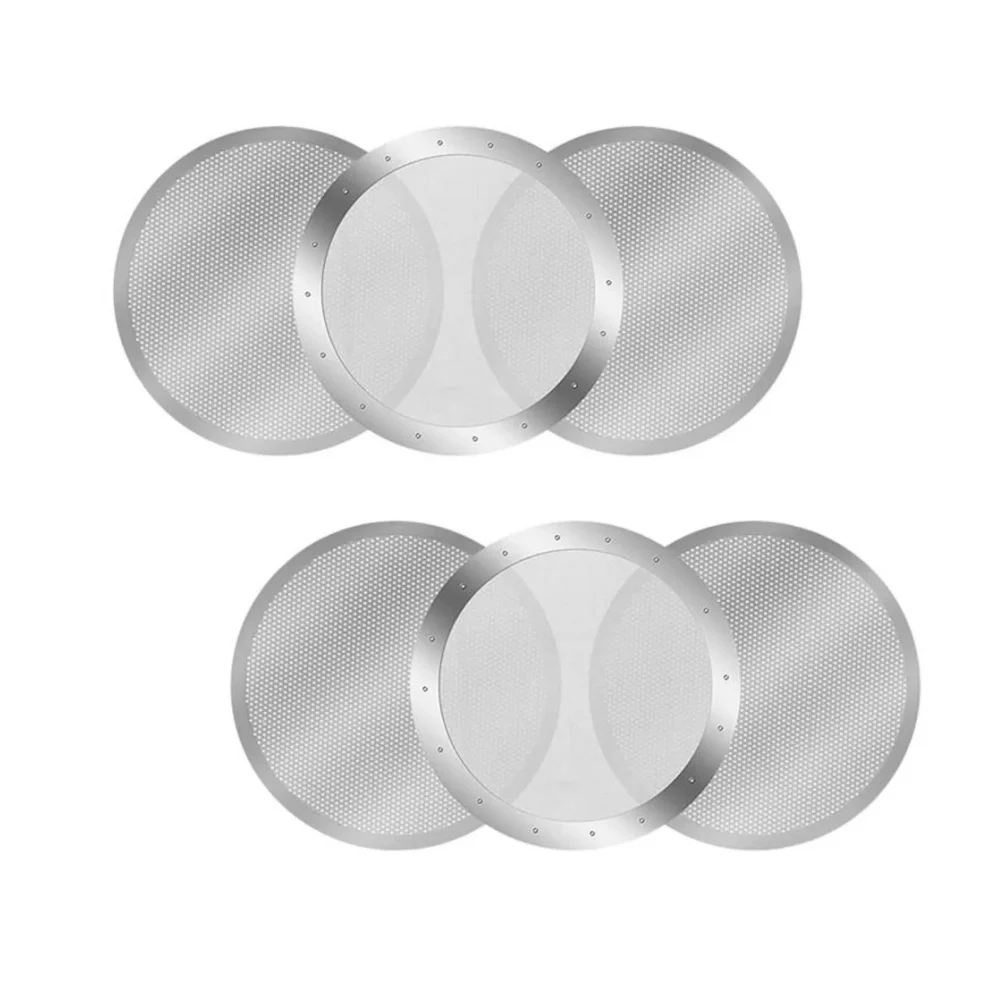
Photo-etched filter discs
Thin photo-etched disc with drawing-defined hole or slot pattern.
Product detailsDrawing-based manufacturing
Thin etched-foil and electroformed screens for small apertures and patterned inserts. Etching removes metal from foil; electroforming deposits metal on a tool. Thickness, aperture profile and handling therefore differ.
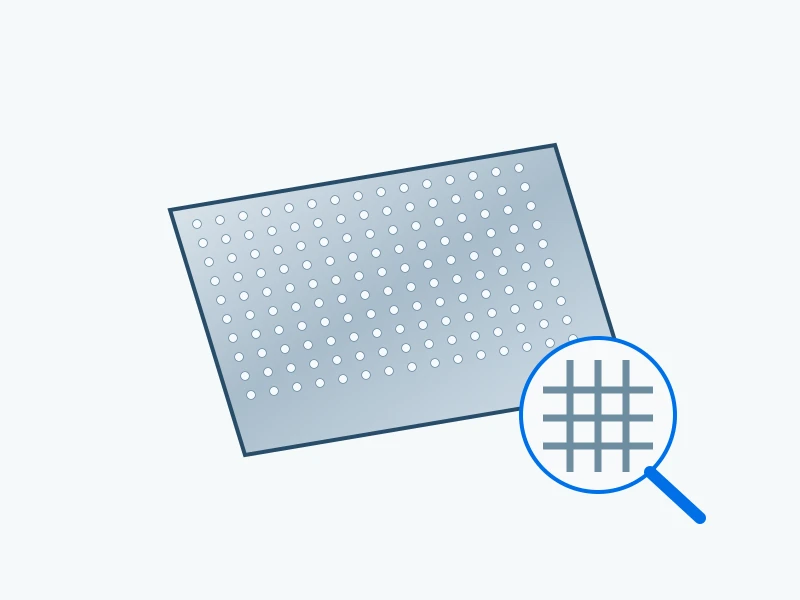
Choose by precision screen form
Define the aperture function, working face and component outline before selecting the fine-pattern manufacturing route.
Etched and electroformed screens
3 products
Thin photo-etched disc with drawing-defined hole or slot pattern.
Product details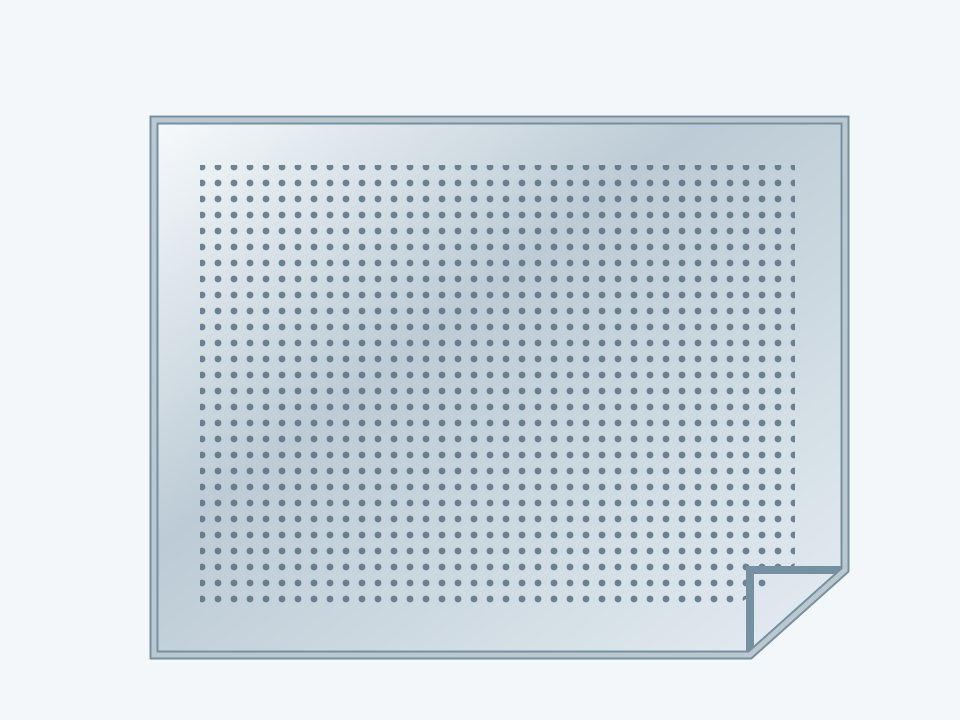
Clear filters
A precision screen must also survive handling and installation.
Defines functional geometry
Controls throughput and ligament width
Narrows the feasible process
Guides aperture orientation
Affects release and cleanability
Establishes acceptance
Construction
A precision screen must also survive handling and installation.
| Construction | Application and fit | Confirm first | Find a product |
|---|---|---|---|
| Flat precision screens | The finished part is a thin flat screen with fine repeated features. | Outline, aperture profile, pitch, thickness, working face and flatness. | Filter matching products |
| Precision filter discs | The precision screen installs as a round or annular disc. | OD, ID, patterned area, sealing margin, orientation and tolerance. | Filter matching products |
Etched and electroformed screens
For compact flow paths with controlled aperture patterns.
Thin patterned inserts in compact passages.
Active and sealing areas defined in one foil profile.
Electroformed patterns for applications that call for that material and process.
Optical measurement and protected handling suit fragile screens.
Etched and electroformed screens
Choose a precision-screen process by feature geometry, sheet thickness, alloy and handling needs.
Read guide→How to compare woven openings, porous-media claims and test-rated filter elements without treating every micron number as equivalent.
Read guide→Etched and electroformed screens
No. Material, production route, stiffness, corrosion compatibility and cleaning behavior differ. Use the actual material designation.
A change can alter opening feasibility, undercut, stiffness and pressure loss. It is a specification change, not an automatic substitution.
Thin etched or electroformed foil can deform in handling or under differential pressure. Specify the free span and fixing method so the backing frame does not cover critical openings.
Define the dimensions, media, joints and inspection records before confirming the order.