
Shijiazhuang, Hebei, Chinasales@kaifil.com
KAIFIL
Demister pads and mesh blocks

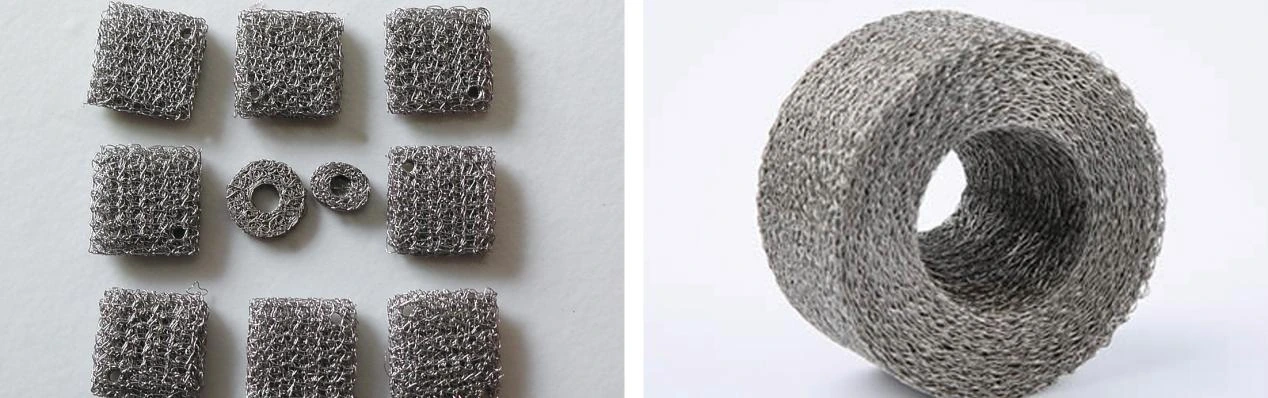
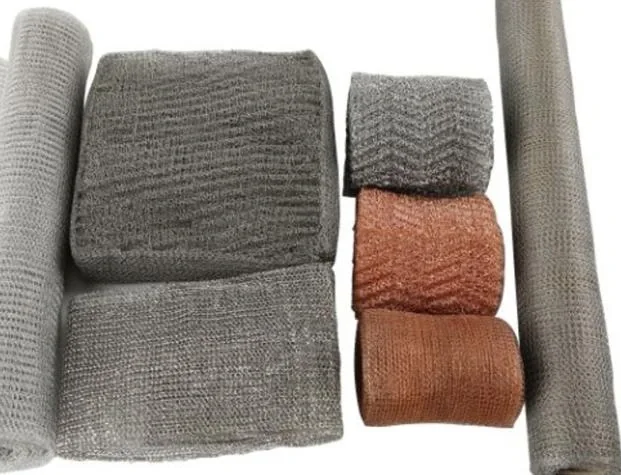
Compressed knitted mesh blocks

Compressed metal-mesh blocks, rings and cylinders for coalescing, damping and silencing. Free and installed height, density, retention and recovery inspection.

Metal wire mesh
Incoming round-wire diameter
0.10–0.55 mm
Density and compression
Mass, finished volume, compression direction and installed preload
Retention
Cavity, contact faces, retaining sleeve and removal route
Block calculation geometry
50 × 50 × 25 mm

Share a drawing, reference sample or application requirements to discuss the configuration.

Product details

Construction and function

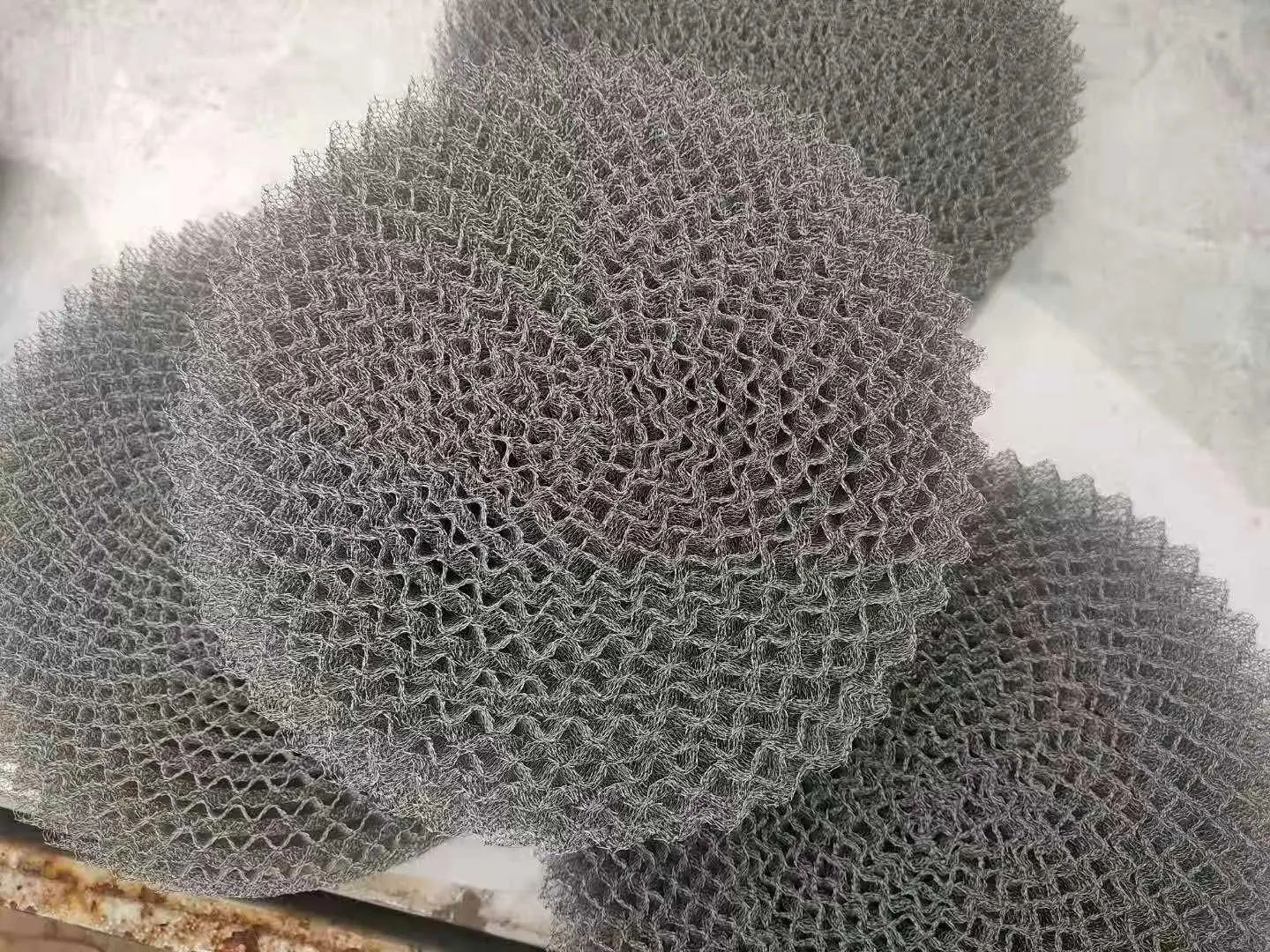
Knitted wire is layered and mechanically compressed into a ring, cylinder or block. Interlocking loops create a resilient porous metal body. Finished mass and envelope define bulk density; compression direction and installed preload define its mechanical working state. The compressed structure serves as an oil-gas coalescing insert, vibration-damping element or exhaust silencing component according to its assembly.
Installation and inspection

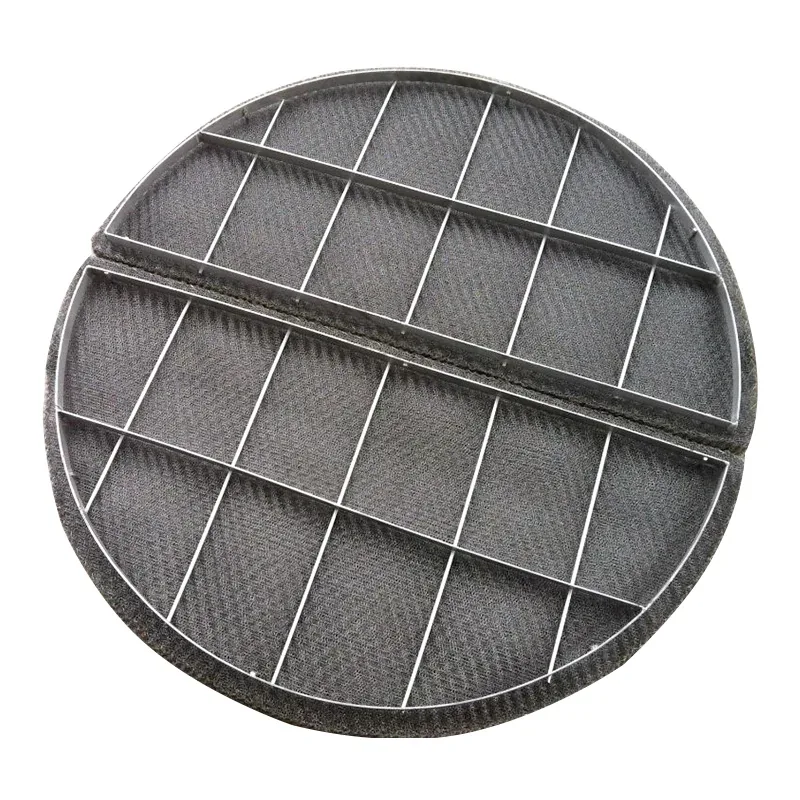
The drawing distinguishes free height from installed height and defines the mating cavity, contact faces and retaining features. Rings also require inside and outside diameters. Inspection checks dimensions, mass, recovery after compression, loose wire ends and retention in the housing. Wire alloy is specified for temperature, cleaning and contact conditions; the support frame or retaining sleeve receives its own material designation.

Compressed knitted mesh blocks — Filter medium

Keep raw mesh, pressed shape and installed compression linked

Start with the knitted ribbon and the mass used in the forming charge. Folding, winding and die compression establish the final ring or block. Keep wire identity and the forming mass with the pressed dimensions, so repeat batches reproduce the same metal network rather than only the outside outline.

The free component and the installed component have different heights. The mating cavity, contact faces and retaining sleeve define compression and the removal route. Record the compression direction and mass with the finished envelope. Packaging supports the formed shape and keeps loose wire ends from catching adjacent parts.

Component and interface schedule

Component and interface schedule

FeatureTechnical definition
Wire and formWire alloy and diameter; ring, cylinder or block
Density and compressionMass, finished volume, compression direction and installed preload
RetentionCavity, contact faces, retaining sleeve and removal route
Block calculation geometryBlock 50 ×50 ×25 mm; gross face 2500 mm²
Height-compression calculationFree height 30 mm; installed height 25 mm; compression 5 mm
Raw material, forming and installed state

Raw material, forming and installed state

Component or stageFunctionDrawing or inspection definition
Knitted ribbonSupplies the interlocking loopsAlloy, wire and incoming mesh identity
Forming chargeDefines metal quantity and lay-upMass, folding or winding direction
Pressed ring or blockProvides the finished porous bodyFree dimensions, mass and compression direction
Installed cavityDefines the working compressionInstalled height, contact faces and retention
Raw material, forming and installed state
Incoming knitted-wire material for compressed mesh parts

Incoming knitted-wire material for compressed mesh parts

Incoming-material dimensionNumerical choicesUnitDelivery state
Round-wire diameter0.10–0.55mmWire in the knitted ribbon before compression.
Common round-wire selection0.20–0.25mmSelected within the stated round-wire series.
Ribbon width40 / 80 / 100 / 150 / 200 / 300 / 400 / 500 / 600mmWidth of incoming ribbon; pressed-part dimensions follow the die and assembly drawing.
Ordering and production

Ordering and production

Supply itemOrder basis
Production lead time2–3 weeks after order and drawing confirmation.
Trial ordersSmall trial quantities for fit and process evaluation.
Regular production orders50 pieces or US$3,000 per order.
Quotation basisMaterial, finished dimensions, filter construction, connections and quantity.

Applications

Mechanical damping

The compressed loops deform under preload and recover within the specified working displacement.

Oil-gas separation inserts

The porous insert provides wire contact and a drainage path within its housing.

Specifications

Compressed knitted mesh blocks
ParameterSpecificationNotes
Incoming round-wire diameter0.10–0.55 mmWire specification of the raw knitted ribbon; the pressed body has separate finished dimensions and bulk density.
Density and compressionMass, finished volume, compression direction and installed preload—
RetentionCavity, contact faces, retaining sleeve and removal route—
Block calculation geometry50 × 50 × 25 mmThe stated 50 × 50 mm face and 25 mm installed height define the calculation geometry. Gross face area = 50 × 50 = 2500 mm².
Height-compression calculation30 − 25 = 5 mmFree height 30 mm and installed height 25 mm give 5 mm axial compression.
Material304 / 316L stainless steel—

Selection guide

Include these details when discussing your requirements.

View specifications
Wire and form
Wire alloy and diameter; ring, cylinder or block
Drawing geometry
Block 50 ×50 ×25 mm; gross face 2500 mm²
Compression shown
Free height 30 mm; installed height 25 mm; compression 5 mm

Frequently asked questions

What defines the installed assembly?

The drawing distinguishes free height from installed height and defines the mating cavity, contact faces and retaining features. Rings also require inside and outside diameters. Inspection checks dimensions, mass, recovery after compression, loose wire ends and retention in the housing. Wire alloy is specified for temperature, cleaning and contact conditions; the support frame or retaining sleeve receives its own material designation.

How do the media and support work together?

Knitted wire is layered and mechanically compressed into a ring, cylinder or block. Interlocking loops create a resilient porous metal body. Finished mass and envelope define bulk density; compression direction and installed preload define its mechanical working state. The compressed structure serves as an oil-gas coalescing insert, vibration-damping element or exhaust silencing component according to its assembly.
Technical enquiry

Define the dimensions, media, joints and inspection records before confirming the order.

Technical details (optional)
Selection inputs

WhatsApp

Search