Shijiazhuang, Hebei, Chinasales@kaifil.com
KAIFIL
Demister pads and mesh blocks

Knitted wire mesh demister pads

Knitted wire demister pads with defined density, depth and support grids. Compare 80, 144 and 193 kg/m³ styles and vessel installation requirements.

Metal wire mesh
Round-wire diameter
0.19 / 0.23 mm
Dry mesh bulk density
98 / 150 / 182 kg/m³
Operating duty
Gas flow, pressure, temperature, liquid loading and pressure drop
Three mesh styles
80 / 144 / 193 kg/m³; paired wire diameter 0.28 mm

Share a drawing, reference sample or application requirements to discuss the configuration.

Product details

Construction and function

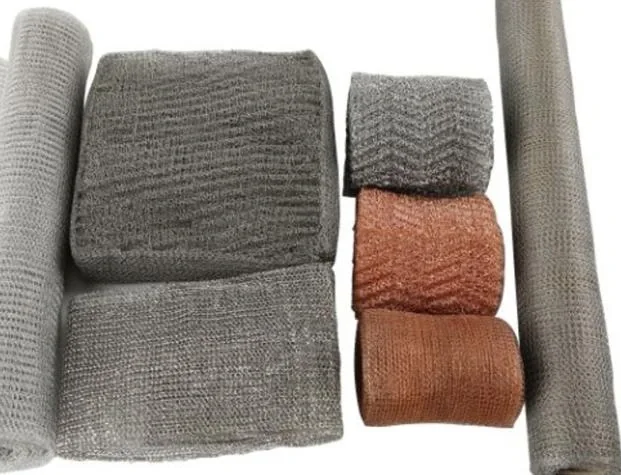
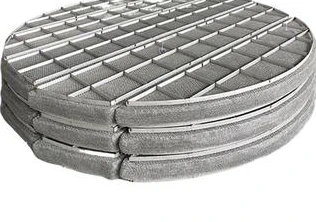
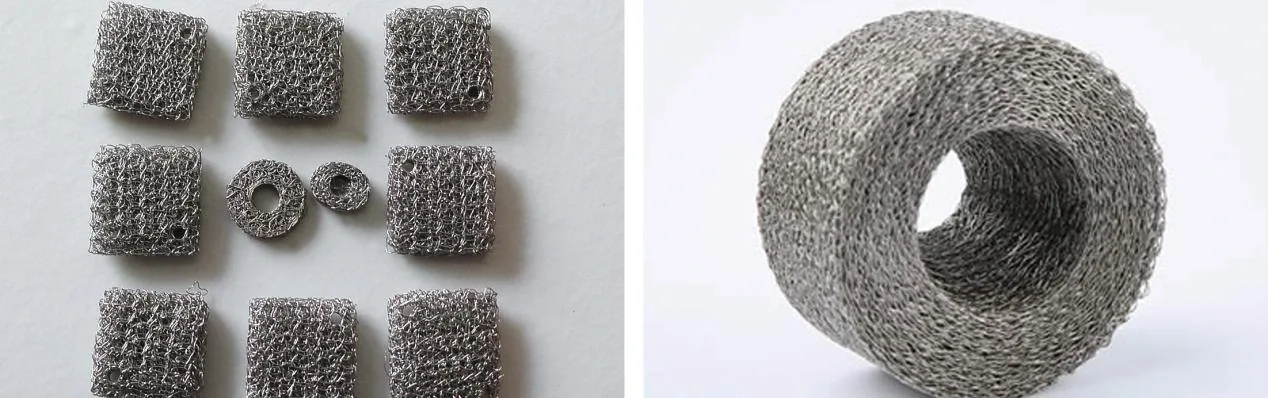
Knitted wire forms interconnected loops that are crimped and stacked into a pad. Gas passes through the open structure; droplets strike the wires, coalesce and drain from the lower face. The knitted medium, support grid and hold-down grid have separate functions. Density, wire diameter and pad depth define the selected mesh style; gas velocity, liquid loading and drainage define its operating duty.
Installation and inspection

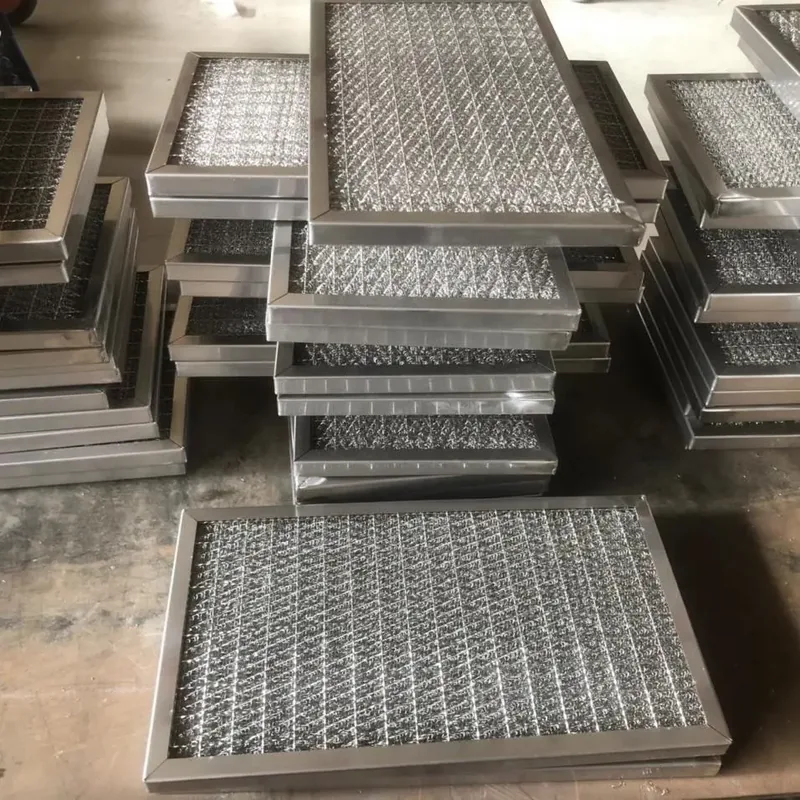
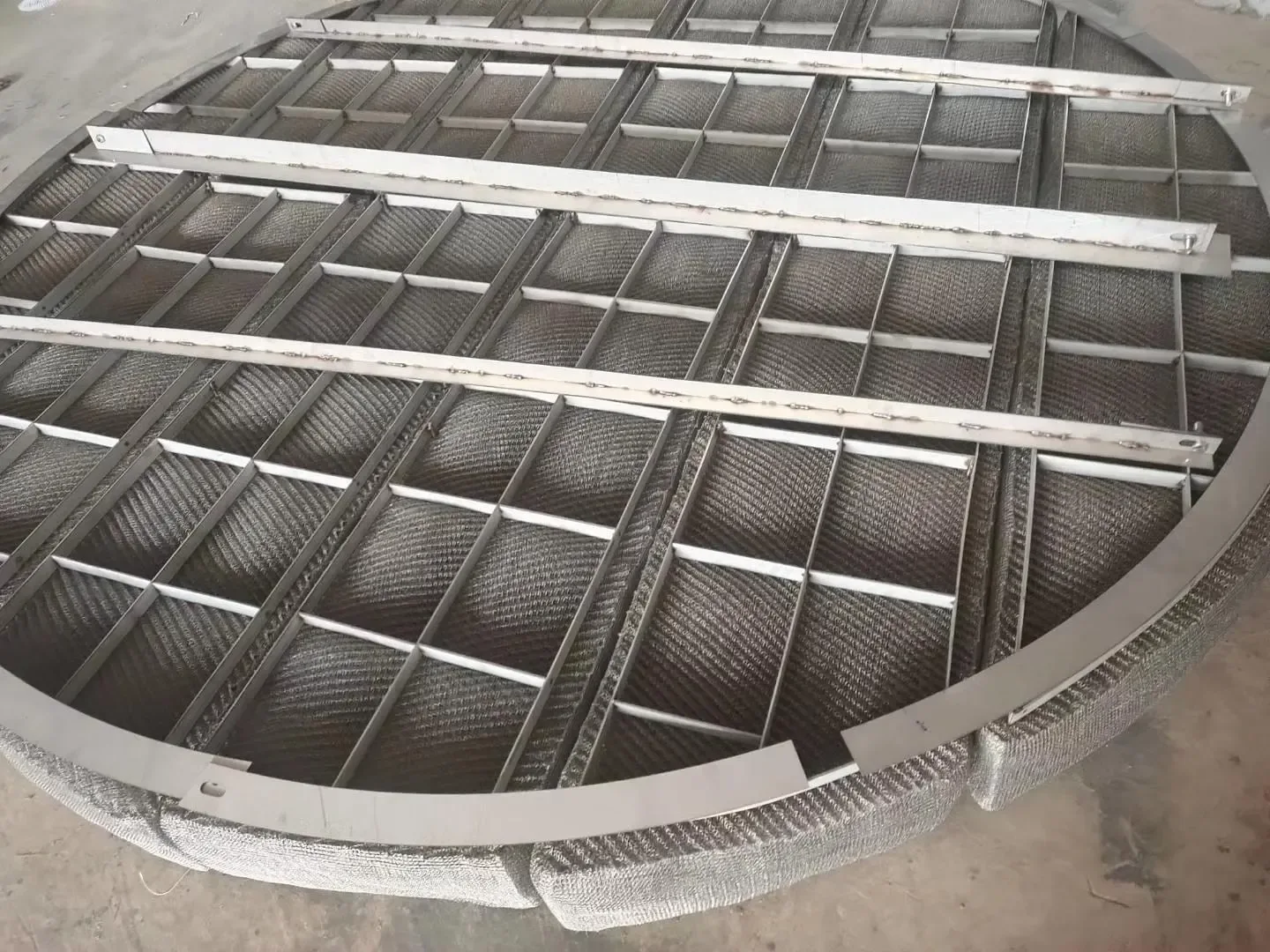
The installed assembly includes vessel diameter, pad thickness, grid depth, support beams and drainage clearance. The three listed mesh styles have densities of 80, 144 and 193 kg/m³ with 0.28 mm wire. These are distinct constructions. Inspection checks mass against finished volume, thickness, grid attachment and edge fit. Scrubber outlets and process vessels use the pad with a clear drainage path beneath the gas-liquid separation layer.

Knitted wire mesh demister pads — Product view

Define the bed from wire loops to its drainage face

The demister body is built from knitted wire, crimped and laid or wound to form a bed. Wire diameter, crimp and layer arrangement determine the physical mesh structure. The pad specification keeps that structure together with depth and dry mesh mass; the roll-stock width alone does not define the finished pad.

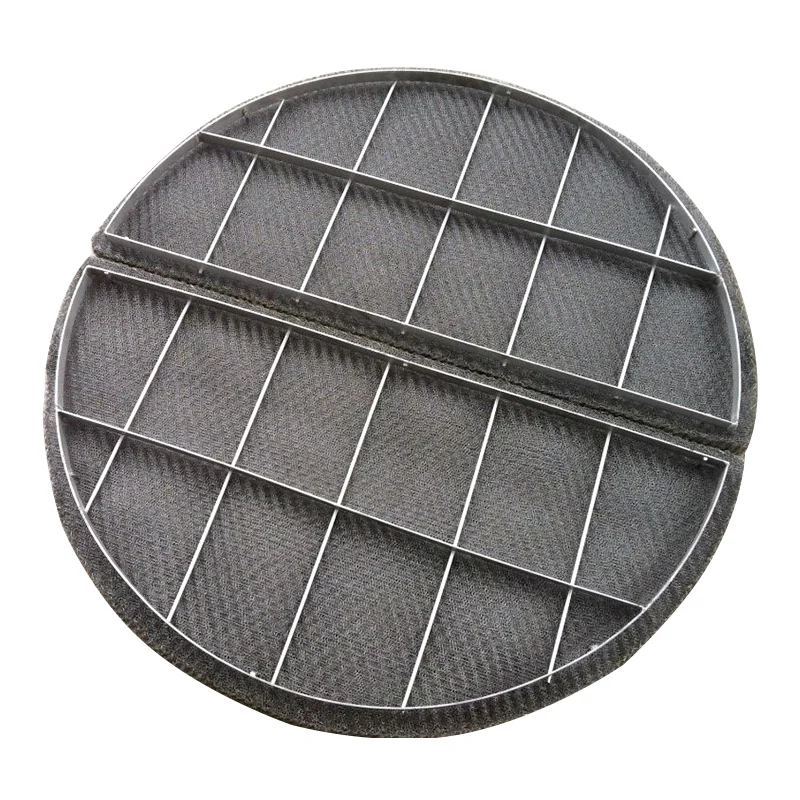
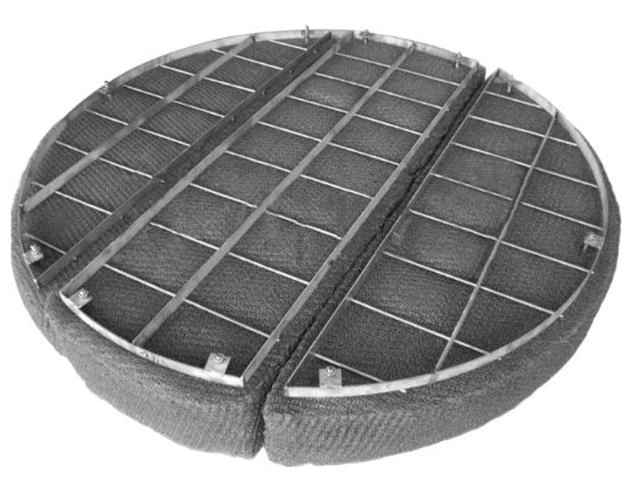
A retaining grid supports the installed bed and preserves its shape under the specified flow direction. Show gas entry, liquid drainage, supports and perimeter seating together. A replacement order retains the mesh construction and the vessel interfaces, linking raw knitted material to the complete gas-liquid separation element.

Component and interface schedule

Component and interface schedule

FeatureTechnical definition
Knitted mediumWire diameter, alloy, mesh style, density and pad depth
Support assemblyBottom grid, upper restraint, beam positions and grid depth
Operating dutyGas flow, pressure, temperature, liquid loading and pressure drop
Three mesh styles80 / 144 / 193 kg/m³; paired wire diameter 0.28 mm
Pad depth and drawingDepth series 100–200 mm; shown assembly Ø600 ×150 mm
The components of a knitted-mesh demister

The components of a knitted-mesh demister

Component or stageFunctionDrawing or inspection definition
Knitted wireProvides interlocking contact surfacesWire diameter, alloy and loop construction
Crimped layersCreate the three-dimensional bedCrimp, laying direction and pad depth
Support gridsHold the bed in the vesselGrid material, support position and retention
Installed flow pathContact droplets and drain liquidGas-entry face, drainage and perimeter fit
The components of a knitted-mesh demister
Matched demister mesh constructions

Matched demister mesh constructions

Mesh constructionRound wire, mmFlat wire section, mmDry mesh density, kg/m³
150 kg/m³ construction0.230.10 × 0.40150
98 kg/m³ construction0.230.10 × 0.4098
182 kg/m³ construction0.190.10 × 0.28182
Ordering and production

Ordering and production

Supply itemOrder basis
Production lead time2–3 weeks after order and drawing confirmation.
Trial ordersSmall trial quantities for fit and process evaluation.
Regular production orders50 pieces or US$3,000 per order.
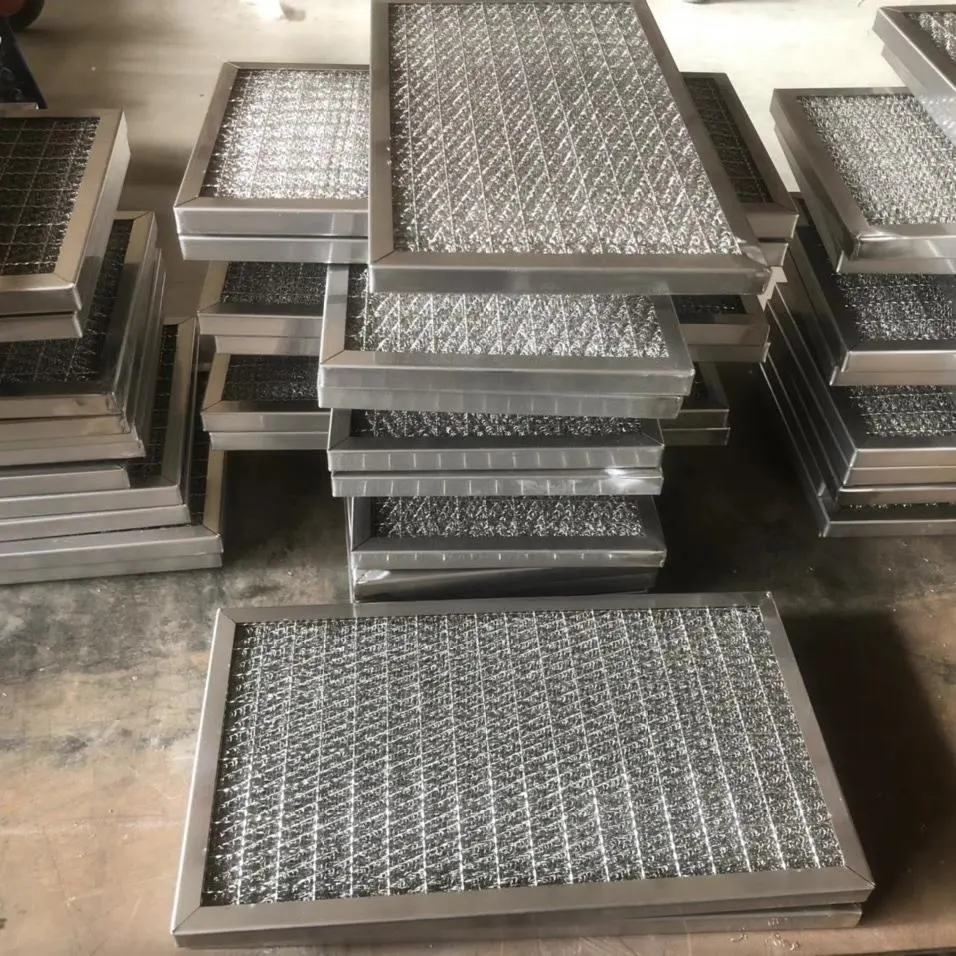
Quotation basisMaterial, finished dimensions, filter construction, connections and quantity.

Applications

Scrubber outlets

Coalesced liquid drains below the pad while gas passes through its knitted structure.

Process vessels

The support and hold-down grids locate the separation pad across the vessel.

Specifications

Knitted wire mesh demister pads
ParameterSpecificationNotes
Round-wire diameter0.19 / 0.23 mmRound-wire values in the matched 98 / 150 / 182 kg/m³ series; flat-wire sections are listed separately.
Dry mesh bulk density98 / 150 / 182 kg/m³Dry knitted-mesh mass divided by finished mesh volume; support grids and retaining hardware are separate.
Operating dutyGas flow, pressure, temperature, liquid loading and pressure drop—
Three mesh styles80 / 144 / 193 kg/m³; paired wire diameter 0.28 mm—
Pad depth and drawingDepth series 100–200 mm; shown assembly Ø600 ×150 mm—
Material304 / 316L stainless steel—

Selection guide

Include these details when discussing your requirements.

View specifications
Knitted medium
Wire diameter, alloy, mesh style, density and pad depth
Support assembly
Bottom grid, upper restraint, beam positions and grid depth

Frequently asked questions

What defines the installed assembly?

The installed assembly includes vessel diameter, pad thickness, grid depth, support beams and drainage clearance. The three listed mesh styles have densities of 80, 144 and 193 kg/m³ with 0.28 mm wire. These are distinct constructions. Inspection checks mass against finished volume, thickness, grid attachment and edge fit. Scrubber outlets and process vessels use the pad with a clear drainage path beneath the gas-liquid separation layer.

How do the media and support work together?

Knitted wire forms interconnected loops that are crimped and stacked into a pad. Gas passes through the open structure; droplets strike the wires, coalesce and drain from the lower face. The knitted medium, support grid and hold-down grid have separate functions. Density, wire diameter and pad depth define the selected mesh style; gas velocity, liquid loading and drainage define its operating duty.
Technical enquiry

Define the dimensions, media, joints and inspection records before confirming the order.

Technical details (optional)
Selection inputs

WhatsApp

Search