Where knitted mesh is useful
Knitted mesh intercepts entrained droplets, brings them together and provides a drainage path. It is used in scrubbers, evaporators, steam drums and gas–liquid separators. Select the wire material for the condensate as well as the carrier gas.
Choosing the pad construction
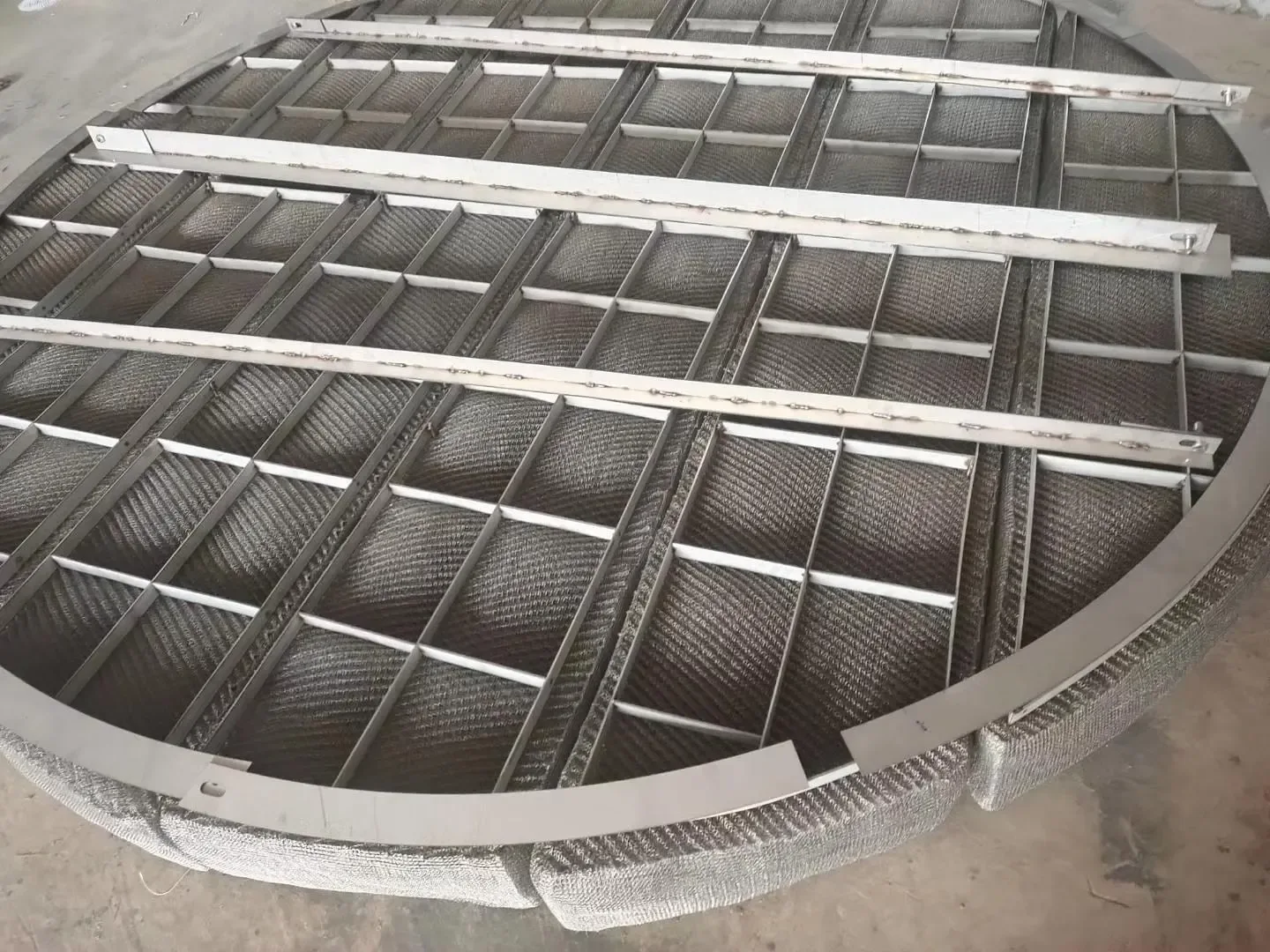
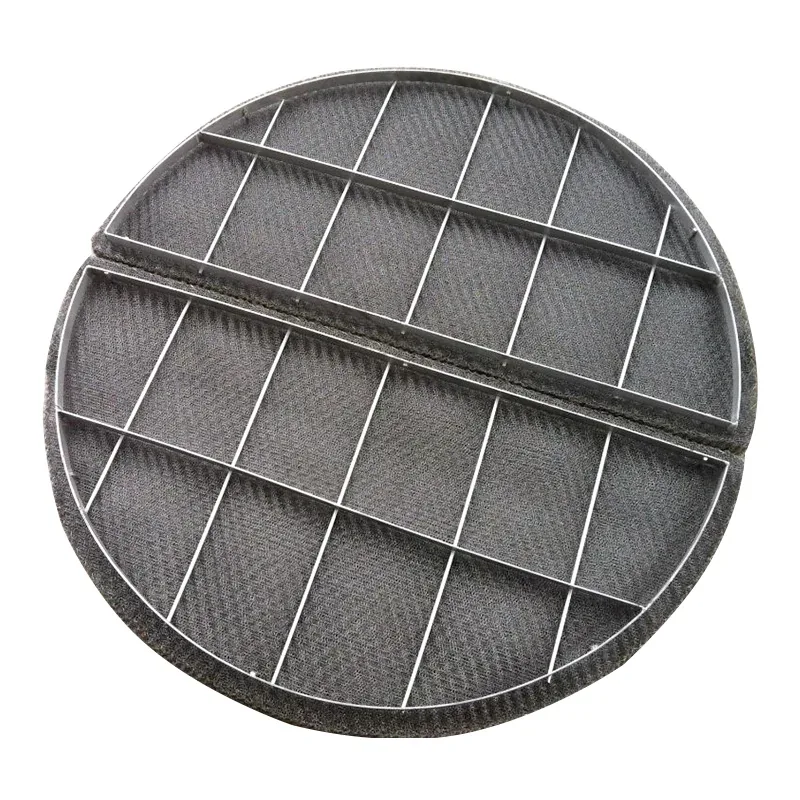
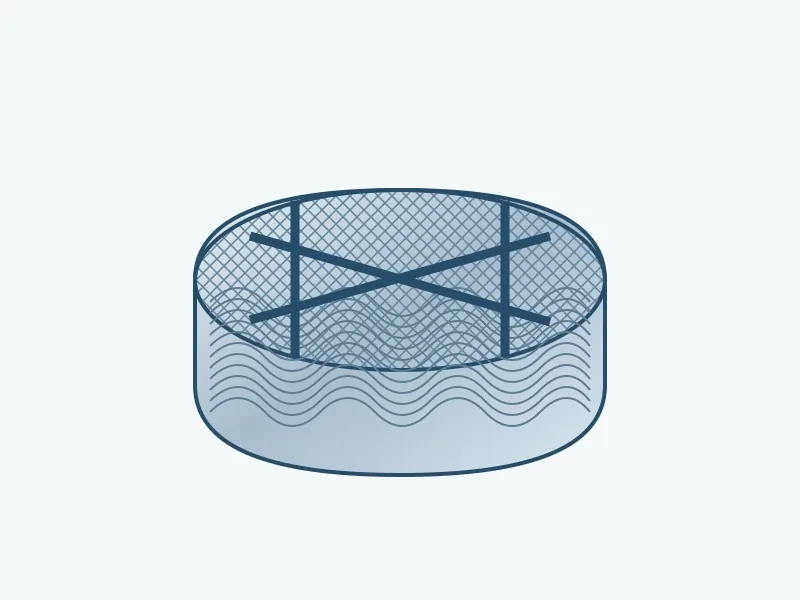
A one-piece pad suits an accessible vessel; segmented pads pass through a restricted manway and assemble on the support grid. For vertical upward gas flow, liquid drains against the gas; horizontal-flow installations drain across the gas direction. The support and retention arrangement preserves the pad shape and drainage path.
Diagnosing carryover and pressure rise
Rising pressure drop with declining capacity points to loading or restricted drainage. Carryover with a clean pad can indicate excessive velocity, uneven inlet flow, damaged mesh or gaps around the perimeter. Heavy solids or sticky deposits call for a more open separation stage or upstream solids removal.
From application to sizing
Use the sizing worksheet to state operating gas volume, gas and liquid properties, liquid loading, permitted pressure drop and vessel dimensions. Compare normal, minimum and maximum operating points before selecting pad depth, density and support.
Continue the specification
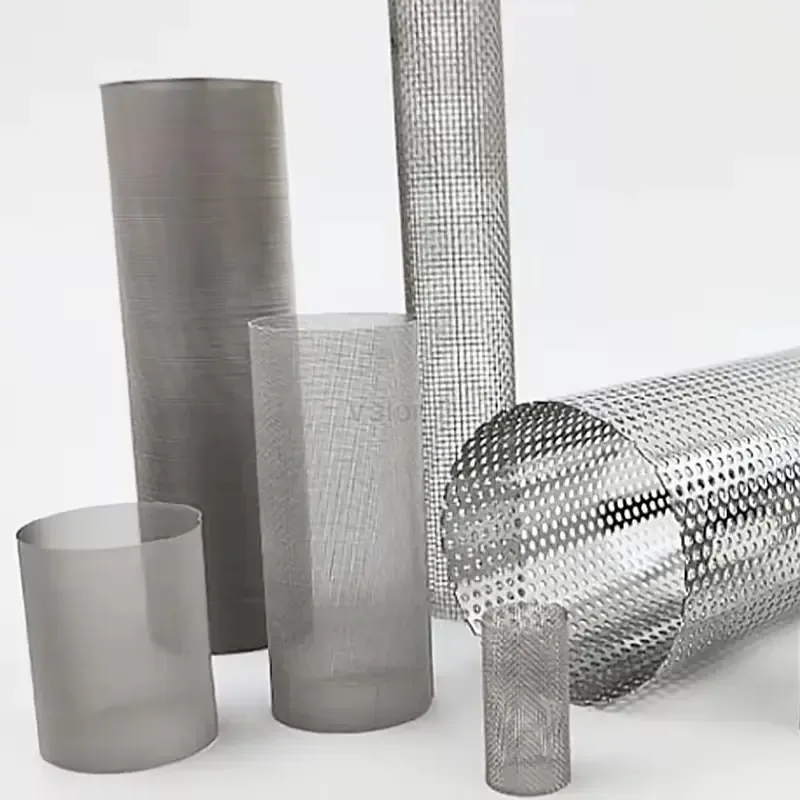
Related product forms
Relevant product categories
Follow the mesh from roll stock to the installed pad
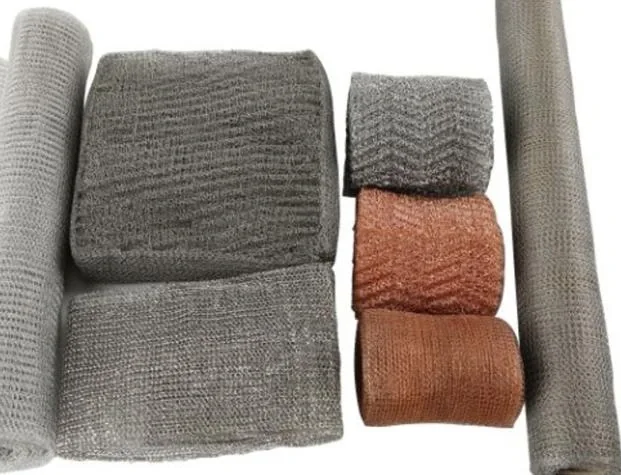
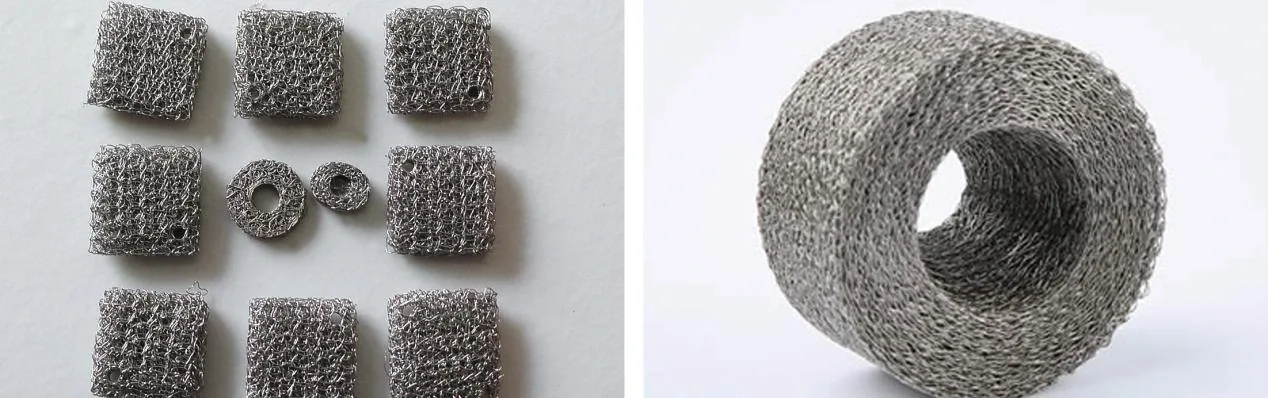
Knitted roll stock, a crimped ribbon, a layered pad and a compressed mesh part are different delivery states. The demister uses the layered structure to contact droplets and drain coalesced liquid. Keep wire material, crimp, layering and the finished mesh mass together when defining a replacement.
The retaining grid and pad segmentation belong to the vessel installation. Show the feed face, drainage direction, grid position and perimeter contact on one drawing. The mesh mass excludes the support hardware; the segment layout connects the available manway opening to the assembled pad geometry.