Shijiazhuang, Hebei, Chinasales@kaifil.com
KAIFIL
Filter media rolls and sheets

Knitted Wire Mesh Rolls

Interlocking metal-wire loops supplied as flat or crimped knitted mesh rolls for demister manufacture, coalescing inserts and compressed mesh components. Specify wire, strip width, crimp and delivery length together.

Metal wire mesh
Wire diameter
0.10–0.55 mm
Common demister wire
0.20–0.25 mm
Delivery widths
40 / 80 / 100 / 150 / 200 / 300 / 400 / 500 / 600 mm
Delivery form
Flat or crimped rolls

Share a drawing, reference sample or application requirements to discuss the configuration.

Specifications

Knitted Wire Mesh Rolls
ParameterSpecificationNotes
Wire diameter0.10–0.55 mmRound-wire series
Common demister wire0.20–0.25 mmWire selected with the pad construction
Delivery widths40 / 80 / 100 / 150 / 200 / 300 / 400 / 500 / 600 mmRelaxed ribbon width
Delivery formFlat or crimped rollsCrimped profile specified separately
Mesh structureInterlocking knitted loopsLoop construction and orientation recorded
Wire material304 / 316L; nickel / titanium / MonelWire alloy identified for the contacting media
Roll lengthCut-to-length rollOrder states required length per roll
Crimp geometryHeight and pitchMeasured in the specified relaxed state
Batch controlMass per unit lengthUsed with wire and width records
Edges and packingClean cut ends; protected roll edgesPrevents snagging and crushing during handling

Materials: 304 / 316L stainless steel; pure nickel, titanium and Monel wire options

Product details

A continuous loop structure

Knitted mesh is made from interlocking wire loops. The looped ribbon bends, folds and winds into a three-dimensional porous assembly. Woven wire cloth has intersecting warp and weft wires; knitted mesh instead provides a flexible loop network for droplet contact, coalescing and subsequent forming.
Wire diameter and delivery width

The round-wire series covers 0.10–0.55 mm wire, with 0.20–0.25 mm commonly used for demister conversion. Delivery widths include 40, 80, 100, 150, 200, 300, 400, 500 and 600 mm. Wire diameter, knitted construction and relaxed width identify the supplied ribbon; roll length is specified separately.

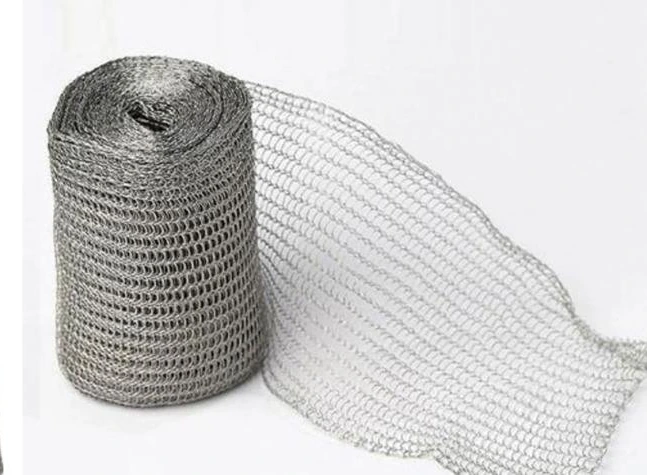
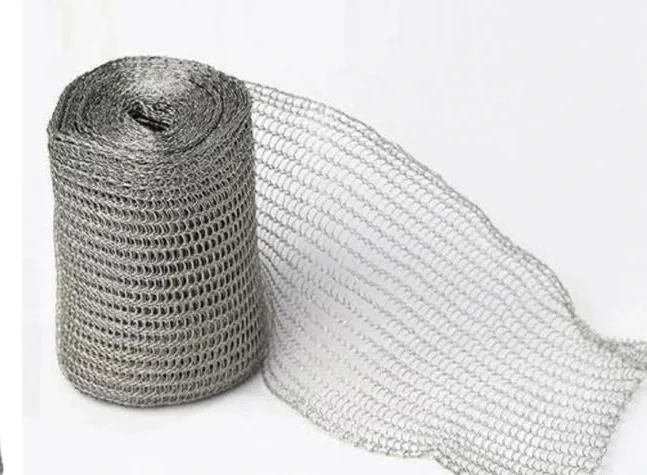
A knitted metal-wire mesh roll with its looped ribbon unwound
A single knitted-mesh roll is shown with its looped ribbon unwound. Wire diameter, ribbon width and delivery length identify the supplied roll.

Flat mesh, crimped mesh and finished parts

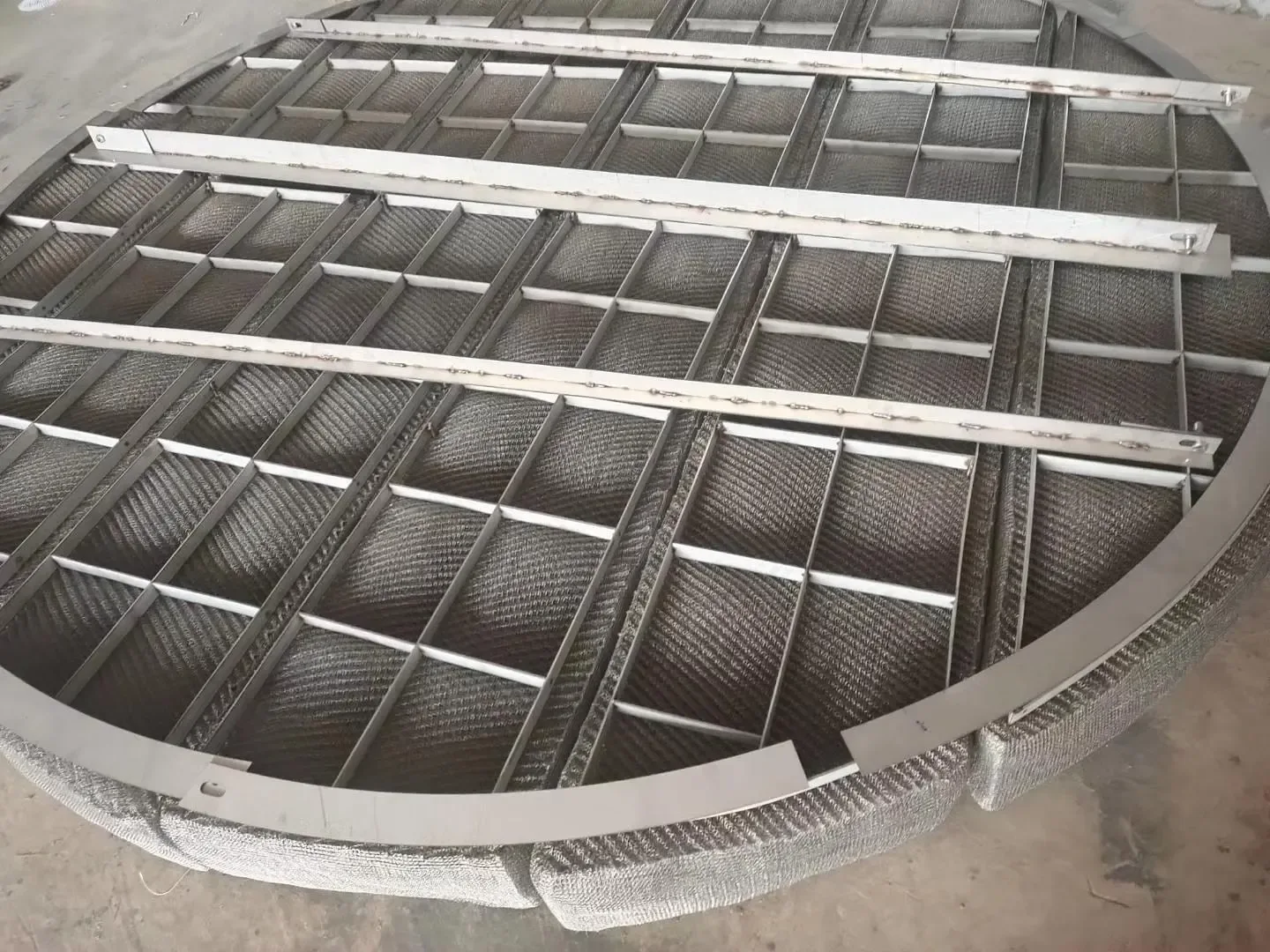
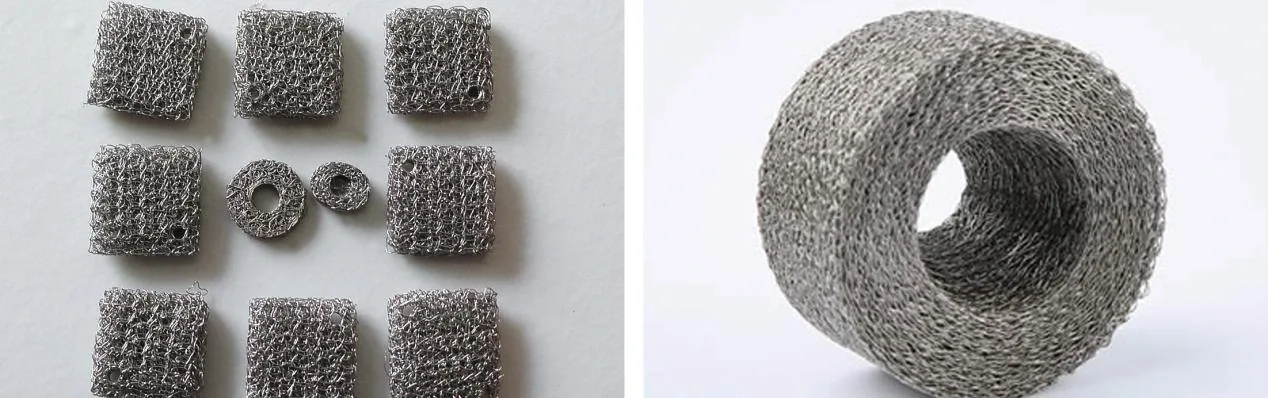
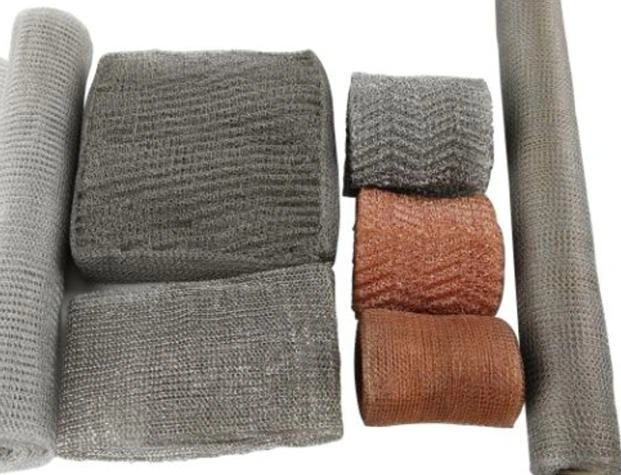
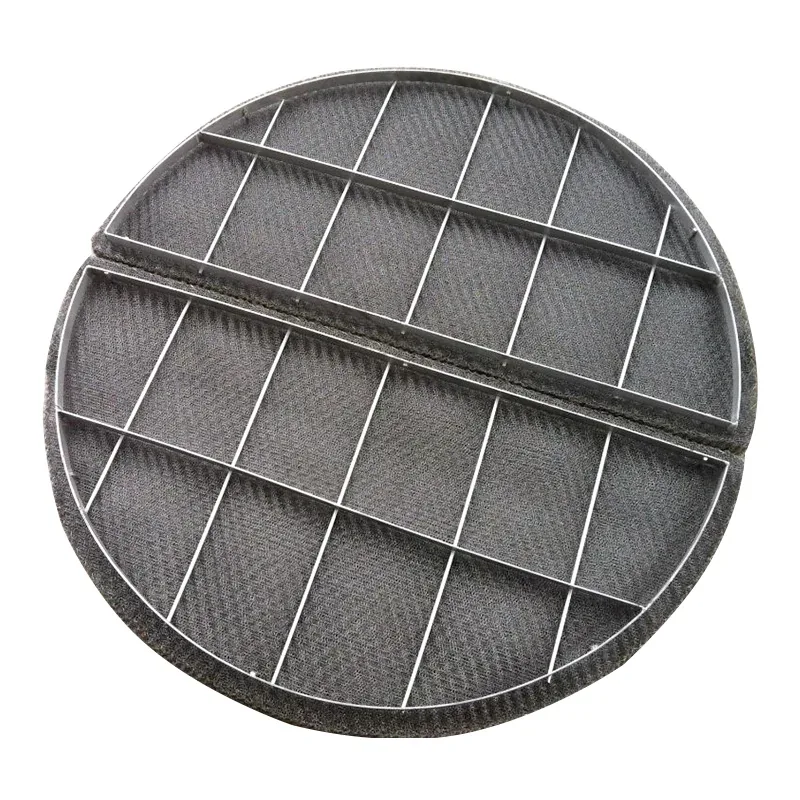
Flat knitted mesh is the starting ribbon. Crimping gives the ribbon a repeating out-of-plane profile before winding or cross-layering. A demister pad combines layers with the specified depth, density and grid support. Die compression produces rings or blocks with a defined finished envelope and preload. Each is a distinct delivery state.

Choose the wire for the contacting medium

304 and 316L stainless steel are supplied alongside pure nickel, titanium and Monel wire options. Define the gas, entrained liquid and cleaning chemicals together. The mesh wire and a finished pad's support grid receive separate material designations so every wetted component follows the assembly specification.

Inspection and roll handling

Check wire diameter, relaxed width, delivery length, loop continuity and clean cut ends. For crimped mesh, record crimp height and pitch in the specified measuring state. Mass per unit length helps reproduce a conversion batch. Pack rolls against crushing and keep edges separated to prevent snagging during unwinding.

From roll stock to a repeatable assembly

For replacement material, retain the original wire designation, width, crimp profile and mass-per-length record. For a new pad, define layering direction, finished depth, dry mesh mass and support geometry. For a compressed component, define the moulded shape, mass and installed compression. These inputs connect raw mesh to its finished function.

Delivery state and downstream conversion

Delivery state and downstream conversion

Delivery stateStructureNext operationControl point
Flat knitted ribbonFlexible loop networkCrimp, fold or windWire, width and mass per length
Crimped ribbonRepeating wave profileCross-layer or windCrimp height, pitch and direction
Layered demister bodyThree-dimensional mesh bedFit support and retaining gridsDepth, dry mesh mass and segment layout
Compressed ring or blockDensified loop structureFit the mating cavityFinished envelope, mass and preload
Knitted wire ribbon — wire and width selections

Knitted wire ribbon — wire and width selections

Ribbon parameterNumeric selection (mm)
Round-wire diameter0.10–0.55
Common demister-wire diameter0.20–0.25
Ribbon width options40 / 80 / 100 / 150 / 200 / 300 / 400 / 500 / 600

Wire diameter, demister-wire selection and ribbon width are separate ordering parameters. State the laid-flat measuring condition for the ribbon width and select the wire, knit and delivery form together. Roll length, crimp height and finished demister-pad dimensions are specified independently.

Ordering and production

Ordering and production

Supply itemOrder basis
Production lead time2–3 weeks after order and drawing confirmation.
Trial ordersSmall trial quantities for fit and process evaluation.
Regular material ordersQuantity follows the selected roll, sheet or cut-length format; US$3,000 regular order value.
Quotation basisAlloy, media construction, wire or stock thickness, delivery format and quantity.

Applications

Demister pad manufacture

Crimped ribbon is wound or layered to form the mesh body inside a retaining grid.

Coalescing inserts

Looped metal surfaces provide liquid contact and a drainage structure within a defined housing.

Compressed mesh parts

Layered knitted mesh is die-compressed into rings, cylinders or blocks for the specified assembly.

Selection guide

Include these details when discussing your requirements.

Select the delivery state
Choose flat roll stock for further forming or crimped ribbon for a defined winding and layering route.
Match wire and service
Select wire diameter and alloy for the liquid, gas, cleaning chemistry and required finished structure.
Define the conversion geometry
Set strip width, length, crimp height and pitch before specifying pad depth or moulded dimensions.
Set repeat-order controls
Keep wire, relaxed width, mass per length and crimp measurements on the same batch specification.

Frequently asked questions

Is knitted mesh the same as woven wire cloth?

Knitted mesh uses interlocking loops. Woven cloth uses warp and weft intersections. The two structures are specified and converted differently.

What distinguishes flat and crimped rolls?

Crimped ribbon has an out-of-plane wave profile that controls spacing during layering. Flat ribbon is supplied before this forming operation.

Which width is measured?

The delivery specification states the relaxed ribbon width and measuring condition. The finished pad diameter is a separate assembly dimension.

How is repeat material identified?

Record wire alloy and diameter, loop construction, relaxed width, mass per length and crimp profile, together with the batch identifier.

Does the roll specification define a complete demister?

The roll defines the raw mesh. A complete pad additionally has a layering arrangement, depth, mesh mass, support grid, retaining system and drainage orientation.

Technical enquiry

Define the dimensions, media, joints and inspection records before confirming the order.

Technical details (optional)
Selection inputs

WhatsApp

Search