
Shijiazhuang, Hebei, Chinasales@kaifil.com
KAIFIL
Filter panels and framed screens

Perforated screen panels

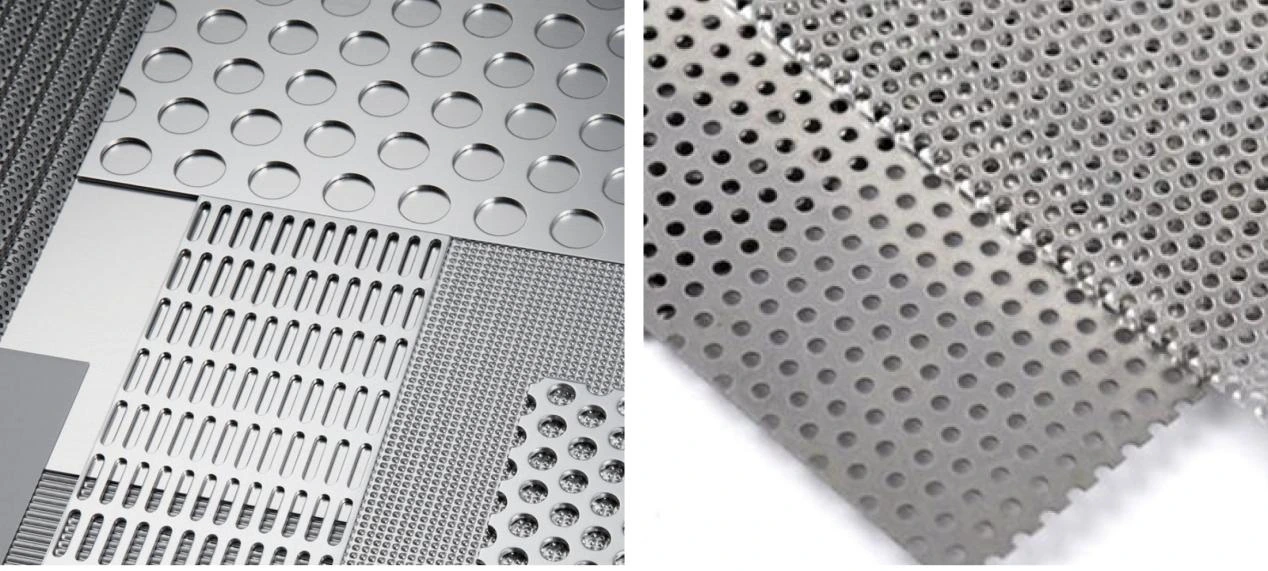
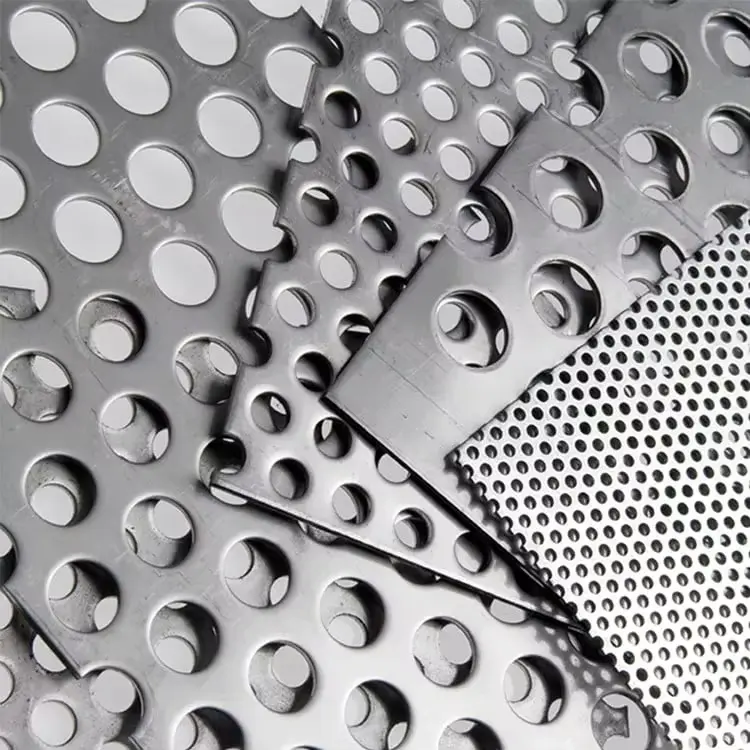
Perforated screen panels use a patterned metal plate where stiffness and repeatable geometric openings are required. Hole diameter, pitch, pattern and plate thickness are selected together.

Perforated metal screens
Construction
Punched metal plate
Round hole — Diameter
0.5–200 mm
Round-hole example
Ø3 / p5 / 60° mm
Calculated sheet open area
32.6 %

Share a drawing, reference sample or application requirements to discuss the configuration.

Product details

Hole geometry, pitch and solid borders

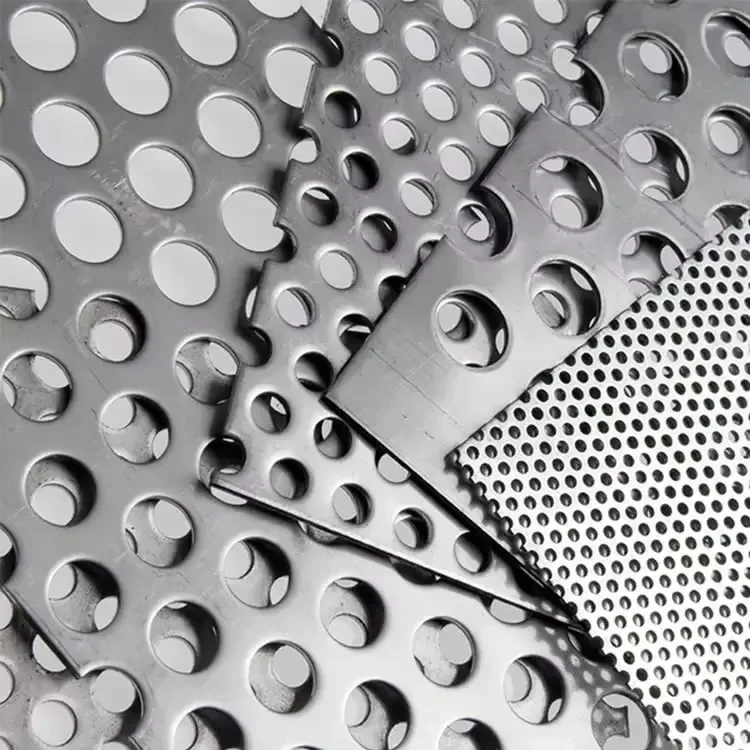
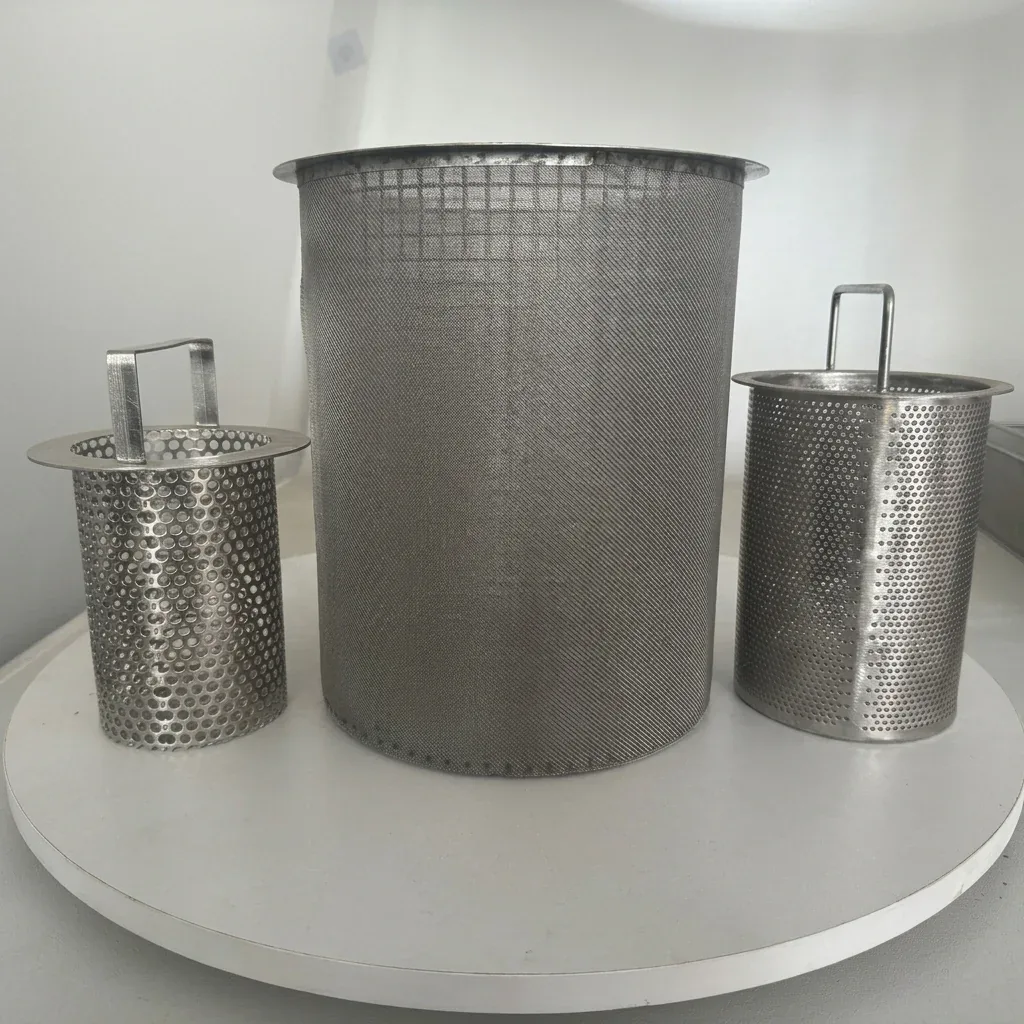
Round, square and elongated holes define different passage shapes. State the clear opening, centre-to-centre pitch and row arrangement together. The solid perimeter carries clamps, bolts or a welded frame. Keep the perforated field, mounting holes and support contact zones distinct on the drawing.
Pattern area and installed flow area

For round holes in a 60° stagger, geometric open area is 100×π/(2√3)×(d/p)². At d=3 mm and p=5 mm, this is 32.6% of the patterned field. A straight square grid with the same diameter and pitch has 28.3%. Frame overlap and support bars define the net exposed field after installation.

Perforated screen panels — Product view

Panel preparation and inspection

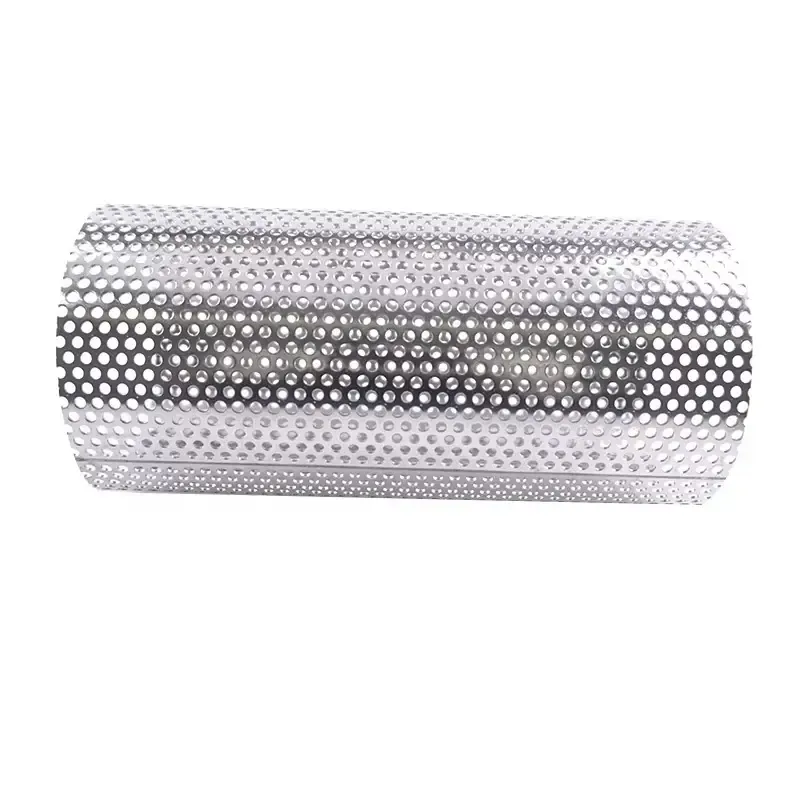
Perforation is followed by flattening and edge preparation. Define the flow face and contact face, then specify the finished edge condition on each. Panel thickness, unsupported span and the frame form the load-carrying assembly. Inspect opening size, pitch, pattern alignment, flatness, edge finish and fixing-hole position after forming.

Hole geometry, pitch and solid borders

Hole geometry, pitch and solid borders

Hole patternDrawing dimensionsGeometric area definition
Round, 60° staggerDiameter d; centre pitch p; row orientation100×π/(2√3)×(d/p)²
Round, square gridDiameter d; equal pitch p in both axes100×π/4×(d/p)²
Square opening, square gridClear side b; centre pitch p100×(b/p)²
Elongated openingWidth, overall length, end shape and pitches in both directions100×opening area / repeating-cell area

For round holes in a 60° stagger, geometric open area is 100×π/(2√3)×(d/p)². At d=3 mm and p=5 mm, this is 32.6% of the patterned field. A straight square grid with the same diameter and pitch has 28.3%. Frame overlap and support bars define the net exposed field after installation.

Perforated screen panels — Perforated sheet thickness

Perforated screen panels — Perforated sheet thickness

DimensionValue (mm)
Perforated sheet thickness0.3–18
Sheet blank format 11000 × 2000
Sheet blank format 21220 × 2440

Sheet and opening series are specified together with thickness, pitch and remaining ligaments. Blank formats precede trimming; the installed panel has its own outside outline, solid border and fixing pattern.

Perforated screen panels — Hole pattern

Perforated screen panels — Hole pattern

Hole patternMeasured featureValue (mm)
Round holeDiameter0.5–200
Square holeClear side length1–100
Slotted holeClear width1–20
Slotted holeOverall hole length5–200

Sheet and opening series are specified together with thickness, pitch and remaining ligaments. Blank formats precede trimming; the installed panel has its own outside outline, solid border and fixing pattern.

Ordering and production

Ordering and production

Supply itemOrder basis
Production lead time2–3 weeks after order and drawing confirmation.
Trial ordersSmall trial quantities for fit and process evaluation.
Regular production orders50 pieces or US$3,000 per order.
Quotation basisMaterial, finished dimensions, filter construction, connections and quantity.

Specifications

Perforated screen panels
ParameterSpecificationNotes
ConstructionPunched metal plate—
Round hole — Diameter0.5–200 mmSheet and opening series are specified together with thickness, pitch and remaining ligaments. Blank formats precede trimming; the installed panel has its own outside outline, solid border and fixing pattern.
Round-hole exampleØ3 / p5 / 60° mm—
Calculated sheet open area32.6 %100×π/(2√3)×(3/5)²
Material options304 / 316L stainless steel—
Installed dimensionsOverall size, active field, border and fixing patternOutside size, active field, plate thickness, solid-border width, mounting-hole pattern, frame or support span and the flow-face orientation define the replacement.
Perforated sheet thickness0.3–18 mmSheet and opening series are specified together with thickness, pitch and remaining ligaments. Blank formats precede trimming; the installed panel has its own outside outline, solid border and fixing pattern.

Selection guide

Include these details when discussing your requirements.

Hole geometry, pitch and solid borders
Round, square and elongated holes define different passage shapes. State the clear opening, centre-to-centre pitch and row arrangement together. The solid perimeter carries clamps, bolts or a welded frame. Keep the perforated field, mounting holes and support contact zones distinct on the drawing.
Pattern area and installed flow area
For round holes in a 60° stagger, geometric open area is 100×π/(2√3)×(d/p)². At d=3 mm and p=5 mm, this is 32.6% of the patterned field. A straight square grid with the same diameter and pitch has 28.3%. Frame overlap and support bars define the net exposed field after installation.
Panel preparation and inspection
Perforation is followed by flattening and edge preparation. Define the flow face and contact face, then specify the finished edge condition on each. Panel thickness, unsupported span and the frame form the load-carrying assembly. Inspect opening size, pitch, pattern alignment, flatness, edge finish and fixing-hole position after forming.

Applications

Strainer support panels

The perforated plate carries the fine woven layer and provides drainage. Define the cloth aperture separately from plate holes, and keep the support contact zones and peripheral seal on the assembly drawing.

Dewatering decks

Hole pattern and panel support are selected for drainage, wear and deck motion.

Process guards

A robust opening pattern protects equipment while allowing a defined flow passage.

Frequently asked questions

How is a support panel combined with finer mesh?

The perforated plate carries the fine woven layer and provides drainage. Define the cloth aperture separately from plate holes, and keep the support contact zones and peripheral seal on the assembly drawing.

What specifies a replaceable panel?

Outside size, active field, plate thickness, solid-border width, mounting-hole pattern, frame or support span and the flow-face orientation define the replacement.

Technical enquiry

Define the dimensions, media, joints and inspection records before confirming the order.

Technical details (optional)
Selection inputs

WhatsApp

Search