Shijiazhuang, Hebei, Chinasales@kaifil.com
KAIFIL
Strainer baskets

Perforated strainer baskets

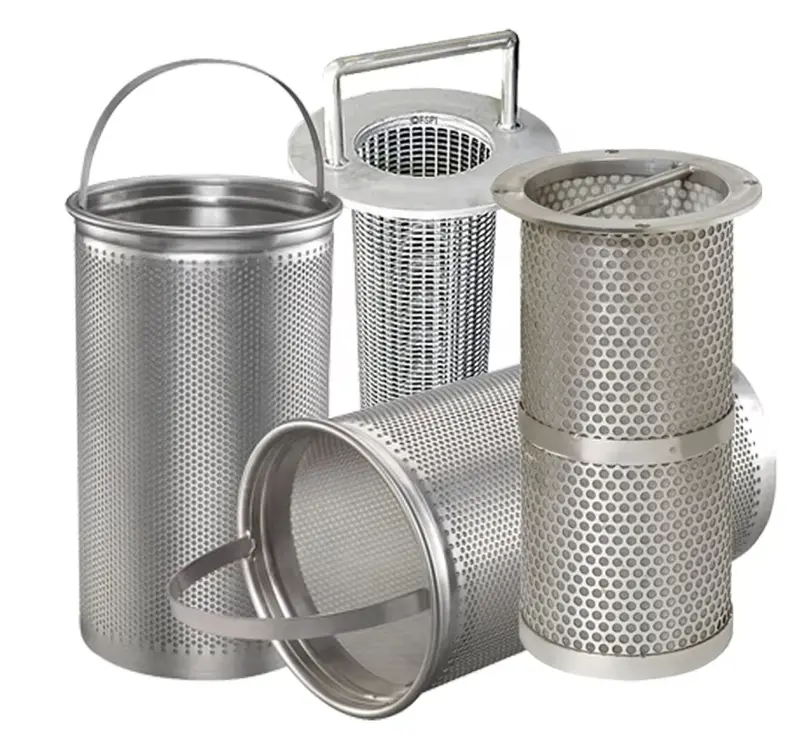
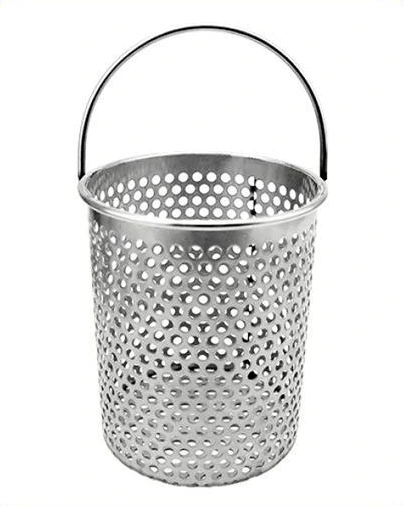
Removable stainless steel baskets combine a perforated shell, closed bottom, seating rim and lifting handle. They capture coarse solids directly or carry a separate fine-mesh liner or filter bag, with the housing interface and filtration layer specified independently.

Perforated metal screens
Shell and bottom
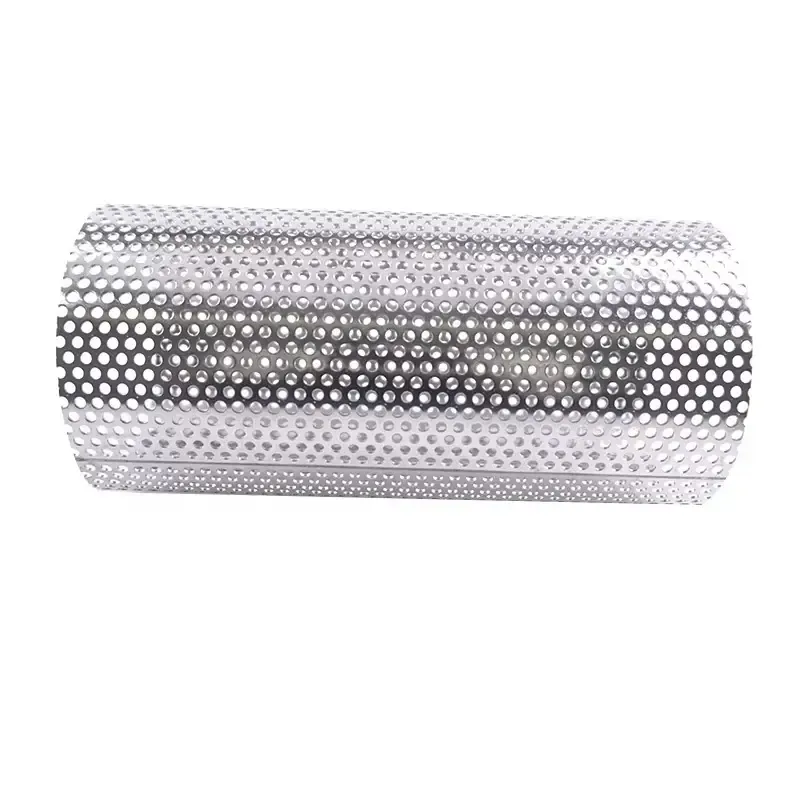
Rolled perforated shell with attached bottom
Material
304 / 316L stainless steel
Perforation options
1/16 · 3/16 · 1/4 in
Open-area calculation
32.6 %

Share a drawing, reference sample or application requirements to discuss the configuration.

Product details

Shell, bottom and seating rim

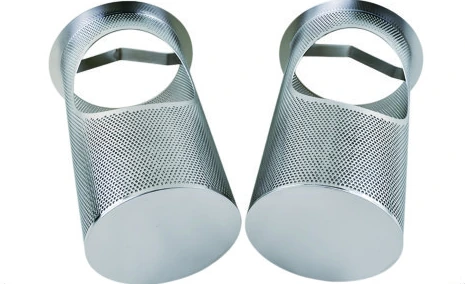
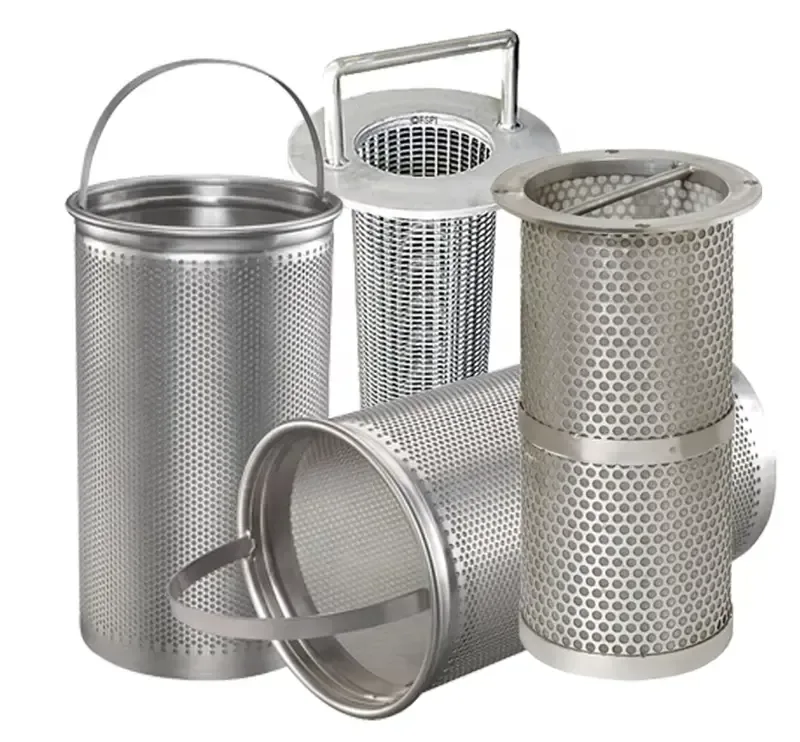
The rolled perforated shell forms the active cylindrical surface. A longitudinal joint closes the shell; a welded bottom closes the flow path, and a reinforced upper rim locates the basket in its housing. Flat and formed bottoms, straight and inclined basket openings, and lifting handles define different installed geometries. The basket drawing identifies each feature separately.
Perforation and effective flow area

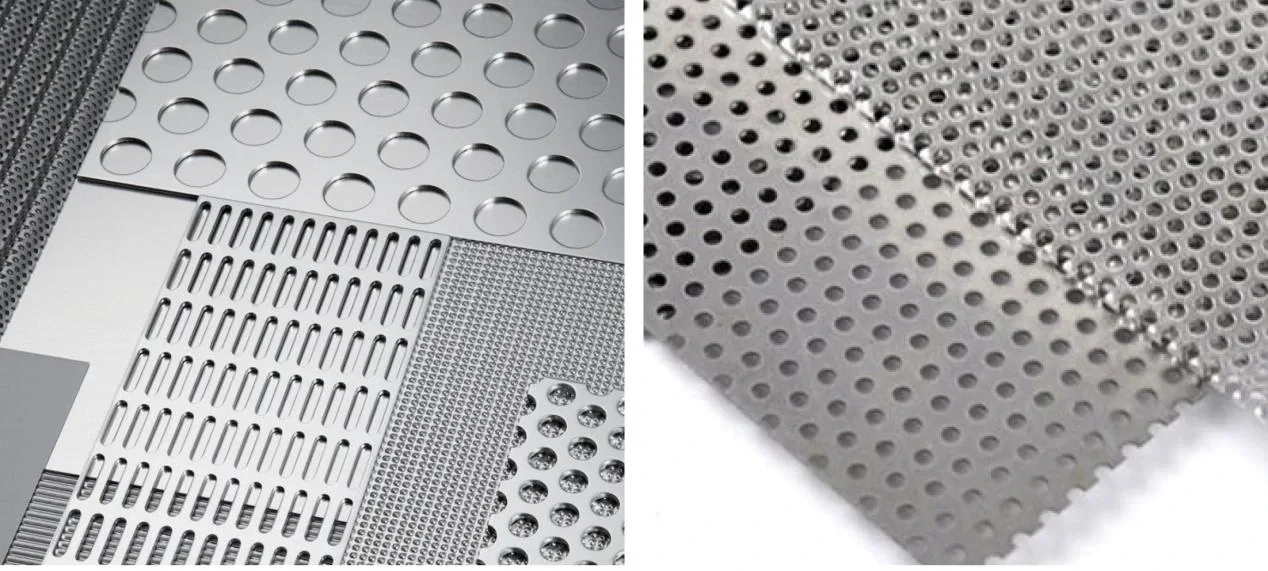
Hole diameter, centre-to-centre pitch, hole arrangement and sheet thickness define the perforated surface. A 60° staggered pattern with 3 mm holes on 5 mm pitch has 32.6% geometric open area. The assembled basket has additional solid zones at its longitudinal seam, upper rim, bottom joint and support rings; its effective flow area is calculated from the exposed perforated surface.

Perforated strainer baskets — Product view

Direct screening, mesh lining and bag support

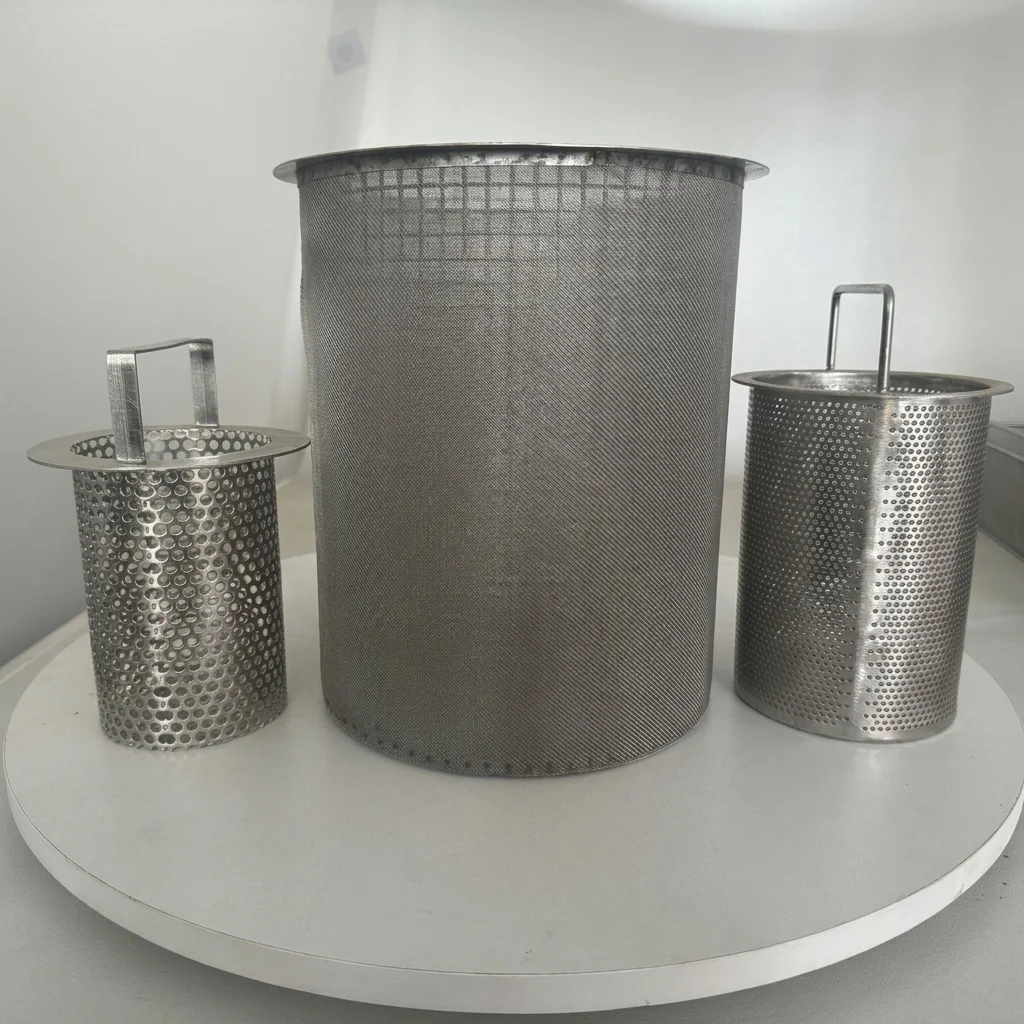
An unlined basket intercepts particles at its perforations. A mesh-lined basket uses the woven liner as the finer separation layer and the perforated shell as mechanical support. In a bag-filter housing, the basket supports the filter bag against differential pressure while the bag material determines filtration grade. These constructions have separate media specifications and cleaning procedures.

Installation, lifting and cleaning

The seating rim carries the basket at the housing shoulder. Its outside dimension, contact width, gasket location and installed height determine the sealing interface. The handle fits below the cover when assembled and provides a lifting point during service. Removal clearance includes basket depth and handle height. Cleaning follows the exposed hole pattern and bottom seam so retained solids leave the basket completely.

Material allocation and manufacturing

304 and 316L stainless steel are specified by component: perforated shell, bottom, rim, handle and any retaining ring. The fabrication sequence is perforation, blank cutting, rolling, seam joining, bottom and rim assembly, deburring and cleaning. Smooth hole edges and continuous attachment of the bottom protect a fitted bag or mesh liner during installation and removal.

Dimensions and acceptance

The dimensional schedule records basket outside diameter, body depth, bottom profile, rim geometry, handle height and support positions. Inspection checks the hole pattern and thickness, roundness, overall height, seam continuity, rim seating and handle attachment. Replacement baskets use the housing seat and withdrawal envelope as the dimensional datum.

Replacement basket and strainer housing

A replacement strainer basket is the removable screening or support component inside a basket strainer. In a simplex basket strainer, the housing contains one operating basket. Match the replacement to the seating rim, installed depth, handle clearance and seal location. The perforated basket sizes on this page identify basket geometry; the assembled housing has its own pressure and connection specification.

Bag-support basket sizes

Bag-support basket sizes

The five numbered 304 stainless steel basket sizes below retain their own body geometry, hole options and thickness options. Dimensions are in millimetres; the seating rim is dimensioned separately on the housing drawing.

Basket sizeBody diameter × length (mm)Hole diameter (mm)Sheet thickness (mm)
1180 × 3701 / 2 / 41 / 1.2 / 1.5
2180 × 7301 / 2 / 41 / 1.2 / 1.5
3110 × 22041.2
4110 × 33041.2
5110 × 50041.2
Component and interface schedule

Component and interface schedule

ComponentDefined geometry or function
Perforated shellDiameter, depth, hole diameter, pitch, pattern and sheet thickness
BottomFlat or formed profile; seam and drainage arrangement
Seating rimOutside dimension, contact width, installed height and gasket location
Lift handleAttachment points, folded or fixed height and withdrawal clearance
Liner or filter bagSeparate retention grade, attachment and cleaning method
Define the bottom and the seating geometry

Define the bottom and the seating geometry

A perforated basket screens through its open wall. A solid bottom redirects liquid toward the perforated side; a perforated bottom provides an additional screened outlet. Identify the bottom construction on the drawing and define the open wall height independently from the seating rim and bottom joint.

The rim, sealing face and handle perform different jobs. Match the rim to the housing seat, then define the gasket position and the handling clearance. Measure the finished body at several heights to check fit. Protect the rim and bottom against distortion during transport, and keep handles from loading adjacent baskets.

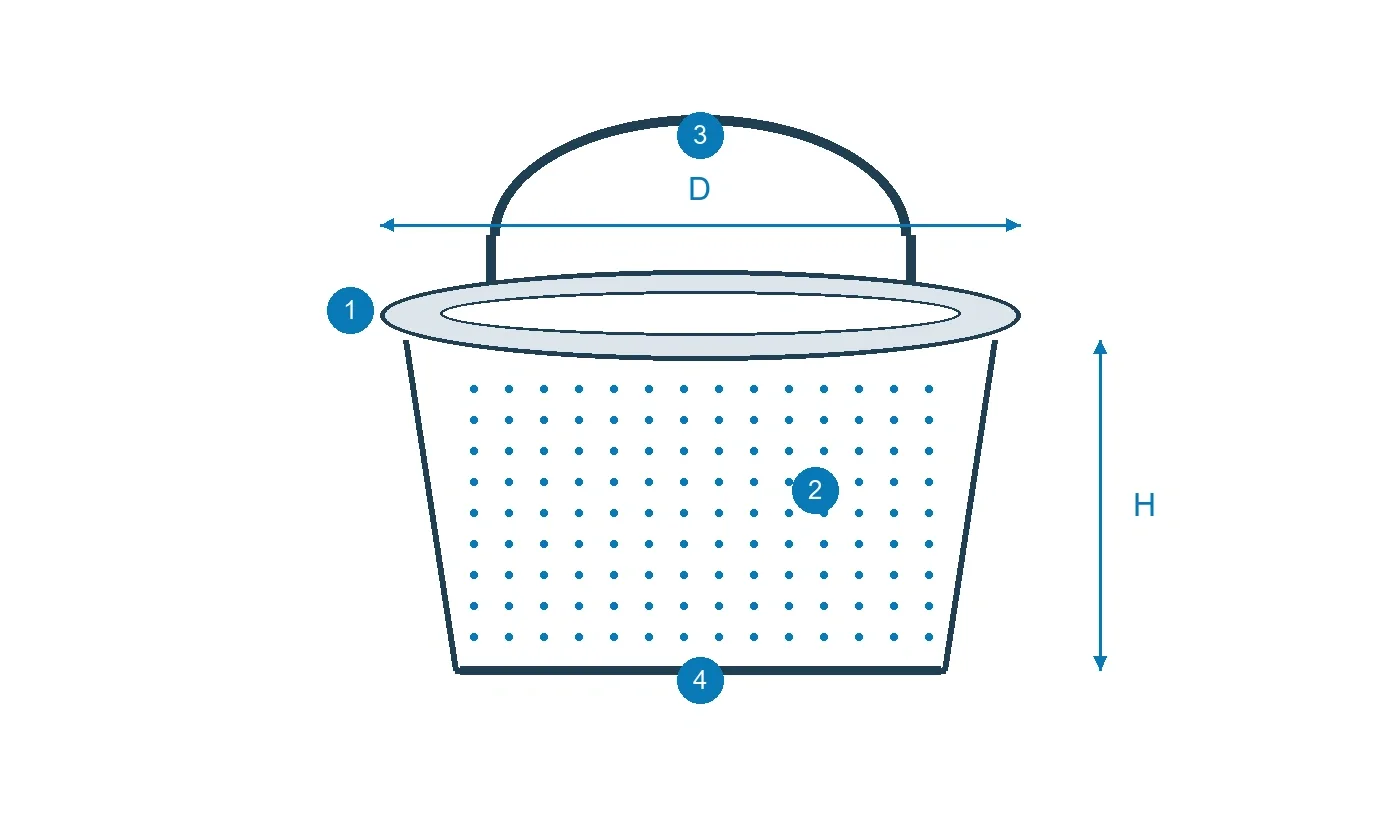
Strainer basket schematic showing seating rim, body, lifting handle and bottom
Perforated basket construction and fit

Perforated basket construction and fit

Feature or constructionRole in the assemblyDrawing or acceptance check
Perforated sidewallScreening or support surfaceHole size, pitch, wall thickness and active height
Solid bottomCloses the axial outletBottom joint and sidewall flow path
Perforated bottomAdds a screened outlet areaHole pattern and bottom support
Seating rimCarries and locates the basketOutside diameter, thickness and contact face
Lifting handleAllows removalAttachment and installed extraction clearance
Seating and handling geometry

Seating and handling geometry

1 seating rim; 2 screening body; 3 lifting handle; 4 bottom. D is the rim diameter and H the body projection below the rim. Check the handle and lifting path separately.

Ordering and production

Ordering and production

Supply itemOrder basis
Production lead time2–3 weeks after order and drawing confirmation.
Trial ordersSmall trial quantities for fit and process evaluation.
Regular production orders50 pieces or US$3,000 per order.
Quotation basisMaterial, finished dimensions, filter construction, connections and quantity.

Specifications

Perforated strainer baskets
ParameterSpecificationNotes
Shell and bottomRolled perforated shell with attached bottomThe rim locates the removable basket in its housing.
Material304 / 316L stainless steelThe five numbered bag-support sizes use 304 stainless steel.
Perforation options1/16 · 3/16 · 1/4 inIndividual hole sizes for separate basket specifications.
Open-area calculation32.6 %3 mm holes on 5 mm pitch; 60° stagger; perforated-sheet geometric area.
Installed geometryBody diameter, depth, rim and bottom profileRim geometry and handle clearance are dimensioned independently.
Sealing and liftingSeating rim, handle and housing clearanceThe gasket contact and cover clearance define the installed interface.

Selection guide

Include these details when discussing your requirements.

Define the installed envelope
Record body diameter, depth, bottom, rim seat and withdrawal height from the housing or original basket.
Choose the separation layer
Use perforations for coarse screening, a woven liner for finer retention, or a bag supported by the perforated shell.
Allocate the material and load
Specify shell, bottom, rim and handle grades with fluid, temperature, cleaning chemistry, flow and differential pressure.
Set inspection dimensions
List hole pattern, sheet thickness, roundness, seam quality, seating fit and handle attachment on the drawing.

Applications

Cooling-water strainers

The removable basket captures scale and debris; access through the housing cover provides a direct cleaning route.

Process-liquid protection

The shell and bottom form a closed screen envelope, with a fitted seating rim controlling the bypass path around the basket.

Bag-filter support

The basket supports a filter bag while its perforations distribute flow over the bag surface.

Frequently asked questions

Does the basket hole size define a filter bag’s rating?

The bag material defines the filtration rating. The perforated basket provides support and a flow path around that bag.

Which basket dimensions determine a replacement fit?

Body diameter and depth define the envelope; rim contact, bottom profile, handle height and cover clearance complete the installation dimensions.

How is free area calculated?

Hole diameter and pitch determine sheet open area. Effective basket area also accounts for seams, rims, support rings and the surface exposed to flow.

Technical enquiry

Define the dimensions, media, joints and inspection records before confirming the order.

Technical details (optional)
Selection inputs

WhatsApp

Search