Shijiazhuang, Hebei, Chinasales@kaifil.com
KAIFIL
Filter media rolls and sheets

Twill Weave Wire Mesh

Stainless steel square mesh with a 2/2 twill interlacing. Fine 500 and 635 mesh constructions pair wire diameter, clear aperture and open area for precision screens and cut filter parts.

Metal wire mesh
Weave
Twill square weave
Nominal mesh count
500×500 / 635×635 mesh/in
Nominal wire diameter
0.0254 / 0.0203 mm
Nominal clear aperture
0.0254 / 0.0203 mm

Share a drawing, reference sample or application requirements to discuss the configuration.

Specifications

Twill Weave Wire Mesh
ParameterSpecificationNotes
WeaveTwill square weave—
Nominal mesh count500×500 / 635×635 mesh/in—
Nominal wire diameter0.0254 / 0.0203 mm500 / 635 mesh
Nominal clear aperture0.0254 / 0.0203 mm500 / 635 mesh
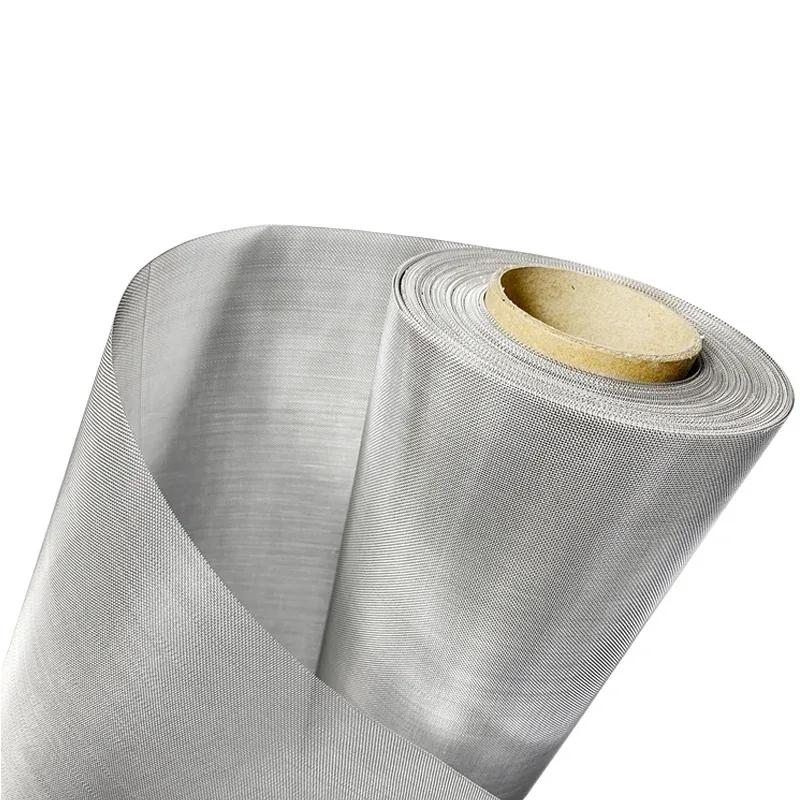
Supply formRoll / sheet / strip / cut blank—

Materials: 304 / 304L / 316 / 316L stainless steel

Product details

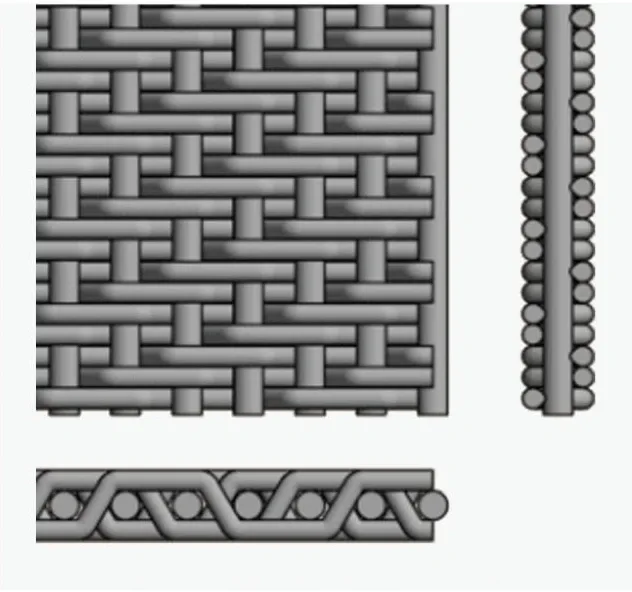
Square openings with diagonal interlacing

Each wire passes over two crossing wires and under the next two. Successive crossings are offset to form the diagonal pattern. Specify twill square weave together with the count and wire diameter in both directions; Dutch weave uses a different, closely packed pore structure.
Fine-mesh geometric specifications

The 500 × 500 construction combines 0.0254 mm wire, 0.0254 mm aperture and 25% open area. The 635 × 635 construction combines 0.0203 mm wire, 0.0203 mm aperture and 25% open area. The table retains the displayed dimensional rounding. Nominal paired constructions retain the listed rounding; values identify the woven series and are not exact values from an aperture equation.

Materials and service conditions

Choose 304 or 304L for the defined process environment, and 316 or 316L when the material specification calls for the molybdenum-bearing branch. State the fluid, concentration, temperature and cleaning chemistry so the wire, backing and joined parts can be selected together.

Rolls, sheets and finished blanks

We supply cloth as rolls, sheets, slit strips and drawing-cut blanks. Identify warp direction, active screen area and clamping margin. Fine wire needs an appropriate backing and careful edge handling when converted into discs, cylinders or framed screens.

Inspection before assembly

Check weave identification, mesh count, wire diameter, representative clear openings and freedom from broken wires. Measure width, length and cut outline separately. Flatness and edge finish matter where the screen meets a support or sealing face.

Define the supported component

The cloth provides the separation surface. The drawing defines unsupported span, backing openings, seam position and attachment. Use the required geometric aperture to select cloth; specify a retention test separately when the process requires a measured particle-removal result.

Fine twill square-mesh constructions

Fine twill square-mesh constructions

Nominal paired constructions retain the listed rounding; values identify the woven series and are not exact values from an aperture equation.

Nominal mesh count (mesh/in)Nominal wire diameter (mm)Nominal clear aperture (mm)Nominal open area (%)
500×5000.02540.025425.0
635×6350.02030.020325.0

Nominal paired constructions retain the listed rounding; values identify the woven series and are not exact values from an aperture equation.

Ordering and production

Ordering and production

Supply itemOrder basis
Production lead time2–3 weeks after order and drawing confirmation.
Trial ordersSmall trial quantities for fit and process evaluation.
Regular material ordersQuantity follows the selected roll, sheet or cut-length format; US$3,000 regular order value.
Quotation basisAlloy, media construction, wire or stock thickness, delivery format and quantity.

Applications

Fine screening

Fine square openings provide a defined geometric separation face in supported screens.

Filter discs and cylinders

Cut cloth becomes a supported disc or cylindrical liner with a drawing-defined retained edge and seam.

Selection guide

Include these details when discussing your requirements.

Choose one paired construction
Keep count, wire diameter, aperture and open area from the same row.
Choose support and edge
Match the backing and retained margin to the active screen area and assembly.
Choose the material condition
Identify the alloy and cleaning environment for both cloth and joined parts.

Frequently asked questions

How does twill differ from plain weave?

Twill crosses over two and under two wires with an offset pattern. Plain weave alternates over and under each wire; the weave must accompany the mesh designation.

Is aperture the same as retention?

Aperture is the geometric clear opening. A measured retention result also depends on the test method, particles and operating conditions.

Can the cloth be supplied as cut parts?

Yes. Specify the finished outline, tolerances, wire direction, retained margin and supporting structure.

Technical enquiry

Define the dimensions, media, joints and inspection records before confirming the order.

Technical details (optional)
Selection inputs

WhatsApp

Search