Shijiazhuang, Hebei, Chinasales@kaifil.com
KAIFIL
Filter media rolls and sheets

Plain weave wire mesh

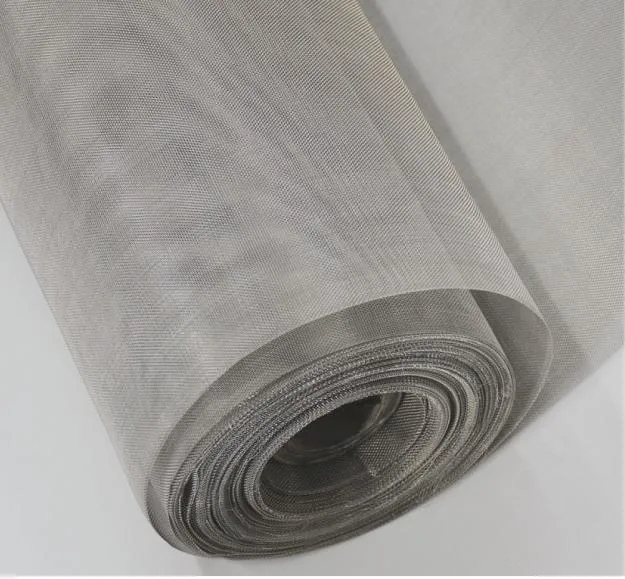
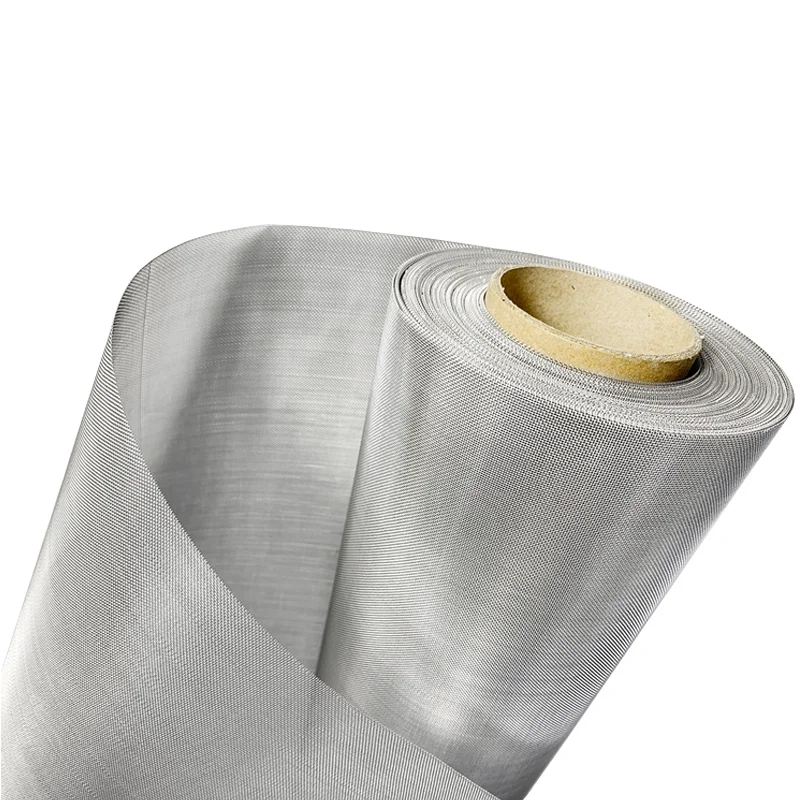
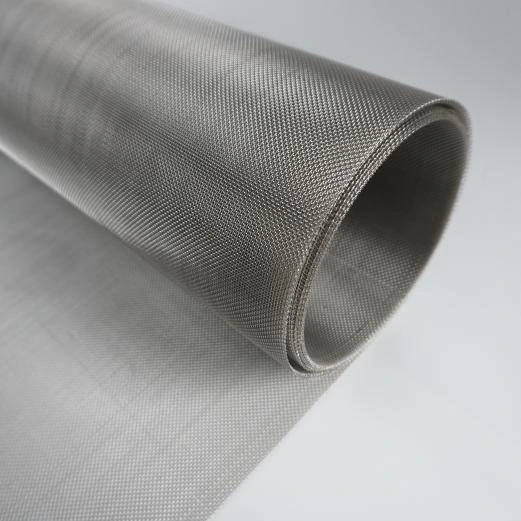
Square-aperture wire cloth in rolls, sheets and slit strips for particle screening, liquid filtration and fabricated filter parts. Compare paired mesh counts, wire diameters, apertures and open areas in the specification table.

Metal wire mesh
Supply form
Roll, sheet, slit strip or cut blank
Material
304 / 316L stainless steel
Edges and orientation
Woven selvedge or cut edge; warp direction identified
Acceptance checks
Wire diameter, count in both directions, representative aperture, width, length and edge condition

Share a drawing, reference sample or application requirements to discuss the configuration.

Specifications

Plain weave wire mesh
ParameterSpecification
Supply formRoll, sheet, slit strip or cut blank
Material304 / 316L stainless steel
Edges and orientationWoven selvedge or cut edge; warp direction identified
Acceptance checksWire diameter, count in both directions, representative aperture, width, length and edge condition

Materials: 304 / 316L stainless steel; Duplex stainless steel S31803 / S32750 / S32760; Monel 400 / K-500; Inconel 600 / 601 / 625 / 718 / X-750; Hastelloy B-2 / B-3 / C-22 / C-276; Pure nickel N2 / N4 / N6 / N8

Product details

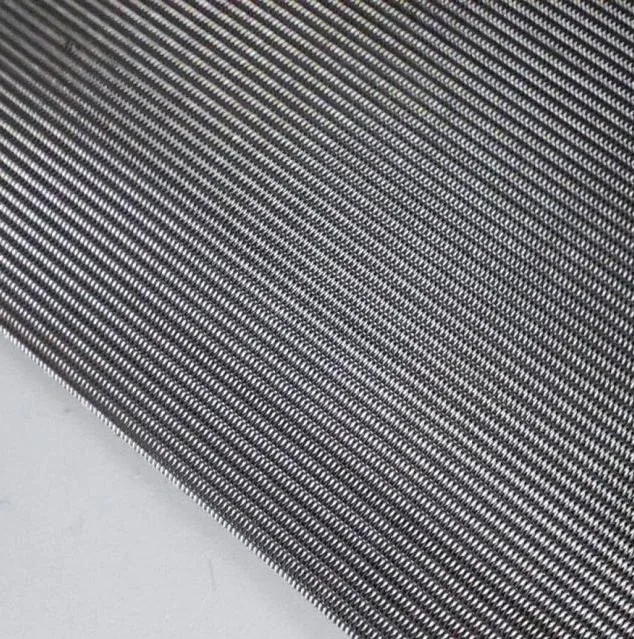
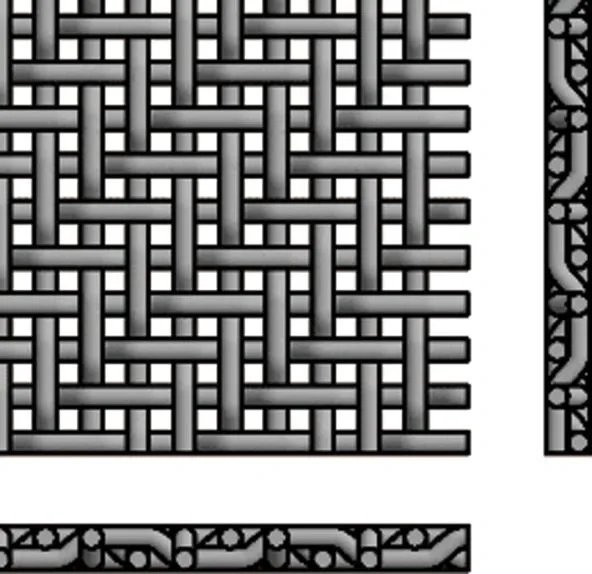
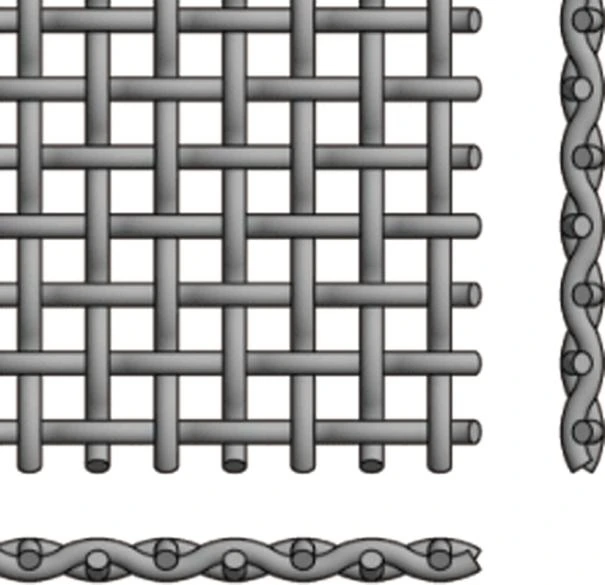
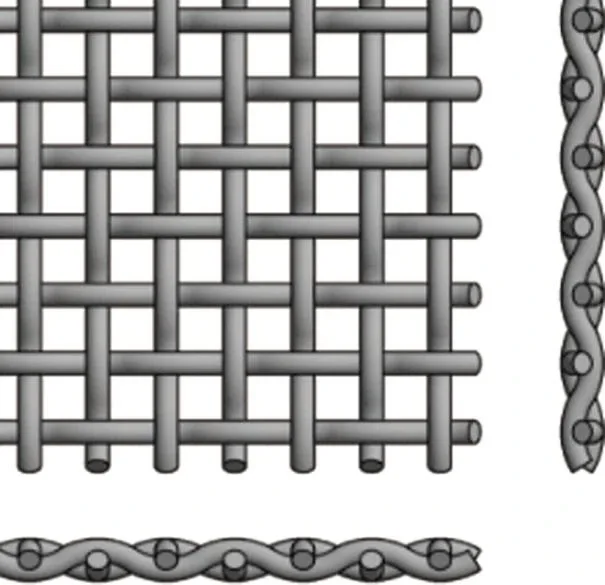
One-over, one-under square weave

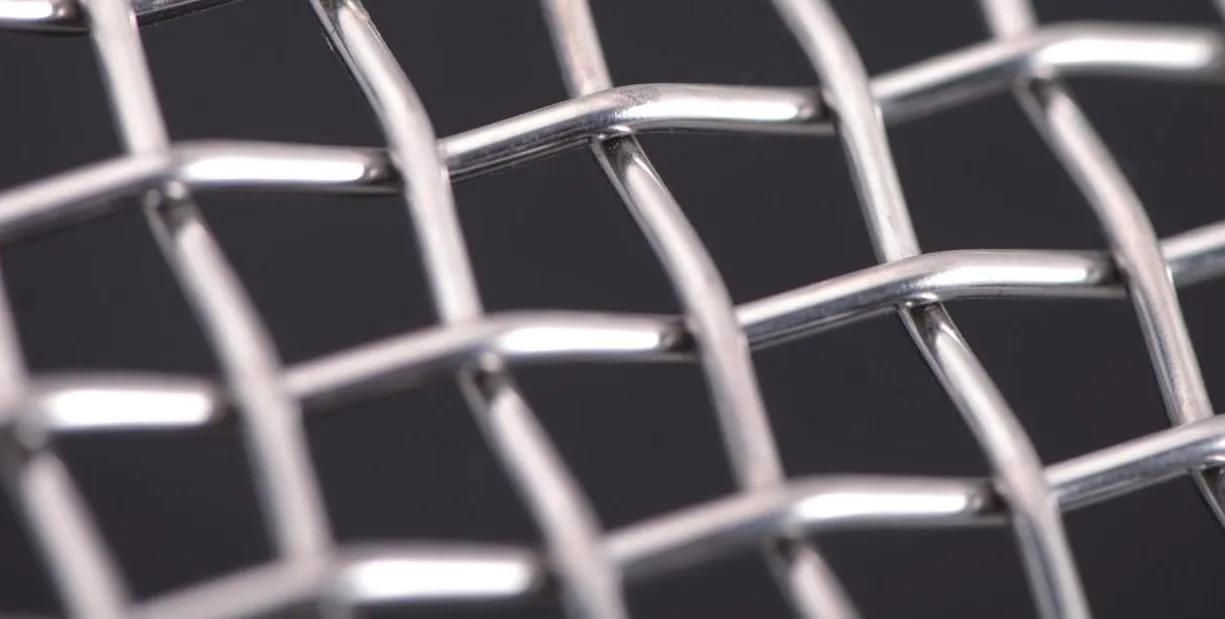
Each warp wire alternates over and under successive weft wires. Equal spacing in both directions creates a square opening. Plain weave describes the interlacing pattern; aperture describes the clear space between adjacent wires. These two properties define the filtering surface together.
Mesh count, aperture and open area

For square mesh, pitch p = 25.4/N mm, aperture a = p − d, and geometric open area = 100 × (a/p)². N is the number of pitches per inch and d is wire diameter in millimetres. At 20 mesh and d = 0.25 mm, p = 1.27 mm and a = 1.02 mm. At the same count, thicker wire gives a smaller opening and less open area. Geometric aperture is the dimension used for this woven cloth; particle-retention performance also depends on the installed filter and the process.

Plain square weave: warp and weft interlace alternately
The one-over, one-under structure forms square openings.

From woven cloth to a finished component

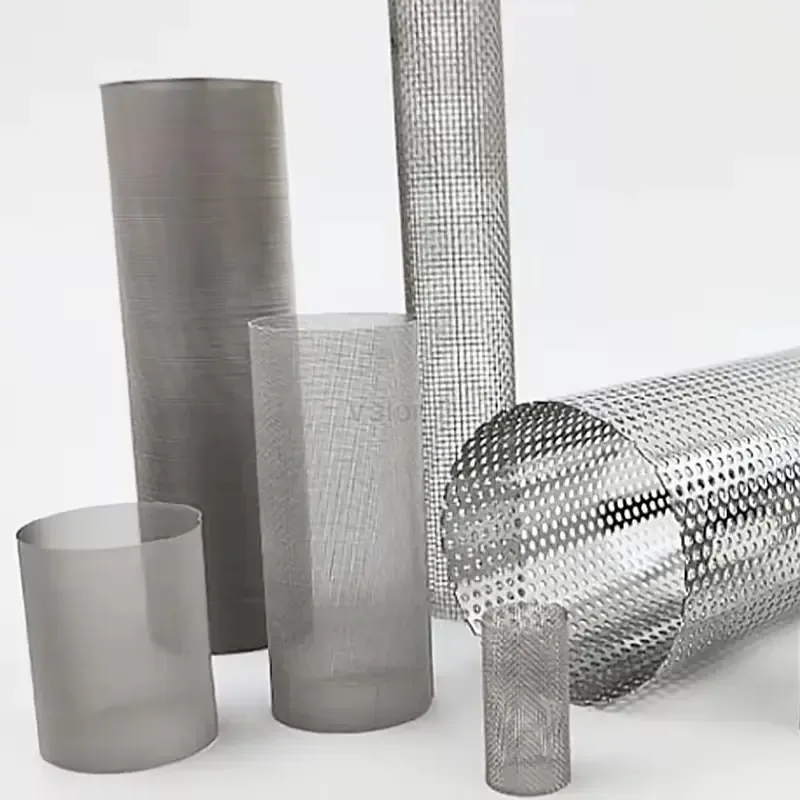
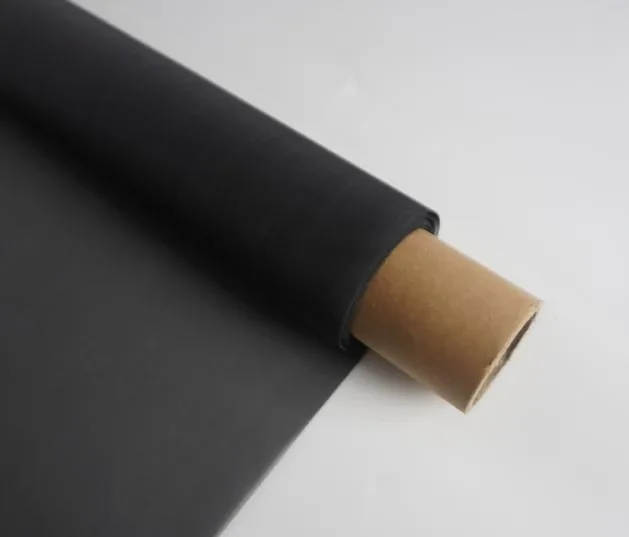
Rolls provide continuous feed for slitting and cutting. Sheets provide flat blanks for framed screens. Slit strips feed narrow components; cut blanks become filter discs, cylinders and support layers. Woven selvedges retain the edge interlacing, while cut edges define the finished outline. Specify warp direction, the active filtering area and the clamped or welded margin before forming the component.

Material and assembly definition

304 and 316L stainless steel are established choices for the woven medium. The material designation applies to the wire cloth. Frames, rims, support plates, welds and seals are separate component selections. A supported screen combines the chosen cloth opening with the strength and clearances of its backing and installation.

Material families and woven constructions

The wire alloy and the weave are specified together. The stainless square-mesh table describes paired geometric constructions; duplex and nickel-alloy cloth use their own grade, mesh count and wire-diameter designation. Plain weave, twill weave and Dutch weave remain separate constructions within an alloy family. Roll, sheet and cut-part drawings identify the chosen construction and material of the filtering cloth.

Paired square-mesh specifications

Paired square-mesh specifications

Each row is a complete mesh-count, wire-diameter, aperture and open-area combination. Inch and millimetre values retain their displayed rounding.

Mesh countWire diameter (in) / Wire diameter (mm)Aperture (in) / Aperture (mm)Open area (%)
1×1.080 / 2.03.920 / 23.3784.6
2×2.063 / 1.60.437 / 11.1076.4
3×3.054 / 1.37.279 / 7.0970.1
4×4.063 / 1.60.187 / 4.7556.0
4×4.047 / 1.19.203 / 5.1665.9
5×5.041 / 1.04.159 / 4.0463.2
6×6.035 / .89.132 / 3.3562.7
8×8.028 / .71.097 / 2.4660.2
10×10.025 / .64.075 / 1.9156.3
10×10.020 / .51.080 / 2.0364.0
12×12.023 / .584.060 / 1.5251.8
12×12.020 / .508.063 / 1.6057.2
14×14.023 / .584.048 / 1.2245.2
14×14.020 / .508.051 / 1.3051.0
16×16.018 / .457.0445 / 1.1350.7
18×18.017 / .432.0386 / .9848.3
20×20.020 / .508.0300 / .7636.0
20×20.016 / .406.0340 / .8646.2
24×24.014 / .356.0277 / .7044.2
30×30.013 / .330.0203 / .5237.1
30×30.012 / .305.0213 / .5440.8
30×30.009 / .229.0243 / .6253.1
35×35.011 / .279.0176 / .4537.9
40×40.010 / .254.0150 / .3836.0
50×50.009 / .229.0110 / .2830.3
50×50.008 / .203.0120 / .3136.0
60×60.0075 / .191.0092 / .2330.5

Each row is a complete mesh-count, wire-diameter, aperture and open-area combination. Inch and millimetre values retain their displayed rounding.

Material families and woven constructions

Material families and woven constructions

The wire alloy and the weave are specified together. The stainless square-mesh table describes paired geometric constructions; duplex and nickel-alloy cloth use their own grade, mesh count and wire-diameter designation. Plain weave, twill weave and Dutch weave remain separate constructions within an alloy family. Roll, sheet and cut-part drawings identify the chosen construction and material of the filtering cloth.

Material family / GradesWoven constructionFamily seriesSelection and conversion
Duplex stainless steel / S31803 / S32750 / S32760Plain weave2–200 meshDuplex wire cloth for chemical-process and seawater equipment; specify S31803, S32750 or S32760 individually.
Monel / 400 / K-500Plain weave; twill and Dutch weave as separate constructions2–200 meshNickel–copper alloy cloth for chemical, petrochemical and marine parts; Monel 400 and K-500 remain distinct grades.
Inconel / 600 / 601 / 625 / 718 / X-750Plain weave; twill and Dutch weave as separate constructions2–200 meshNickel-alloy cloth for process and thermal-service components; identify the exact alloy in the wire and welded component specifications.
Hastelloy / B-2 / B-3 / C-22 / C-276Woven alloy mesh2–200 meshB-2/B-3 and C-22/C-276 are separate material branches for chemical-process filter parts; specify weave and wire pair for the finished cloth.
Pure nickel / N2 / N4 / N6 / N8Plain weave; twill and Dutch weave as separate constructions1–300 mesh; Ø0.03–1.0 mmWoven nickel for filtration and conductive components; identify N2, N4, N6 or N8 separately from electroformed nickel screens.

Mesh-count ranges belong to the material family. The complete designation combines alloy, weave, count and wire diameters. The stainless geometry table and alloy series form separate specification sets.

Ordering and production

Ordering and production

Supply itemOrder basis
Production lead time2–3 weeks after order and drawing confirmation.
Trial ordersSmall trial quantities for fit and process evaluation.
Regular material ordersQuantity follows the selected roll, sheet or cut-length format; US$3,000 regular order value.
Quotation basisAlloy, media construction, wire or stock thickness, delivery format and quantity.

Selection guide

Include these details when discussing your requirements.

Choose the opening
Use the required clear aperture together with wire diameter and mesh count; select one complete row of dimensions.
Define the conversion
State the roll, sheet, strip or blank dimensions and the cutting, forming, welding or clamping operation.
Define the assembled screen
List cloth, frame, backing and seal materials separately; show the supported span and active area on the drawing.

Applications

Particle grading

Square openings separate particles by geometric size in process screening.

Liquid filtration

The selected cloth opening forms the filtering surface for circulating water and other compatible process liquids.

Filter-part fabrication

Cut and formed mesh supplies discs, cylinders and backing layers with a defined aperture.

Production details and documented projects

Mesh weaving
Mesh weaving

Mesh weaving

Each warp wire alternates over and under each weft wire, creating an approximately square aperture. The same mesh count can be woven with different wire diameters and therefore different clear openings.

Frequently asked questions

Does the same mesh count always give the same opening?

Wire diameter determines the remaining clear space. For example, the 10 × 10 rows combine 0.64 mm wire with 1.91 mm aperture, or 0.51 mm wire with 2.03 mm aperture.

How is this different from Dutch weave?

Plain square weave has visible square openings. Plain Dutch weave uses different warp and weft wire sizes and closely packed wires to form a tortuous filtration path.

Which dimensions define a cut or framed screen?

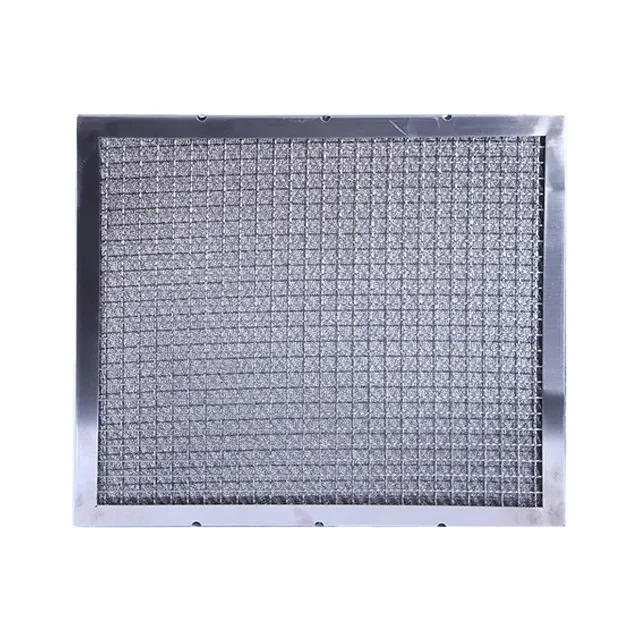
Specify the active mesh area, outer dimensions, wire direction, edge treatment and the clamping or weld margin. The frame and support are dimensioned separately.

Technical enquiry

Define the dimensions, media, joints and inspection records before confirming the order.

Technical details (optional)
Selection inputs

WhatsApp

Search