
Shijiazhuang, Hebei, Chinasales@kaifil.com
KAIFIL
Filter discs and cut screens

Annular wire mesh filter discs

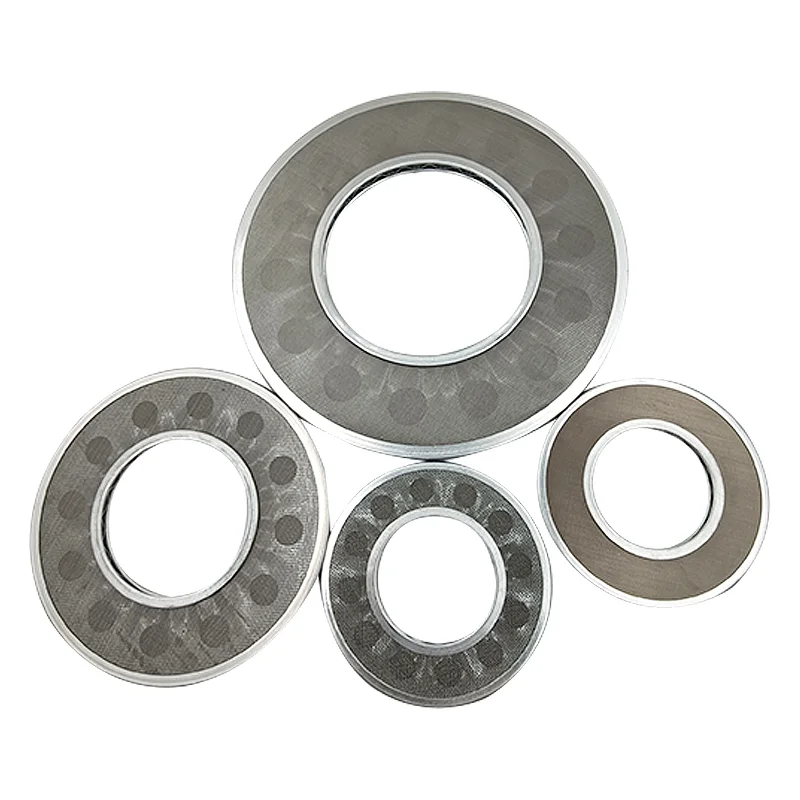
An annular disc surrounds a shaft, port or central fastener with a woven filtering ring. Dimension outside diameter D and centre-hole diameter d from the same datum and state concentricity. Radial width is (D−d)/2. Identify inner and outer sealing lands separately: edge capture reduces the exposed ring width at both boundaries.
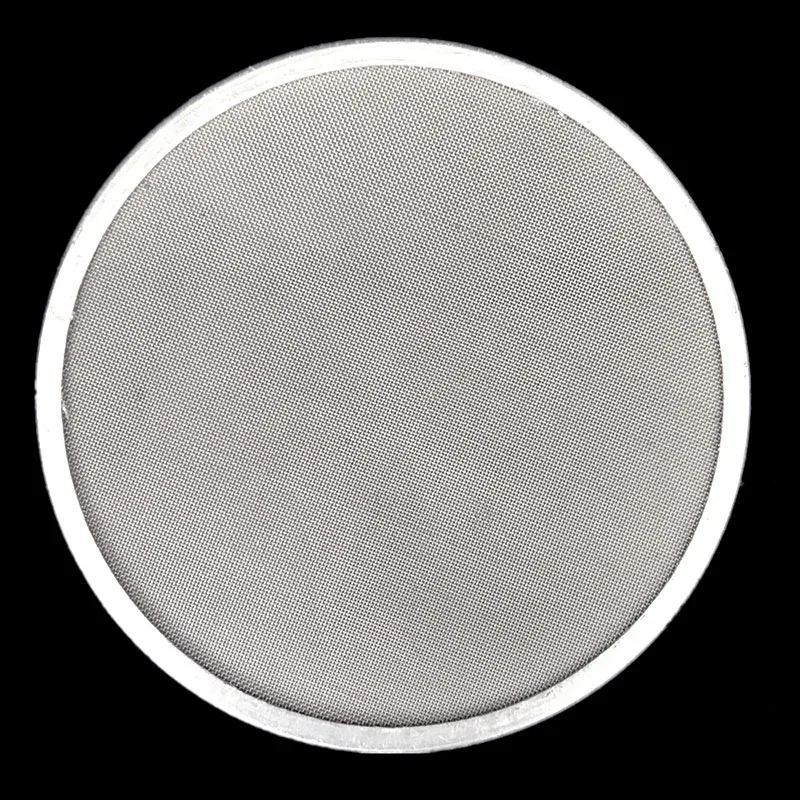
Metal wire mesh
Construction
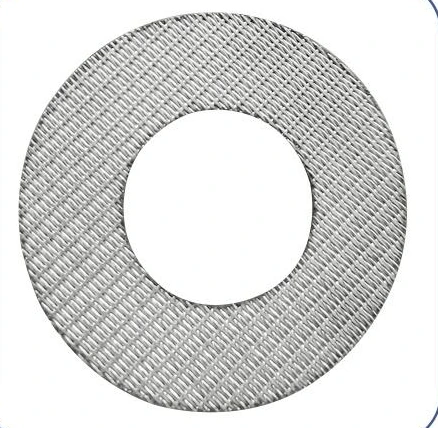
Woven annular screen
Media / opening
Weave + wire + aperture
Outside diameter
5–600 mm
Selected square-weave apertures
0.0737–0.86 mm

Share a drawing, reference sample or application requirements to discuss the configuration.

Product details

Two diameters, one centre datum

An annular disc surrounds a shaft, port or central fastener with a woven filtering ring. Dimension outside diameter D and centre-hole diameter d from the same datum and state concentricity. Radial width is (D−d)/2. Identify inner and outer sealing lands separately: edge capture reduces the exposed ring width at both boundaries.
Gross ring area and open mesh area

For D = 100 mm and d = 40 mm, radial width is 30 mm and gross annular area is π(D²−d²)/4=6597 mm². A 40-mesh square weave with 0.25 mm wire has 0.385 mm aperture and 36.8% geometric open area. Combining these geometries gives about 2425 mm² before edge capture and support blockage. These are worked dimensions; the mounting drawing defines the finished ring.

Annular wire mesh filter discs — Product view

Inner edge, outer edge and support

Single layers fit a continuously supported seat; multilayer rings place the fine filtering layer against the specified support sequence. Bare-cut, joined or rimmed edges are defined independently for the inner and outer boundaries. Inspect loose wire ends at the central passage, concentricity, both edge profiles and total thickness. Mark the support face and flow direction so installation restores the designed contact and seal.

Mesh material and edge material are separate components

The cloth family includes stainless steel, copper, nickel, Monel and Inconel woven mesh. Specify the alloy grade for each cloth layer. Metal edge strips include stainless steel, copper, galvanized steel, aluminium and low-carbon steel; rubber and plastic coverings form separate perimeter options. The rim material, joint and cleaning chemistry are specified independently of the filtering cloth.

Gross ring area and open mesh area

Gross ring area and open mesh area

ComponentDefinition
Drawing exampleD100 mm; d40 mm; (D−d)/2=30 mm
Gross ring area and open mesh areaπ(D²−d²)/4=6597 mm²
Square-weave example25.4/40−0.25=0.385 mm; (0.385/0.635)²=36.8%
Gross ring area and open mesh area × Net cloth fraction6597×(0.385/0.635)²≈2425 mm²

For D = 100 mm and d = 40 mm, radial width is 30 mm and gross annular area is π(D²−d²)/4=6597 mm². A 40-mesh square weave with 0.25 mm wire has 0.385 mm aperture and 36.8% geometric open area. Combining these geometries gives about 2425 mm² before edge capture and support blockage. These are worked dimensions; the mounting drawing defines the finished ring.

Annular wire mesh filter discs — Square-weave cloth options

Annular wire mesh filter discs — Square-weave cloth options

Mesh count / inchWire diameter (mm)Clear aperture (mm)
200.4060.86
400.2540.38
800.1400.18
1000.1020.15
2000.05330.0737

The listed cloth forms the filtering ring. Outside diameter, centre-hole diameter and inner/outer retained lands define the annular component independently of mesh aperture.

Ordering and production

Ordering and production

Supply itemOrder basis
Production lead time2–3 weeks after order and drawing confirmation.
Trial ordersSmall trial quantities for fit and process evaluation.
Regular production orders50 pieces or US$3,000 per order.
Quotation basisMaterial, finished dimensions, filter construction, connections and quantity.

Specifications

Annular wire mesh filter discs
ParameterSpecificationNotes
ConstructionWoven annular screen—
Media / openingWeave + wire + aperture—
Outside diameter5–600 mmCut-disc series; centre opening, edge capture and assembled thickness follow the part drawing.
Selected square-weave apertures0.0737–0.86 mmEach table row pairs one mesh count, wire diameter and aperture; finished-part dimensions are specified separately.
Installed dimensionsOD / centre ID / ring width—
Edge / connectionBare · welded · rimmed—

Materials: The cloth family includes stainless steel, copper, nickel, Monel and Inconel woven mesh. Specify the alloy grade for each cloth layer. Metal edge strips include stainless steel, copper, galvanized steel, aluminium and low-carbon steel; rubber and plastic coverings form separate perimeter options. The rim material, joint and cleaning chemistry are specified independently of the filtering cloth.

Production details and documented projects

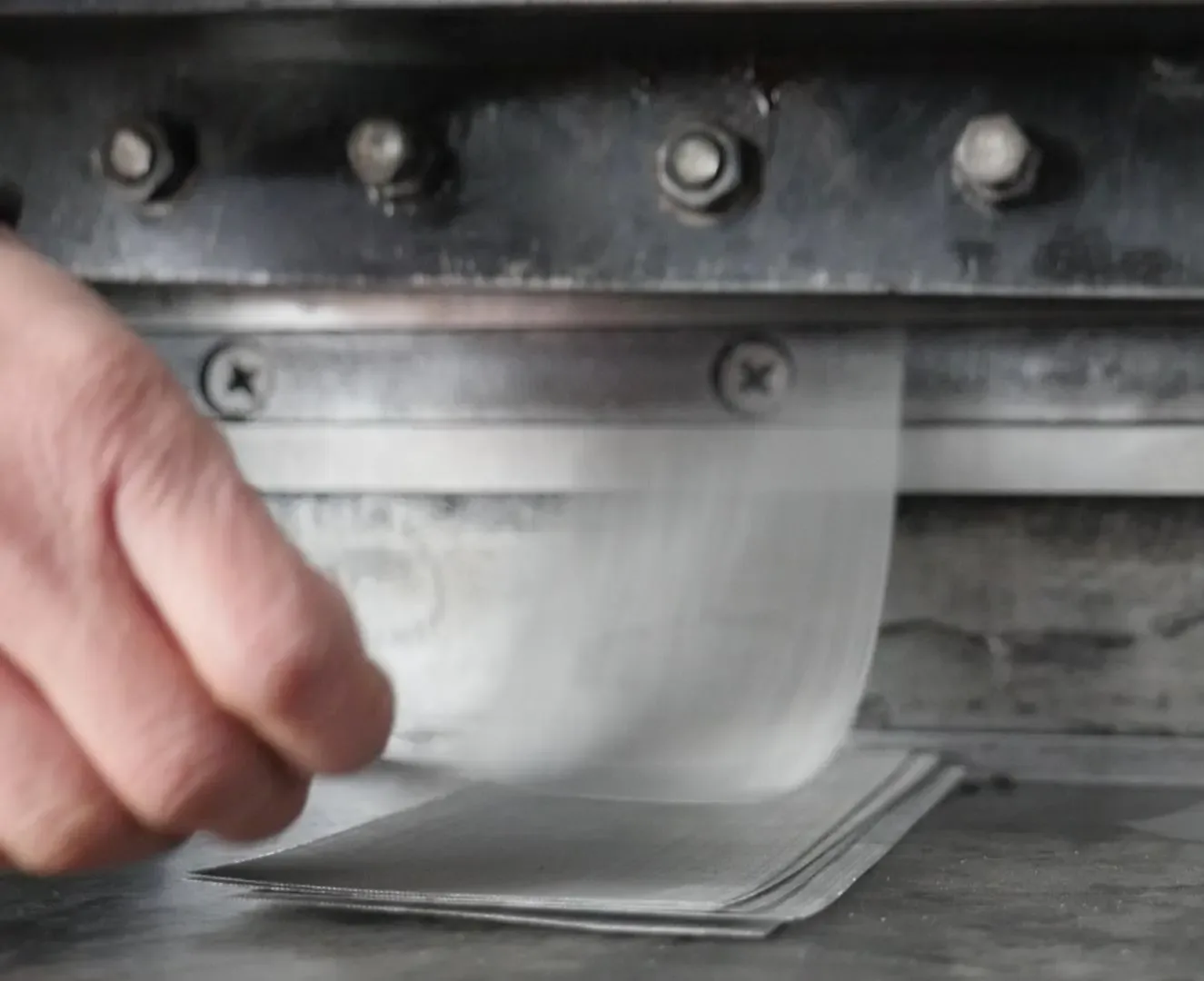
Mesh blank cutting
Mesh blank cutting

Mesh blank cutting

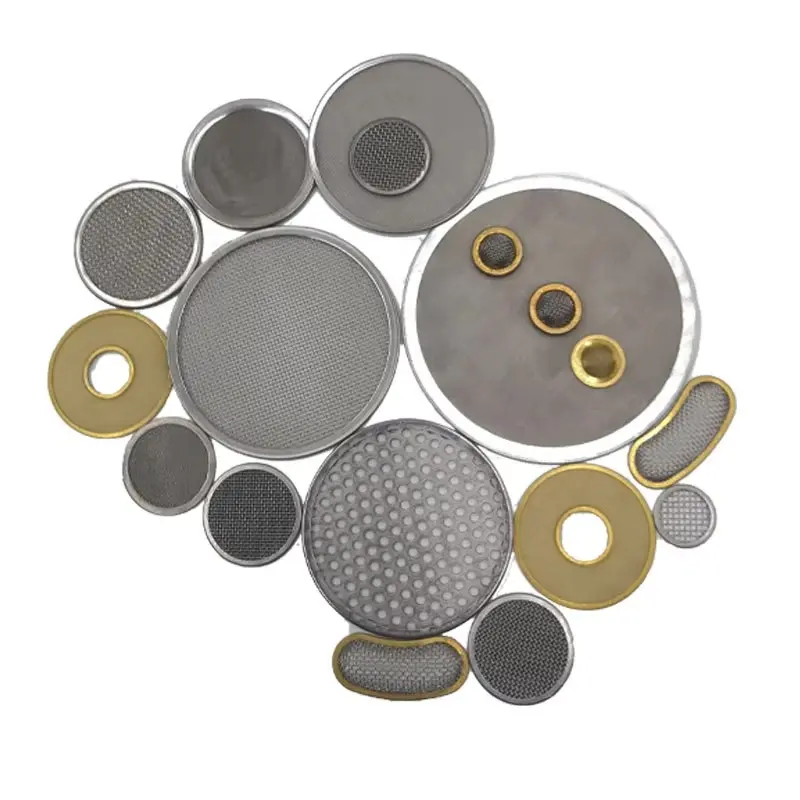
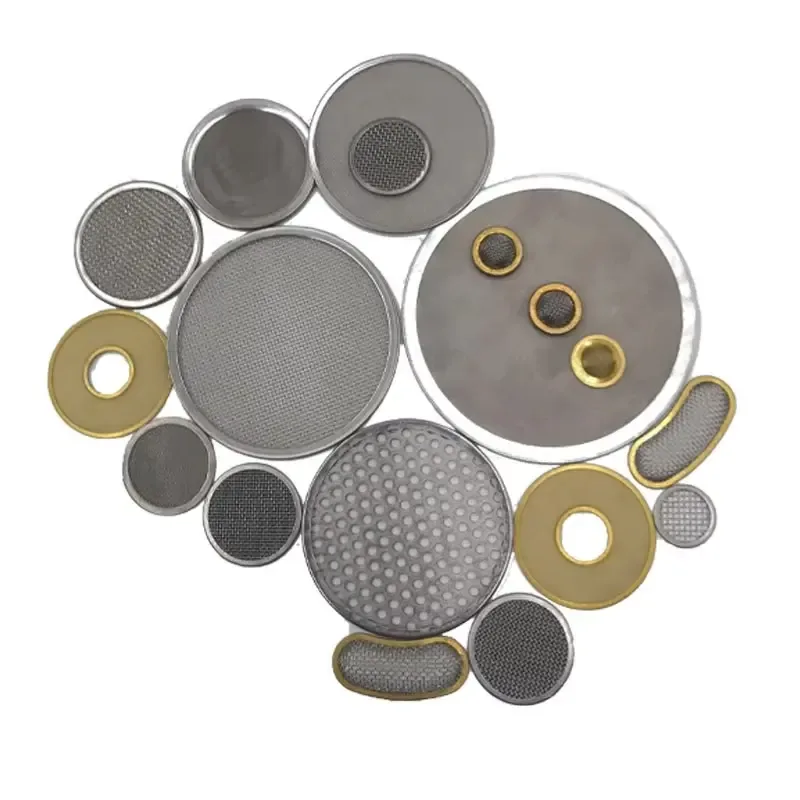
The ring is cut from specified wire cloth as a single layer or a supported stack. Edge finishing prevents stray wires entering the central passage or the sealing land.

Selection guide

Include these details when discussing your requirements.

Two diameters, one centre datum
An annular disc surrounds a shaft, port or central fastener with a woven filtering ring. Dimension outside diameter D and centre-hole diameter d from the same datum and state concentricity. Radial width is (D−d)/2. Identify inner and outer sealing lands separately: edge capture reduces the exposed ring width at both boundaries.
Gross ring area and open mesh area
For D = 100 mm and d = 40 mm, radial width is 30 mm and gross annular area is π(D²−d²)/4=6597 mm². A 40-mesh square weave with 0.25 mm wire has 0.385 mm aperture and 36.8% geometric open area. Combining these geometries gives about 2425 mm² before edge capture and support blockage. These are worked dimensions; the mounting drawing defines the finished ring.
Inner edge, outer edge and support
Single layers fit a continuously supported seat; multilayer rings place the fine filtering layer against the specified support sequence. Bare-cut, joined or rimmed edges are defined independently for the inner and outer boundaries. Inspect loose wire ends at the central passage, concentricity, both edge profiles and total thickness. Mark the support face and flow direction so installation restores the designed contact and seal.

Applications

Two diameters, one centre datum

An annular disc surrounds a shaft, port or central fastener with a woven filtering ring. Dimension outside diameter D and centre-hole diameter d from the same datum and state concentricity. Radial width is (D−d)/2. Identify inner and outer sealing lands separately: edge capture reduces the exposed ring width at both boundaries.

Inner edge, outer edge and support

Single layers fit a continuously supported seat; multilayer rings place the fine filtering layer against the specified support sequence. Bare-cut, joined or rimmed edges are defined independently for the inner and outer boundaries. Inspect loose wire ends at the central passage, concentricity, both edge profiles and total thickness. Mark the support face and flow direction so installation restores the designed contact and seal.

Frequently asked questions

Why measure both edges after finishing?

Cutting and edge capture define the finished outside and inside diameters. Inspect both against the common centre datum, together with seating flatness and the retained filtering width.

How is the central opening used?

The drawing assigns it to a shaft, port or fixing interface and specifies clearance. The surrounding ring provides the filtering area; inner and outer lands define the bypass barriers.

Technical enquiry

Define the dimensions, media, joints and inspection records before confirming the order.

Technical details (optional)
Selection inputs

WhatsApp

Search