Shijiazhuang, Hebei, Chinasales@kaifil.com
KAIFIL
Filter panels and framed screens

Expanded Metal Screens and Filter Supports

Slit-and-stretched metal sheets with integral diamond openings for filter backing, drainage and formed support parts. Titanium and pure-nickel constructions are specified by opening geometry, strand dimensions, sheet condition and mounting detail.

Manufacturing route
Slit and stretched sheet
Opening geometry
Diamond pattern
Surface condition
Raised / flattened
Titanium starting thickness
0.3–5 mm

Share a drawing, reference sample or application requirements to discuss the configuration.

Specifications

Expanded Metal Screens and Filter Supports
ParameterSpecificationNotes
Manufacturing routeSlit and stretched sheetIntegral strands and bonds form the openings.
Opening geometryDiamond patternSWD/LWD pitch and SWO/LWO clear opening are separate.
Surface conditionRaised / flattenedSpecify contact face and finished profile.
Titanium starting thickness0.3–5 mmApplies to the titanium-sheet branch.
Titanium sheet width10–2000 mmWidth is paired with the selected pattern and finished form.
Strand sectionWidth and thickness specified mmFinished overall thickness is a separate dimension.
MaterialsTitanium / pure nickelState the sheet grade and separate frame material.
Delivery formCut sheet / formed supportDefine outline, diamond direction, bends and attachment.
Cut edgesDefined edge line and deburred contactInclude exposed cut strands and media contact areas.
Titanium nominal diamond patterns0.3 × 0.5; 0.6 × 1.2; 1 × 2; 1.5 × 3; 1.5 × 2.5; 2 × 3; 2 × 4; 3 × 4; 3 × 6; 3.5 × 6; 4 × 8; 5 × 10; 6 × 12; 8 × 15 mmEach row is one nominal short × long diamond-pattern designation for the titanium branch. The pattern drawing defines SWD/LWD pitch, SWO/LWO clear opening and strand section separately. Select the starting-sheet thickness, sheet width and finished outline with the pattern; pure nickel has its own material specification.

Materials: Titanium and commercially pure nickel; specify the alloy designation for the sheet and the material of any separate frame or fastener.

Product details

An integral sheet structure

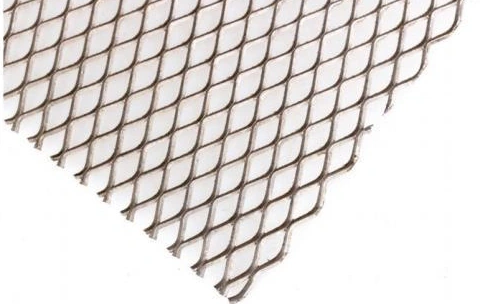
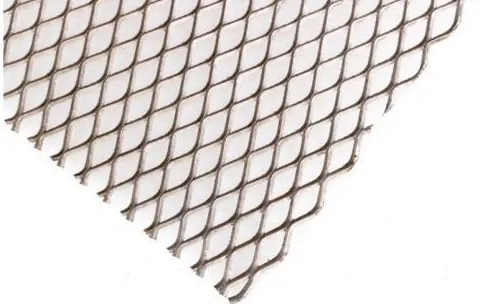
Expanded metal is made by slitting sheet and stretching it to open a connected network of strands and bonds. The diamond openings are part of one sheet, with no woven crossings. The strands form the sides of each opening and the bonds connect them into a continuous structure.
Separate pitch from clear opening

SWD and LWD identify the short and long design pitches between corresponding points of adjacent diamonds. SWO and LWO identify the clear opening dimensions. State all required dimensions on the pattern drawing. A diamond pitch is not the same measurement as the free passage between strands.

Expanded metal sheet with connected diamond openings and integral strands
The openings are produced by slitting and stretching sheet; the strands remain connected at the bonds.

Raised and flattened constructions

Raised expanded metal retains the out-of-plane strand geometry from expansion. Flattened material is rolled to produce a flatter surface. Specify starting sheet thickness, strand width and finished overall thickness independently. The surface condition determines how a supporting sheet contacts fine cloth, spacers and its mounting seat.

Filter backing and drainage

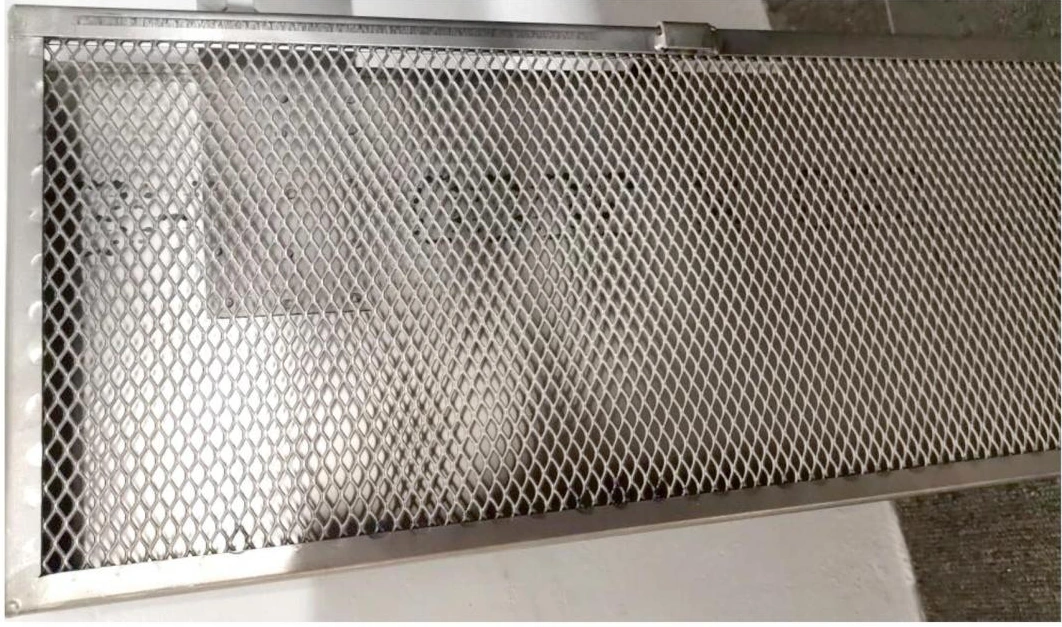
The expanded sheet supports a separate filtering layer or serves as an open coarse screen. Define the contact side, unsupported span and drainage route. A flatter contact face helps distribute contact beneath thin media; a raised structure provides an offset surface that is included in the assembly stack height.

Materials, cutting and forming

The titanium-sheet branch covers starting thicknesses of 0.3–5 mm and sheet widths of 10–2000 mm. Pattern and finished form are specified together. Pure-nickel sheets form a separate material branch. Cut edges, diamond orientation, bend direction and any frame attachment are defined for the finished support.

Inspect the complete support part

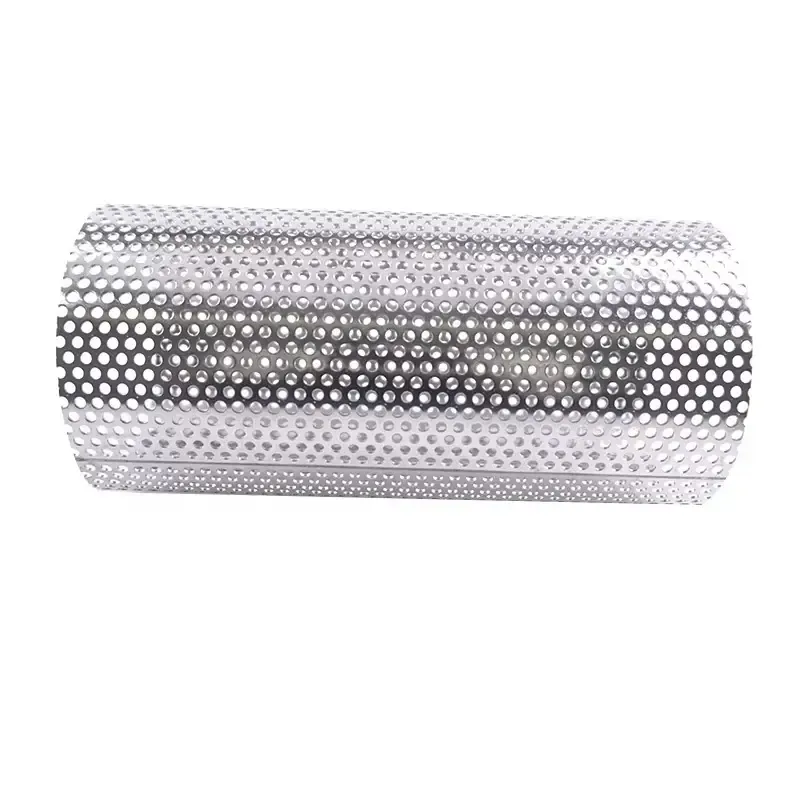
Check clear openings, pitches, strand width, starting thickness and overall profile. Inspect cut strands, sharp edges, flatness and the formed outline. A framed or cylindrical support also needs its attachment, seam and bearing surfaces checked. Record the pattern direction so a replacement preserves the installed flow and contact layout.

Construction choices for filtering assemblies

Construction choices for filtering assemblies

ConstructionStructureAssembly taskSpecification focus
Raised expanded sheetIntegral strands with out-of-plane profileOpen support with defined spacingOverall height and contact side
Flattened expanded sheetRolled integral diamond networkFlatter contact beneath filter mediaFinished thickness and flatness
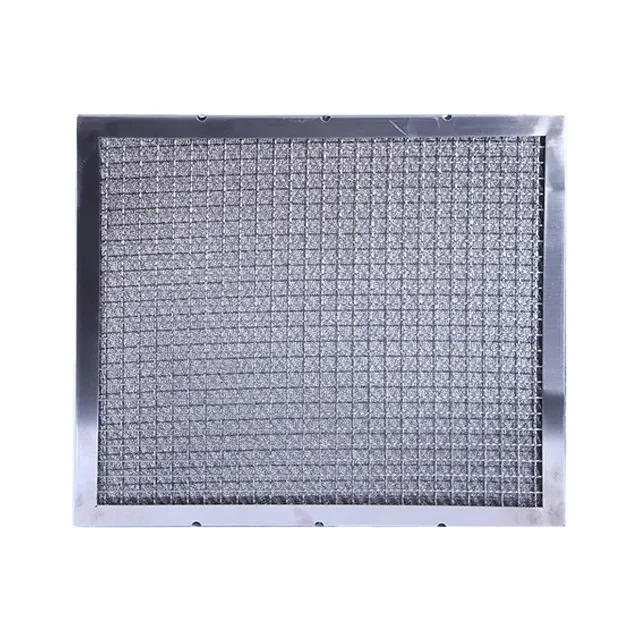
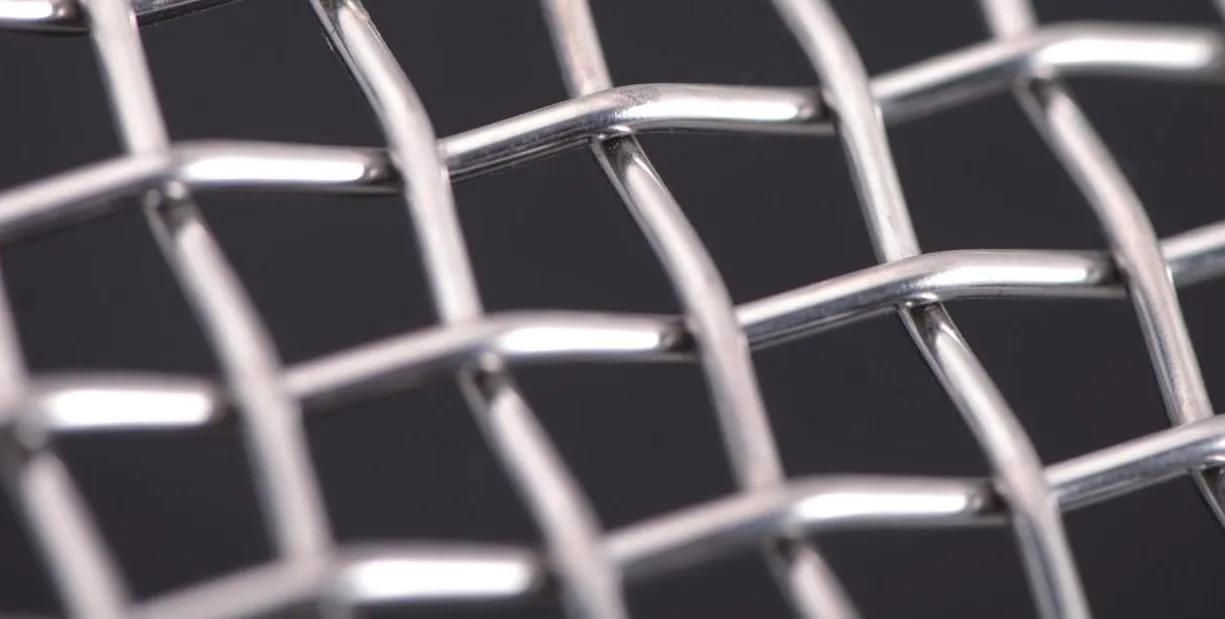
Woven support clothInterlaced separate wiresFlexible support with a specified weaveOpening, wire and weave
Perforated support sheetHoles through sheet with solid ligamentsSupport with a specified hole layoutHole pattern, pitch and sheet thickness
Titanium expanded metal — nominal diamond patterns

Titanium expanded metal — nominal diamond patterns

Nominal short dimension (mm)Nominal long dimension (mm)
0.30.5
0.61.2
12
1.53
1.52.5
23
24
34
36
3.56
48
510
612
815

Each row is one nominal short × long diamond-pattern designation for the titanium branch. The pattern drawing defines SWD/LWD pitch, SWO/LWO clear opening and strand section separately. Select the starting-sheet thickness, sheet width and finished outline with the pattern; pure nickel has its own material specification.

Ordering and production

Ordering and production

Supply itemOrder basis
Production lead time2–3 weeks after order and drawing confirmation.
Trial ordersSmall trial quantities for fit and process evaluation.
Regular material ordersQuantity follows the selected roll, sheet or cut-length format; US$3,000 regular order value.
Quotation basisAlloy, media construction, wire or stock thickness, delivery format and quantity.

Applications

Filter backing

An integral open sheet supports a separate filtering layer and locates it against the assembly supports.

Drainage layers

Diamond openings and the selected surface profile form flow paths behind the filtering medium.

Formed support parts

Cut and formed sheet becomes panels or support shells with a defined pattern direction and edge attachment.

Selection guide

Include these details when discussing your requirements.

Select its function
Define whether the part is the screening surface or backing for a separate filtering layer.
Choose the contact face
Compare raised and flattened geometry with the media contact and assembly height.
Specify the diamond dimensions
List pitch, clear opening, strand width and thickness rather than a woven mesh count.
Match support and mounting
Set span, orientation, seam or frame joint and the removal route.

Frequently asked questions

Is expanded metal woven wire mesh?

Expanded metal is slit and stretched from sheet. Its strands and bonds form an integral network; woven mesh interlaces separate wires.

What is the difference between SWD and SWO?

SWD is the short design pitch. SWO is the short clear opening. LWD and LWO provide the equivalent long-direction dimensions.

Which thickness should be specified?

Give the starting sheet thickness, strand section and finished overall thickness. Raised and flattened sheets have different finished profiles.

Can it replace the fine filtering layer?

Its role follows the specified opening and assembly. In a backing construction the separate fine medium defines the filtration layer.

What must match on a replacement support?

Pattern, clear openings, strand section, orientation, finished shape, mounting edges and contact with the filtering medium.

Technical enquiry

Define the dimensions, media, joints and inspection records before confirming the order.

Technical details (optional)
Selection inputs

WhatsApp

Search