Shijiazhuang, Hebei, Chinasales@kaifil.com
KAIFIL
Filter parts and accessories

Filter O-Ring Seals

KAIFIL supplies O-ring seals for metal filter end connections, cover grooves and removable filter assemblies. NBR, EPDM, FKM and silicone compounds are available in metric and AS568 size series, with compound, hardness and section selected for the sealing groove.

Cross-section shape
Circular
Size systems
Metric / AS568
Material options
NBR / EPDM / FKM / VMQ
Common hardness options
NBR 70 or 90; EPDM 70; FKM 75 or 90 Shore A

Share a drawing, reference sample or application requirements to discuss the configuration.

Product details

A compact seal for a defined groove

An O-ring develops sealing contact when its circular cross section is compressed inside the groove. In filter assemblies, this supports compact face seals and radial seals at end connections or covers. We specify the free-state inside diameter and cross section together with the groove dimensions so the ring seats correctly during assembly.
Metric dimensions and AS568 cross sections

Specify metric rings as inside diameter × cross section, in millimeters. AS568 rings are identified by dash number; common nominal cross sections include 1.78, 2.62, 3.53, 5.33 and 6.99 mm. These are separate size families, not interchangeable steps in the same groove. For an existing seal, measure an unused ring or use the original part drawing rather than a stretched service sample.

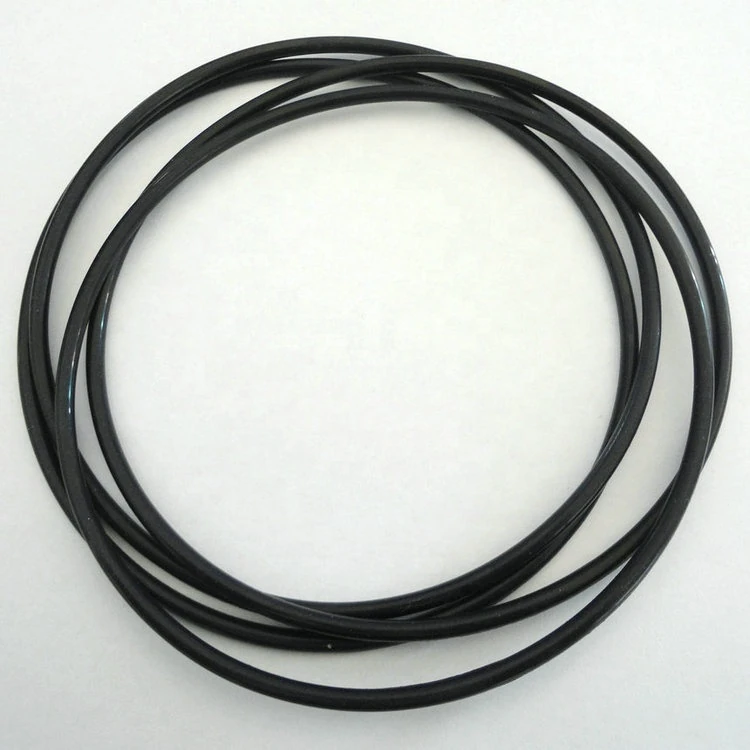
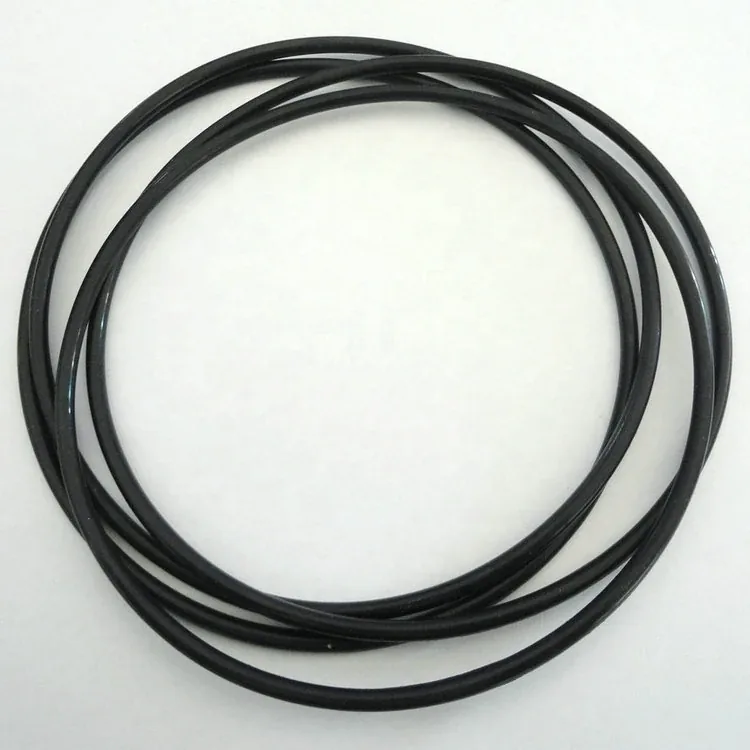
Large-diameter O-rings with circular cross sections

NBR for mineral-oil service

NBR is a practical choice for compatible mineral oils and lubricants. Common hardness selections are 70 and 90 Shore A. Select hardness alongside groove clearance and assembly force: the harder ring can resist extrusion better, while the seal geometry must still provide the intended compression.

EPDM for water and aqueous cleaning

EPDM is used for water-based filter duties and compatible cleaning solutions; 70 Shore A is a common selection. Peroxide-cured compounds can be specified for demanding hot-water and cleaning cycles. Keep mineral oils and petroleum-based lubricants out of the EPDM material selection and installation process.

FKM and silicone options

FKM offers useful resistance to many oils and fuels and is selected for elevated-temperature duties with compatible media. Common hardness options are 75 and 90 Shore A. Silicone provides temperature flexibility for static joints but needs careful handling at sharp groove edges. Hot water, steam, solvents and cleaning cycles should be checked against the exact compound, rather than the polymer name alone.

Installation that protects the sealing surface

Remove burrs and protect the ring from exposed threads during installation. Use a compatible lubricant, keep the ring untwisted and inspect that it is fully seated before closing the joint. Groove depth controls squeeze; groove width provides room for deformation and swelling. A larger cross section should not be used simply to compensate for a damaged groove.

Integration with the filter assembly

Filter-end O-rings seal the removable connection between the element and its housing seat. Cover O-rings seal the housing closure; these are separate positions in the service kit. For 222 and 226 cartridge connections, identify the actual seal position, groove and mating bore with the end fitting. Record free-state ring size, compound, hardness and quantity for each position. Assembly inspection checks a clean groove, untwisted seating and continuous engagement after insertion.

Assembly interface map

Assembly interface map

Component / interfaceDefined function and inspection
Cartridge end fittingIdentifies the element-side groove and seal position
Housing bore or coverDefines the mating sealing surface
O-ringFree-state ID × cross section, compound and hardness
Lead-in and groove edgeSmooth entry protects the sealing surface
Service kitPosition, quantity and material identity remain separate
AS568 common nominal cross-section families

AS568 common nominal cross-section families

Nominal section (mm)Nominal section (in)Size definition
1.780.070Free-state circular-section diameter; inside diameter is selected by the individual dash size.
2.620.103Free-state circular-section diameter; inside diameter is selected by the individual dash size.
3.530.139Free-state circular-section diameter; inside diameter is selected by the individual dash size.
5.330.210Free-state circular-section diameter; inside diameter is selected by the individual dash size.
6.990.275Free-state circular-section diameter; inside diameter is selected by the individual dash size.
Ordering and production

Ordering and production

Supply itemOrder basis
Production lead time2–3 weeks after order and drawing confirmation.
Trial ordersSmall trial quantities for fit and process evaluation.
Regular production orders50 pieces or US$3,000 per order.
Quotation basisMaterial, finished dimensions, section geometry, mating interface and quantity.

Specifications

Filter O-Ring Seals
ParameterSpecificationNotes
Cross-section shapeCircularO-ring for a designed face or radial groove.
Size systemsMetric / AS568Metric: ID × CS; AS568: dash number.
Material optionsNBR / EPDM / FKM / VMQChoose the compound and cure system for all fluid exposure.
Common hardness optionsNBR 70 or 90; EPDM 70; FKM 75 or 90 Shore AHardness is specified by material, not as one shared value.
AS568 nominal cross sections1.78 / 2.62 / 3.53 / 5.33 / 6.99 mmThese are five separate nominal cross-section families. The dash number also defines the free-state inside diameter.
Free-state dimensionsInside diameter × cross sectionUse the uninstalled, unstretched dimensions.
Outside diameter relationshipOD = ID + 2 × CSGeometric relationship for an unstretched circular-section ring.
Groove dataDepth / width / diameter / clearanceInclude mating-surface finish and assembly lead-in.
Seal arrangementStatic face / static radialFilter connections, covers and removable inserts.
Color identificationBlack / compound-specific colorsColor is recorded separately from material and hardness.
Supply formatIndividual sizes / matched seal kitsLabel each ring by position, material, size and hardness.

Materials: NBR, EPDM, FKM and silicone (VMQ). Compound and cure system are selected for the process fluid, cleaning exposure and temperature cycle.

Product details

Examine the part profile, contact faces and construction details.

Large-diameter O-rings with circular cross sections

Large-diameter O-rings with circular cross sections

Large-diameter O-rings with circular cross sections

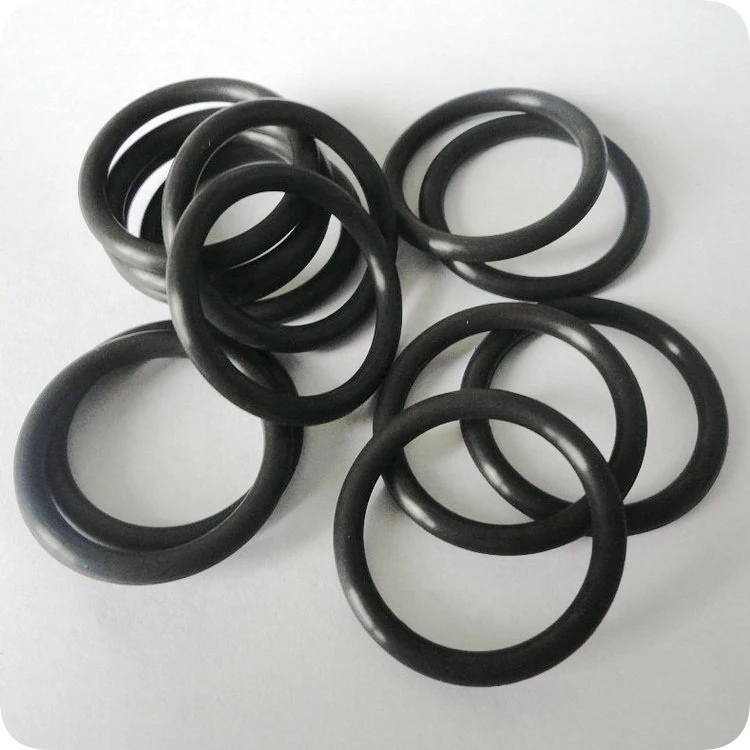
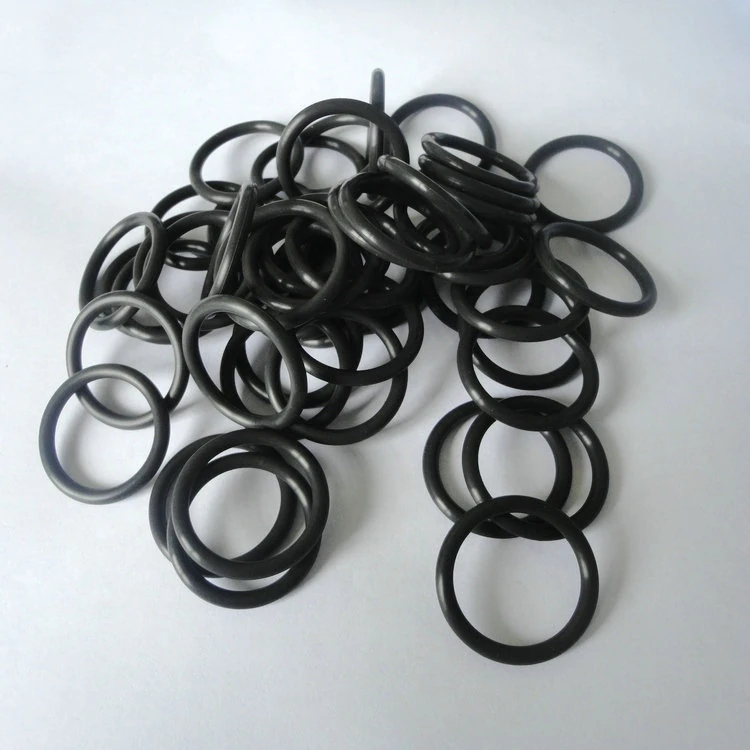
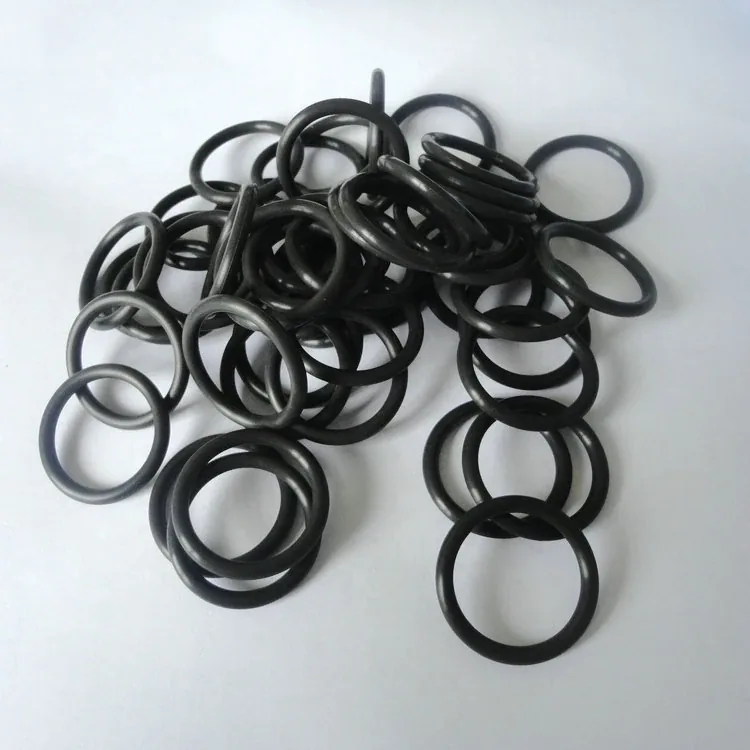
O-ring seals in assorted sizes

O-ring seals in assorted sizes

O-ring seals in assorted sizes

Selection guide

Include these details when discussing your requirements.

Identify face or radial sealing
Show the groove section and pressure direction. The same ring size can behave differently in different groove arrangements.
Choose material before color
Base selection on both process and cleaning fluids. Keep polymer, compound, hardness and color as separate order fields.
Match ID and section together
Give the free-state ID and cross section or the full AS568 dash number. Outside diameter alone is insufficient.
Use the groove to set compression
Groove depth, width, clearance and compound hardness form the sealing design. Check them together for a replacement ring.
Separate hot cleaning from operation
Include the maximum cleaning temperature and exposure time in addition to normal operating temperature.

Frequently asked questions

How should I specify an O-ring size?

For a metric ring, provide free-state inside diameter × cross section. For AS568, provide the dash number. Add material and hardness to make the order description complete.

Can I identify the material from its color?

No. Several polymers can be black, and the same polymer can be produced in different colors. Use the compound specification or material record.

Is FKM always a better replacement for EPDM?

Material selection follows the fluid. FKM is useful for many oils and fuels; EPDM is frequently selected for water and compatible aqueous cleaning. The cleaning cycle can change the preferred compound.

Does higher hardness give a higher pressure rating?

Hardness influences deformation and extrusion resistance, but pressure capability also depends on groove clearance, section, temperature and mating parts. Select hardness as part of the complete groove design.

Can a used ring be measured for replacement?

A used ring helps identify the general profile, but swelling, stretch and compression can change its dimensions. A groove drawing, original specification or unused sample gives a better replacement basis.

Can you supply seal kits for a filter assembly?

Yes. We organize rings by sealing position and mark the material, size, hardness and quantity for each position.

Technical enquiry

Define the dimensions, media, joints and inspection records before confirming the order.

Technical details (optional)
Selection inputs

WhatsApp

Search