Starting material
Stainless steel wire is selected against the agreed alloy and wire diameter. The finished mesh specification also needs weave type, aperture or mesh count, roll width and any downstream cutting requirement.
Workshop process
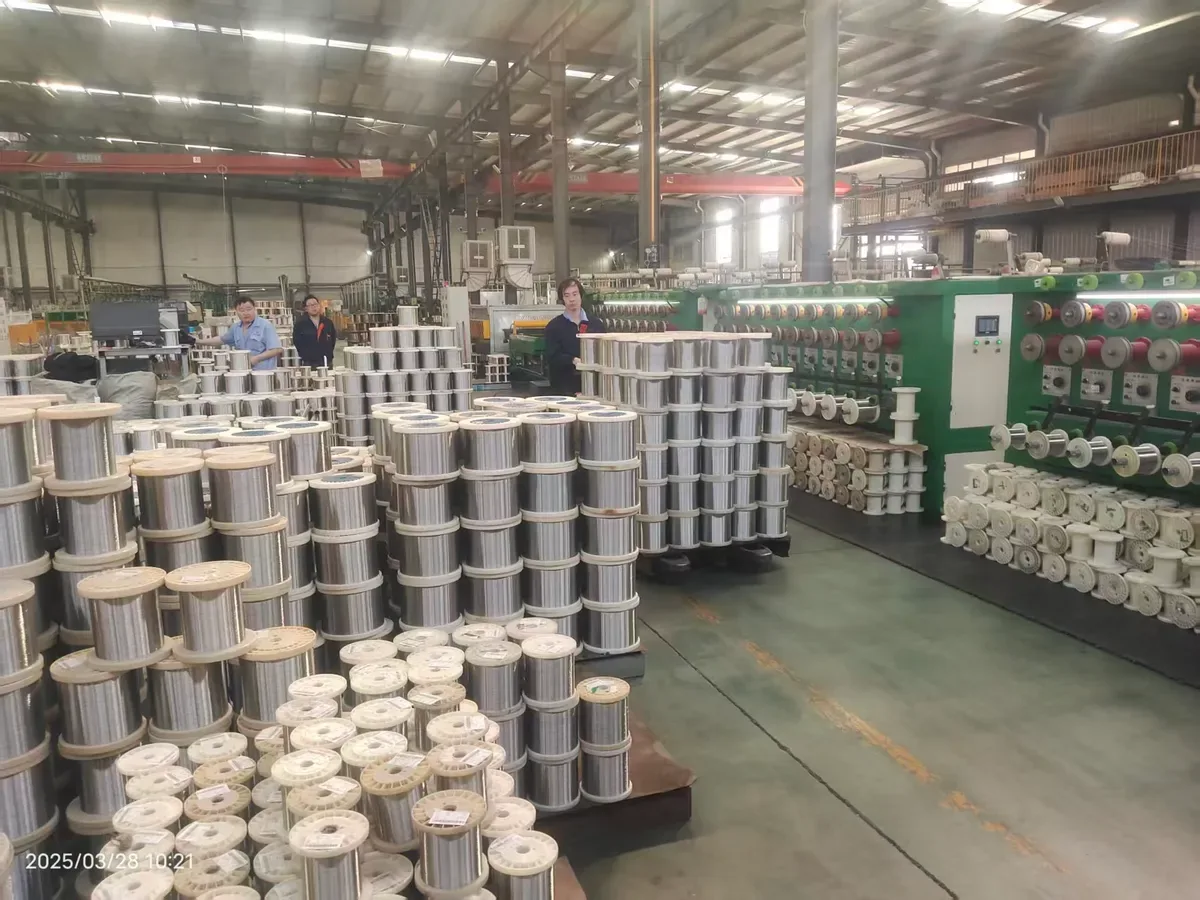
Wire is fed through drawing equipment and collected for subsequent mesh production. Coils are prepared for weaving, where controlled wire diameter and weave construction establish the geometry of the filtering surface.
What buyers should specify
For a mesh-based filter component, identify material grade, wire diameter, weave, aperture, roll or part dimensions and the inspection documents required with the order. A drawing or reference sample helps match the mesh to the fabricated part.
Design review
Wire preparation belongs at the start of the woven-mesh specification. Select the alloy, wire diameter and drawing route for the required weave. Material identification, diameter consistency and surface condition support repeatable aperture geometry in the finished cloth.
Inspection and acceptance
For an order, state the material grade, finished wire diameter, weave, aperture or mesh count with its companion wire size, roll dimensions and required inspection records. Confirm traceability and tolerances before weaving. If the wire is subsequently formed into discs or cylinders, include the forming and edge requirements as separate acceptance items.
Continue the specification
Custom 800 µm Stainless Steel Mesh Cylinders for Industrial Equipment