Shijiazhuang, Hebei, Chinasales@kaifil.com
KAIFIL
Filter media rolls and sheets

Plain Dutch weave filter mesh

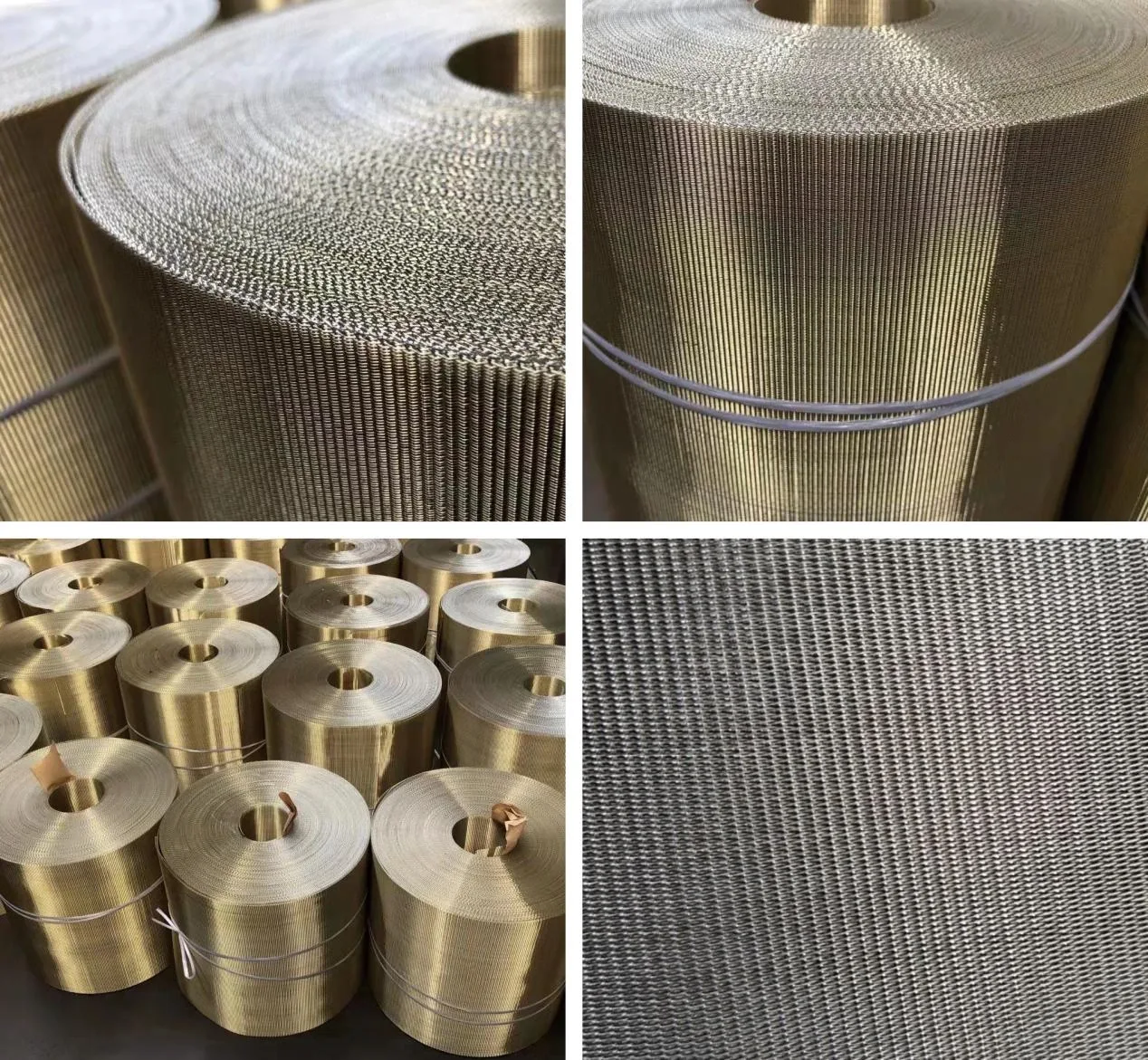
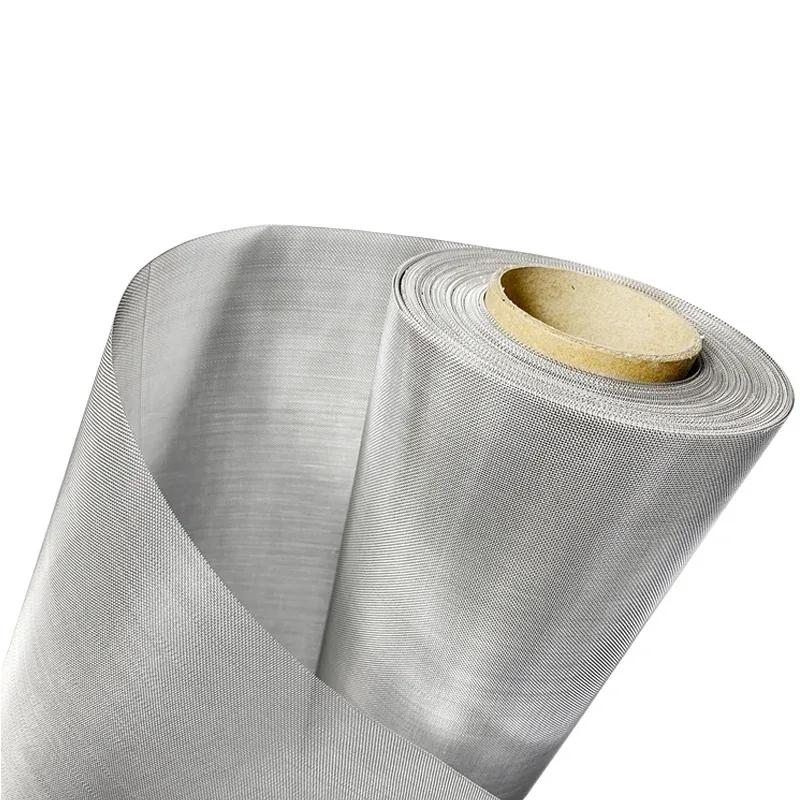
Kaifil supplies plain Dutch weave stainless steel mesh in rolls, sheets and cut blanks. Paired warp and weft counts, wire diameters and cloth thickness define each dense-woven filter construction.

Metal wire mesh
Weave
Plain Dutch weave, 1/1 interlacing
Wire arrangement
Coarser warp / closely packed finer weft
Stainless steel grades
304 / 316L
Supply forms
Rolls / sheets / strips / cut blanks

Share a drawing, reference sample or application requirements to discuss the configuration.

Specifications

Plain Dutch weave filter mesh
ParameterSpecificationNotes
WeavePlain Dutch weave, 1/1 interlacing—
Wire arrangementCoarser warp / closely packed finer weft—
Stainless steel grades304 / 316L—
Supply formsRolls / sheets / strips / cut blanks—
Pore-size series30–347 µmPaired weave and wire combinations are listed in the specification tables.
Cloth thickness0.16–2.32 mmThickness follows the complete weave designation.
Warp directionLengthwise along the roll—
Weft directionAcross the roll width—

Materials: 304 / 316L stainless steel; Monel 400 / K-500; Inconel 600 / 601 / 625 / 718 / X-750; Pure nickel N2 / N4 / N6 / N8

Product details

Dense plain-weave construction

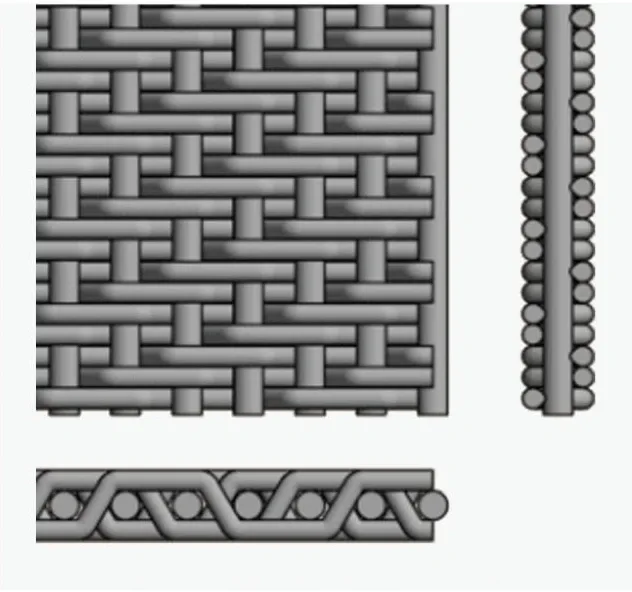
Plain Dutch weave combines relatively coarse warp wires with densely packed finer weft wires in a 1/1 interlacing pattern. The compact weave creates tortuous flow passages through the cloth. A complete designation includes warp count, weft count and both wire diameters, giving the fabricator the geometry needed for repeatable conversion.
Read the complete weave designation

The first number in a designation is the warp count per inch; the second is the weft count. Wire diameters follow the same order. For 24×110 mesh, the listed warp and weft wires are 0.355×0.25 mm, with a cloth thickness of 0.855 mm. Keep the count and wire pair together when selecting a roll or specifying a replacement filter.

Pore size, thickness and filter assembly

The table provides pore-size values for the listed cloth constructions. Selection starts with the full weave designation and continues with the required particle-retention test, available filtration area and differential pressure. Cloth thickness controls seating depth, rolled diameter and the space occupied by a layered screen pack. Supports and drainage layers carry installation and reverse-cleaning loads.

From woven cloth to finished components

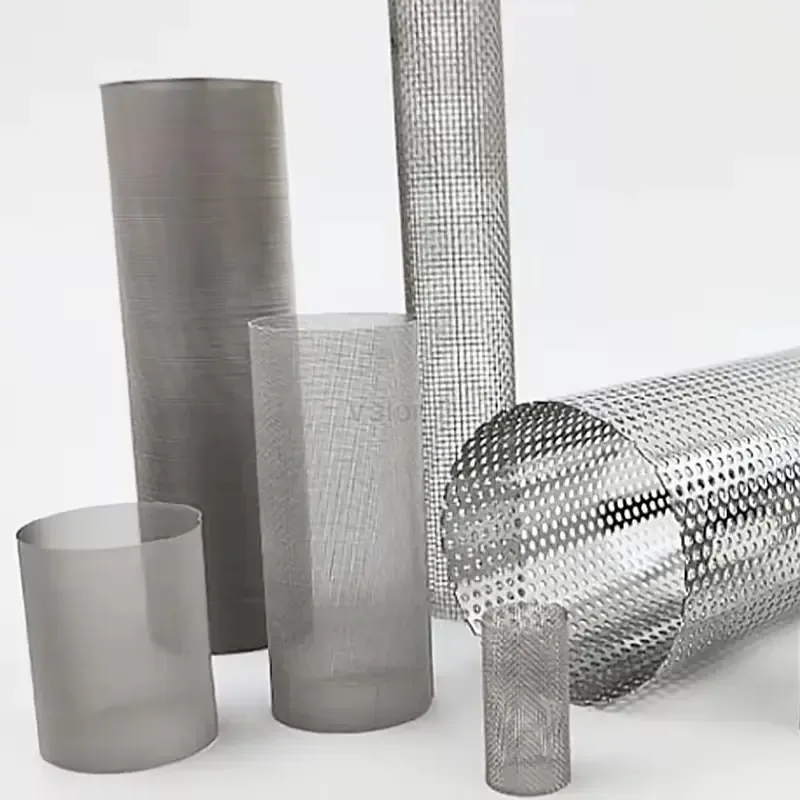
Plain Dutch cloth is supplied in rolls, sheets, strips and cut blanks for discs, screen packs and cylindrical filters. Mark warp direction on the cutting drawing. Define edge retention, weld margins and sealing surfaces before forming; these details maintain alignment and close the bypass paths around the filtering fabric.

Filtration area and mass per unit area

The paired specification tables list effective filtration area and mass per square metre. At 24×110 mesh with 0.355×0.25 mm wires, the cloth has a 97 µm pore-size entry, 11.3% effective filtration area, 2.60 kg/m² mass and 0.855 mm thickness. These values describe one dense-woven construction. The effective filtration area belongs to the flow passages in the Dutch weave; the square-aperture formula describes a different geometry. Cloth mass and thickness support blank-weight and seating-depth calculations.

Material families and woven constructions

304 and 316L stainless steel form the base material options. Monel, Inconel and pure nickel also provide Dutch-woven material branches. Specify the exact alloy, warp×weft counts and both wire diameters together. Alloy selection applies to the woven filtering layer; support plates, welded fittings and seals retain their own material specifications.

Micronic filter cloth: specify the weave

Micronic filter cloth is a trade term for fine woven metal filter cloth. This page specifies the Dutch construction by its complete warp × weft count, both wire diameters and pore designation. Keep these values together when ordering cut discs, liners or cartridge media. Particle-retention acceptance uses the stated test method and criterion.

Plain Dutch weave specifications — 1

Plain Dutch weave specifications — 1

Each row is one complete woven construction. Counts and wire diameters are ordered warp × weft.

Warp × weft (per inch)Wire diameters (mm)Pore size (µm)Thickness (mm)
7×400.9×0.713472.32
7×440.71×0.633191.97
8×450.8×0.63102.00
8.5×600.63×0.452961.53
8×850.45×0.3152751.08
10×900.45×0.282491.01
10×760.5×0.3552481.21
12×860.45×0.3152111.08
12×640.56×0.42111.36
12.5×760.45×0.3551921.16
14×1000.40×0.281820.96
14×1100.355×0.251770.855
14×760.45×0.3551731.16
16×1000.40×0.281600.96
17×1200.355×0.2241550.803
16×1200.28×0.2241450.728

Counts and wire diameters follow warp × weft order. Area, mass and thickness belong to the same listed construction.

Plain Dutch weave specifications — 2

Plain Dutch weave specifications — 2

Each row is one complete woven construction. Counts and wire diameters are ordered warp × weft.

Warp × weft (per inch)Wire diameters (mm)Pore size (µm)Thickness (mm)
20×1400.315×0.201330.715
20×1700.25×0.161300.57
20×1100.355×0.251260.855
22×1200.315×0.2241150.763
25×1400.28×0.21000.68
24×1100.355×0.25970.855
28×1500.28×0.18920.64
30×1500.25×0.18820.61
30×1400.315×0.20770.715
35×1900.224×0.14740.504
35×1700.224×0.16690.544
40×2000.18×0.135630.43
45×2500.16×0.11560.384
50×3000.16×0.09550.34
60×5000.14×0.055510.252
50×2700.14×0.10500.34

Counts and wire diameters follow warp × weft order. Area, mass and thickness belong to the same listed construction.

Plain Dutch weave specifications — 3

Plain Dutch weave specifications — 3

Each row is one complete woven construction. Counts and wire diameters are ordered warp × weft.

Warp × weft (per inch)Wire diameters (mm)Pore size (µm)Thickness (mm)
70×9300.10×0.03300.16
65×3900.125×0.071420.267
60×3000.14×0.09410.32
80×7000.125×0.04400.205
60×2700.14×0.1390.34
77×5600.14×0.05380.24
80×6000.1×0.045370.19
70×3900.112×0.071360.254
65×7500.10×0.036360.172
70×3400.125×0.08350.285
80×4300.125×0.063320.251

Counts and wire diameters follow warp × weft order. Area, mass and thickness belong to the same listed construction.

Filtration area and mass per unit area

Filtration area and mass per unit area

Counts and wire diameters follow warp × weft order. Area, mass and thickness belong to the same listed construction.

Warp × weft (per inch)Wire diameters (mm)Effective filtration area (%)Mass per area (kg/m²)
7×400.9×0.7114.36.65
7×440.71×0.6314.25.55
8×450.8×0.615.55.7
8.5×600.63×0.4520.34.16
8×850.45×0.31527.32.73
10×900.45×0.2829.22.57
10×760.5×0.35521.83.24
12×860.45×0.31520.92.93
12×640.56×0.416.03.89
12.5×760.45×0.35515.93.26
14×1000.40×0.2820.32.62
14×1100.355×0.2522.22.28
14×760.45×0.35514.33.33
16×1000.40×0.2817.72.7
17×1200.355×0.22422.42.19
16×1200.28×0.22419.21.97
20×1400.315×0.2021.5—
20×1700.25×0.1628.91.56
20×1100.355×0.2515.32.47
22×1200.315×0.22415.52.20
25×1400.28×0.215.21.96
24×1100.355×0.2511.32.60
28×1500.28×0.1815.91.87
30×1500.25×0.1813.51.79
30×1400.315×0.2011.42.21
35×1900.224×0.1416.81.47
35×1700.224×0.1612.81.62
40×2000.18×0.13515.41.24
45×2500.16×0.1115.21.11
50×3000.16×0.0920.00.98
60×5000.14×0.05534.10.70
50×2700.14×0.1015.20.98
70×9300.10×0.0336.20.39
65×3900.125×0.07119.10.78
60×3000.14×0.0914.10.96
80×7000.125×0.0438.10.60
60×2700.14×0.111.21.03
77×5600.14×0.0527.50.74
80×6000.1×0.04529.80.53
70×3900.112×0.07116.30.74
65×7500.10×0.03637.10.43
70×3400.125×0.0813.20.86
80×4300.125×0.06316.60.77

Counts and wire diameters follow warp × weft order. Area, mass and thickness belong to the same listed construction.

Material families and woven constructions

Material families and woven constructions

304 and 316L stainless steel form the base material options. Monel, Inconel and pure nickel also provide Dutch-woven material branches. Specify the exact alloy, warp×weft counts and both wire diameters together. Alloy selection applies to the woven filtering layer; support plates, welded fittings and seals retain their own material specifications.

Material familyGradesWoven constructionSelection and conversion
Monel400 / K-500Dutch weaveSpecify the full warp×weft designation and paired diameters for this alloy; keep the stainless dimensional series and alloy-specific construction separate.
Inconel600 / 601 / 625 / 718 / X-750Dutch weaveSpecify the full warp×weft designation and paired diameters for this alloy; keep the stainless dimensional series and alloy-specific construction separate.
Pure nickelN2 / N4 / N6 / N8Dutch weaveSpecify the full warp×weft designation and paired diameters for this alloy; keep the stainless dimensional series and alloy-specific construction separate.
Ordering and production

Ordering and production

Supply itemOrder basis
Production lead time2–3 weeks after order and drawing confirmation.
Trial ordersSmall trial quantities for fit and process evaluation.
Regular material ordersQuantity follows the selected roll, sheet or cut-length format; US$3,000 regular order value.
Quotation basisAlloy, media construction, wire or stock thickness, delivery format and quantity.

Selection guide

Include these details when discussing your requirements.

Choose a complete weave
Select warp×weft count and both wire diameters from the same row.
Match the process
Define target retention, test basis, fluid viscosity, flow and differential pressure.
Set supply dimensions
Provide width, length, quantity, warp orientation and edge condition.
Define the finished assembly
Specify support, forming radius, seams, sealing surfaces and cleaning direction.

Applications

Hydraulic and process filters

Dense cloth provides a compact filtration layer backed by a rigid element support.

Extruder screen packs

Dutch mesh serves as the fine layer within a supported melt-filtration stack.

Custom filter cylinders

Cut and formed cloth is joined to a support and end fittings for equipment installation.

Production details and documented projects

Mesh weaving
Mesh weaving

Mesh weaving

Plain Dutch weave combines relatively coarse warp wires with densely packed finer weft wires in a 1/1 interlacing pattern. The compact weave creates tortuous flow passages through the cloth. A complete designation includes warp count, weft count and both wire diameters, giving the fabricator the geometry needed for repeatable conversion.
Frequently asked questions

What does 24×110 mean?

It identifies 24 warp wires and 110 weft wires per inch. The paired wire diameters complete the construction specification.

How is Dutch mesh different from square mesh?

Square mesh has visible square openings. Dutch mesh uses tightly packed unequal wires to form passages through a dense woven structure.

Which direction is warp?

Warp runs lengthwise along the woven roll. Weft runs across its width. Mark these directions on cut-part drawings.

How do I order a replacement mesh?

Provide both counts, both wire diameters, material, cloth thickness, width and length. Add the existing filter arrangement and process conditions.

Technical enquiry

Define the dimensions, media, joints and inspection records before confirming the order.

Technical details (optional)
Selection inputs

WhatsApp

Search