Shijiazhuang, Hebei, Chinasales@kaifil.com
KAIFIL
Filter discs and cut screens

Sintered Mesh Leaf Disc Filter Elements

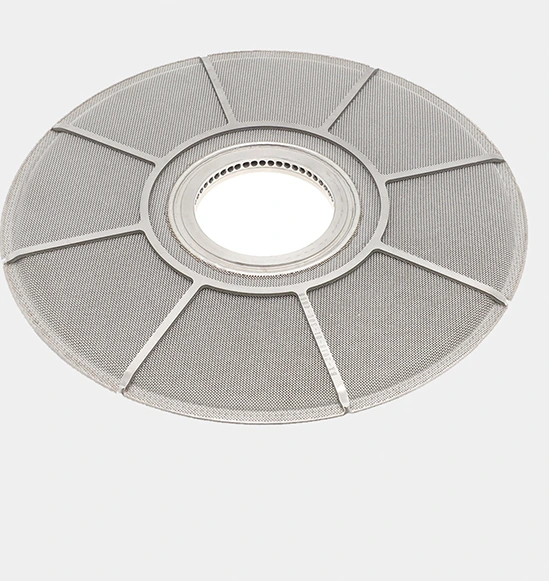
Metal leaf discs combine two filtering faces, an internal drainage support and a central collection hub. Annular sintered-mesh elements stack around a central outlet for polymer melt filtration.

Sintered metal filters and media
Element construction
Two metal filtering faces with internal drainage
Outside diameter
111–381 mm
Central opening
38–115 mm
Mounting
Central hub and stacked outlet

Share a drawing, reference sample or application requirements to discuss the configuration.

Specifications

Sintered Mesh Leaf Disc Filter Elements
ParameterSpecificationNotes
Element constructionTwo metal filtering faces with internal drainageSupported leaf-disc assembly
Outside diameter111–381 mmAnnular series; paired to the installation drawing
Central opening38–115 mmPaired hub and central-shaft geometry
MountingCentral hub and stacked outletHub contacts and axial closure defined together
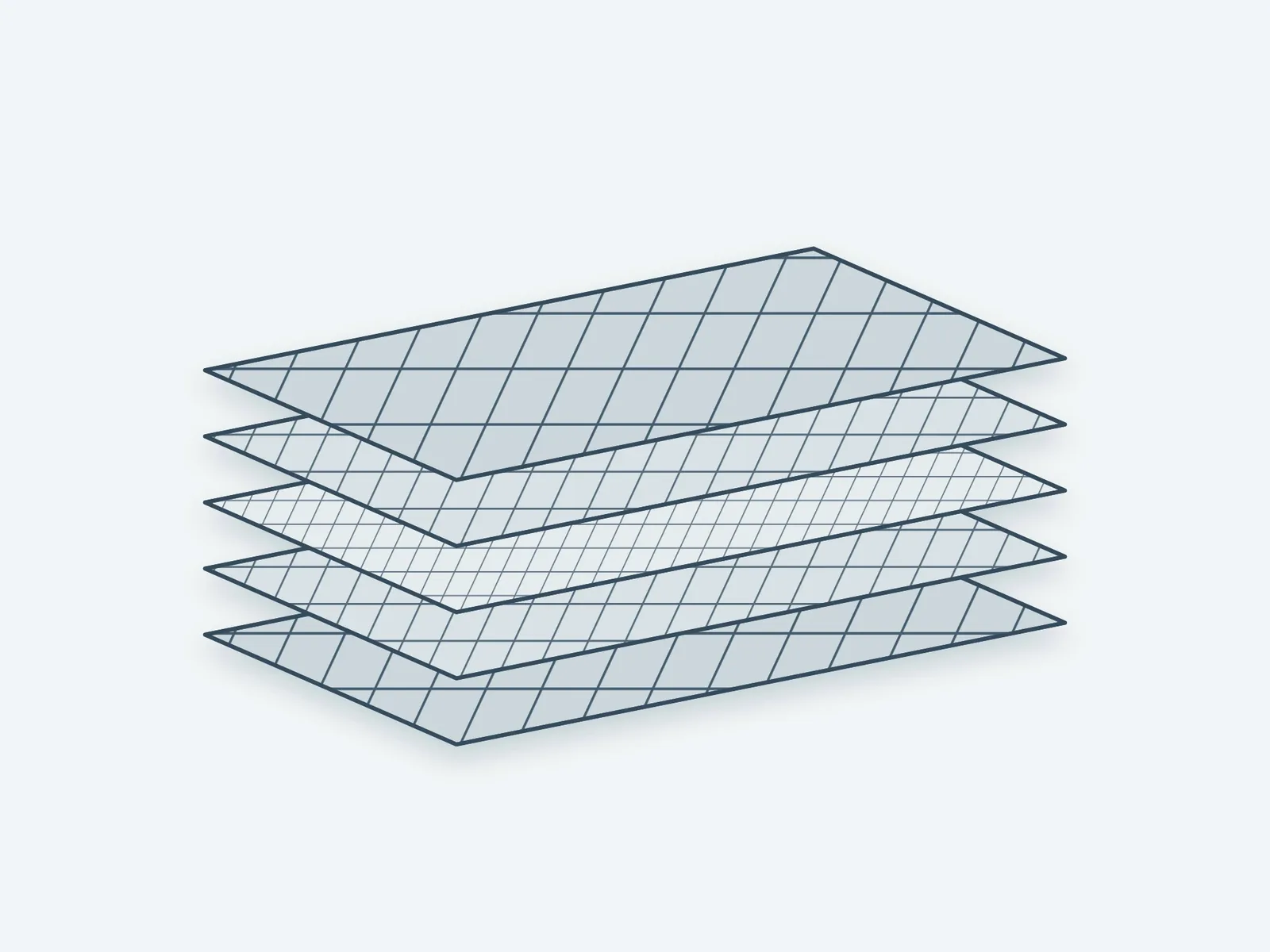
Filter-face mediumFive-layer sintered mesh; 1.7 mm laminateThese options specify the five-layer filter-face laminate. The leaf disc has two filtering faces, an internal drainage support and a hub; their assembled axial height and installed stack pitch are defined separately. Select the nominal media grade with its filtration test basis and the face alloy; the complete disc retains its paired outside-diameter and hub dimensions.
Principal mesh alloy316L stainless steelHub and support materials identified separately
Disc heightOverall thickness and hub thicknessMeasured from defined axial datums
Stack geometryDisc count, pitch and total heightClamped state and end closure shown
Drainage structureInternal support and central collection pathFlow passage retained through the assembly
Edge constructionClosed perimeter and specified jointsInspect continuous joining zones
AcceptanceFlatness, hub alignment, seal fit and media checkConditions stated on the inspection plan

Materials: 316L stainless steel sintered wire-mesh laminate; separately specified hub and support alloy

Product details

Two filtering faces and one collection hub

A metal leaf disc is a filtering assembly with an upper and lower metal face. Melt crosses the faces into the supported internal drainage space, then travels towards the central hub and outlet. The flow path, support and hub distinguish a leaf disc from a flat cut mesh disc or a screen pack clamped on a breaker plate.
Filtering laminate and radial support

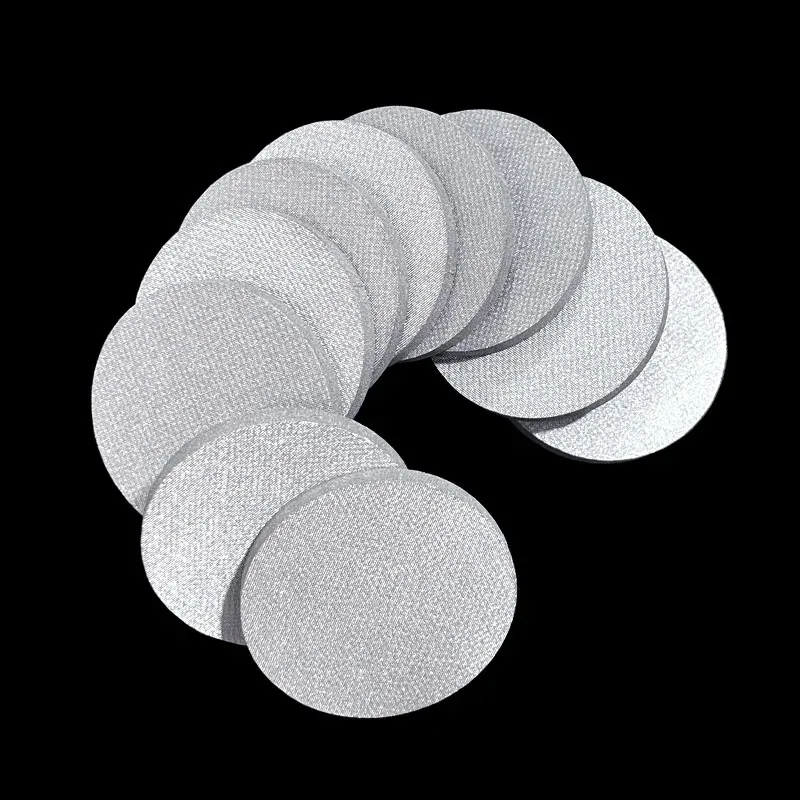
The sintered wire-mesh laminate forms the filtering faces. Internal support holds the faces apart and provides a drainage route; the central hub locates and seals the element on the outlet assembly. The outer edge closes the perimeter. The drawing identifies each contact, support and joining zone, with the filter medium and metal support specified separately.

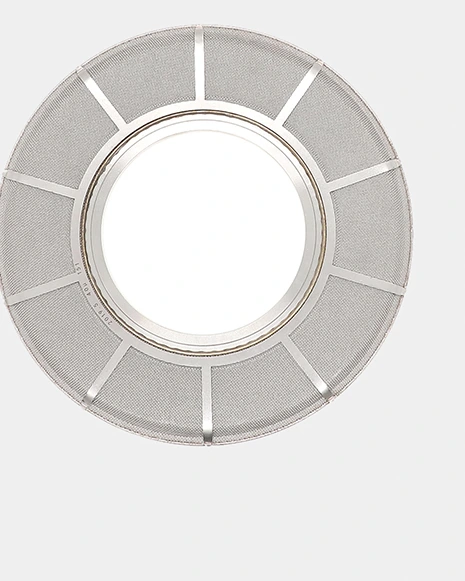
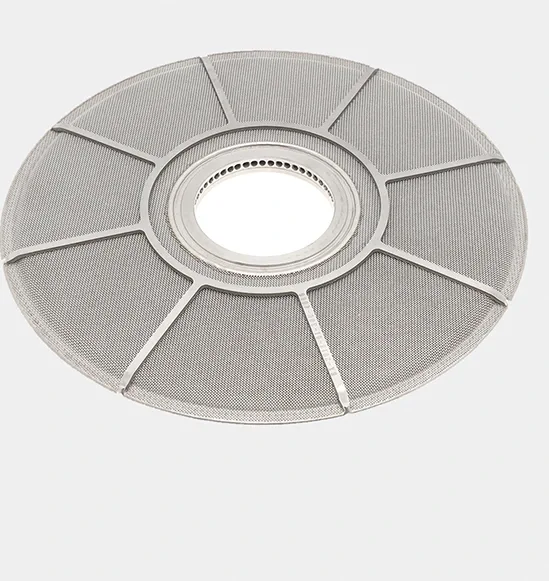
Annular leaf-disc face with centre hub and radial divisions
The face view identifies the centre opening, hub region and radial support divisions. The internal flow path is specified on the assembly drawing.

Annular dimensions and installed height

The annular series covers outside diameters of 111–381 mm and central openings of 38–115 mm. Select paired dimensions from the housing and central shaft drawing. Disc overall thickness, hub thickness and installed stack pitch are distinct dimensions. The exposed annulus excludes the hub, sealed rim and support footprints.

Build the stack from its interfaces

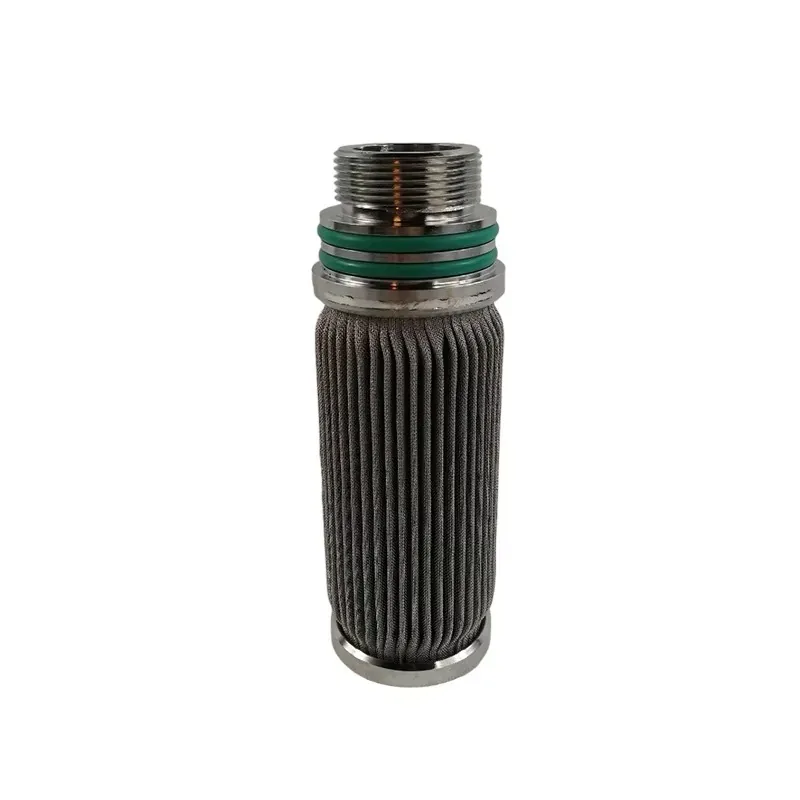
A stack combines discs with the specified spacing, hub contacts and end closure. The central assembly collects the filtrate while the spaces between adjacent discs feed the filtering faces. Record the disc count, stack height, axial clamping arrangement and seal contacts together. The hub drawing and assembly tolerances govern replacement interchangeability.

Polymer and media selection

Specify polymer type, melt temperature, viscosity basis, throughput and contamination. The sintered-mesh grade is identified with its media specification and retention test. 316L is the principal mesh material; hub, support and joined parts have their own alloy entries. Film, sheet and pellet processes are matched to the finished stack geometry and the required product quality.

Cleaning and inspection

Disassemble and clean using the defined process for the polymer, alloy and joined assembly. Keep central passages and drainage routes open. Inspect the faces, perimeter joints, hub sealing surfaces and distortion before reassembly. The acceptance record includes dimensions, flatness, hub alignment and the specified flow or integrity check at its stated conditions.

Leaf-disc interfaces and inspection

Leaf-disc interfaces and inspection

Part or dimensionFunctionDrawing definitionInspection point
Upper and lower facesPass polymer melt through the metal mediumLaminate grade and exposed annulusFace condition and media test
Internal supportCarry faces and drain filtrateSupport layout and drainage openingSupport contact and open passages
Central hubLocate, seal and collectBore, contact faces and outletAlignment, fit and sealing surface
Outer perimeterClose the filtering envelopeJoint and rim dimensionsClosure and distortion
Complete stackCombine feeding gaps and collection pathCount, pitch, end closure and clampAssembled height and correct seating
Five-layer laminate for leaf-disc filtering faces

Five-layer laminate for leaf-disc filtering faces

Nominal filtration grade (µm)Sintered mesh layersLaminate thickness (mm)
151.7
251.7
551.7
1051.7
2051.7
3051.7
5051.7
8051.7
10051.7
15051.7
20051.7

These options specify the five-layer filter-face laminate. The leaf disc has two filtering faces, an internal drainage support and a hub; their assembled axial height and installed stack pitch are defined separately. Select the nominal media grade with its filtration test basis and the face alloy; the complete disc retains its paired outside-diameter and hub dimensions.

Ordering and production

Ordering and production

Supply itemOrder basis
Production lead time2–3 weeks after order and drawing confirmation.
Trial ordersSmall trial quantities for fit and process evaluation.
Regular production orders50 pieces or US$3,000 per order.
Quotation basisMaterial, finished dimensions, filter construction, connections and quantity.

Applications

Polymer film production

Stacked metal faces provide filtering area around a central outlet in film-processing assemblies.

Polymer sheet and pellet lines

Leaf-disc dimensions and stack interfaces fit the specified melt-filter housing.

Cleanable process filtration

The metal assembly provides removable filtering faces, supports and a central collection connection for the defined process.

Selection guide

Include these details when discussing your requirements.

Start from the hub and housing
Match central bore, hub geometry, outer clearance and the axial clamping arrangement to the existing filter assembly.
Size the exposed faces
Separate overall diameter from usable annular area, edge closure and support footprints.
Select the metal medium
Pair the sintered-mesh grade and test basis with polymer, viscosity, throughput and product-quality requirements.
Control the complete stack
Specify element count, pitch, stack height, hub contacts and end closure rather than the disc diameter alone.

Frequently asked questions

How is a leaf disc different from an ordinary filter disc?

A leaf disc has two filtering faces, internal drainage and a central collection hub. A flat filter disc is a medium fitted to a separate holder or support.

Are overall thickness and stack pitch the same?

Overall thickness describes one element. Stack pitch describes the installed spacing between adjacent elements and includes the defined hub or spacer contacts.

How are the bore and outside diameter selected?

Use the housing and central-shaft drawing to select a matching annular pair, then define hub contact and radial clearances.

What does the radial pattern in the photograph show?

It shows annular metal faces, the centre opening and radial supporting divisions. The internal drainage construction is defined on the assembly drawing.

What matters for a replacement stack?

Hub geometry, sealing contacts, disc count, pitch, clamped height, media grade and flow path must all match the receiving assembly.

Technical enquiry

Define the dimensions, media, joints and inspection records before confirming the order.

Technical details (optional)
Selection inputs

WhatsApp

Search