
Kaifil
Screen packs for polymer melt filtration
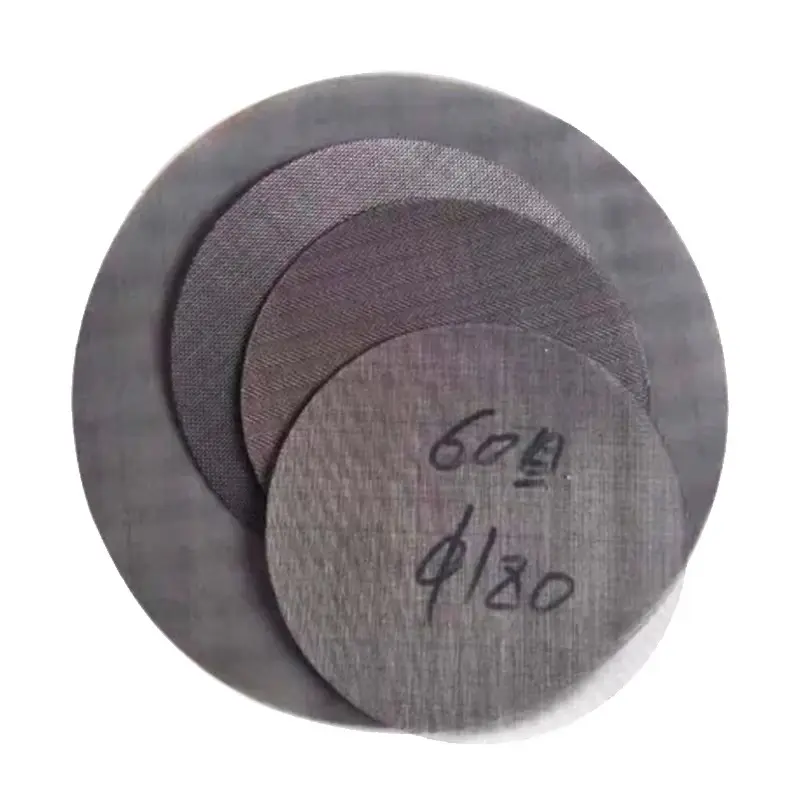
A polymer melt screen pack removes unwanted solids or gels from the melt and supports stable operation through the breaker plate or screen changer. The pack must fit the equipment, survive the pressure and temperature conditions, and provide the required balance between retention, throughput and change interval.
Define the screen changer interface
Start with the breaker plate or screen changer drawing. Specify the disc outline, outside diameter, any centre hole, available stack height and sealing area. A pack that does not seat correctly can allow melt to bypass the intended filtration layers.
Specify every layer
List the mesh construction, wire diameter or agreed opening, material and order of layers. Identify which face receives the melt and how the coarse support layers bear against the breaker plate. Mesh count alone does not define an equivalent filtration construction.
Describe the polymer and contamination
Identify the polymer, virgin or recycled feed, melt temperature, throughput and the contamination to be removed. Include operating differential pressure and the changeover criteria. These inputs help review the layer arrangement without assuming one pack is suitable for every extrusion line.
Agree assembly and acceptance
Specify loose layers, spot-welded packs or an agreed edge construction. Confirm layer count, sequence, finished thickness, outline and required inspection records. Review a sample when the pack is new to the equipment or changes an existing construction.
Technical references: GKD — Polymer filtration · HAVER & BOECKER — Screen packs
Specifications and selection
| Selection inputs | Technical information |
|---|---|
| Material | Material selection begins with the process fluid, temperature, corrosion exposure and fabrication requirements. Specify the grade you need and discuss its suitability for the chosen filter construction. |
| Dimensions and operating conditions | Tell us what you need to filter and how the component must fit. Include material, dimensions, quantity and operating conditions. |
| Drawings and photographs | Yes. Send a drawing, dimensions or sample photographs. We review the material, structure and inspection requirements before confirming a quotation. |
| Quantity | Include the product type, material grade, dimensions, filtration requirement, quantity and operating conditions. Drawings and photographs help clarify interfaces. |
Questions before ordering
Can you manufacture from a drawing or sample?
Yes. A drawing is preferred because it defines interfaces and acceptance criteria. Samples and photographs can support replacement enquiries, but worn dimensions should be checked against the equipment.
What information should I include in an enquiry?
Include the product form, material, dimensions, filtration requirement, process medium, temperature, differential pressure, flow direction, cleaning method, quantity and required documents.
Can I request a sample before a production order?
A sample or first-article stage can be reviewed when the product, tooling and validation plan justify it. Define the sample acceptance criteria in the enquiry.
When will lead time and minimum quantity be confirmed?
They are confirmed in the quotation after material, construction, quantity, tooling, inspection and packing have been reviewed.
Is mesh count the same as micron rating?
No. Mesh count describes openings per linear unit. Aperture also depends on wire diameter, while filtration ratings may depend on weave and a test method.
How do I choose between wire mesh, perforated sheet and wedge wire?
Compare the required opening geometry, open area, thickness, flexibility, support, load, cleaning method and installation. Each structure solves a different combination of needs.
When is a support layer required?
Use support when the filtering medium cannot safely carry differential pressure, handling or cleaning loads by itself. The support must also provide an adequate drainage path.
Can Kaifil select the alloy?
We can discuss common materials and manufacturability from the service information. Final material approval belongs to the equipment or process owner who knows the complete environment.
What quality checks are performed?
Checks follow the approved drawing and order scope and can include incoming material verification, in-process dimensions, media and assembly checks, outgoing inspection and packaging condition.
Can material certificates and inspection records be supplied?
They can be included when the document type, traceability and inspection scope are agreed in the quotation and purchase order.
Can you support first-article inspection?
Yes, where the order defines the sample, characteristics, measurement method, report and approval step before batch production.
Can special tests be arranged?
Special tests are reviewed when the method, fixture, conditions, sampling and acceptance criteria are provided. Availability is confirmed in the quotation.
Are all metal filters reusable?
No. Reuse depends on the medium, contaminant, construction, cleaning method and acceptance condition after cleaning.
Can you reproduce an obsolete filter?
Replacement parts can be reviewed from a drawing, unused sample, housing interface or measured reference. Functional dimensions and service conditions are needed before production.
How can bypass be prevented?
Control the full filtration boundary: media seams, edges, end joints, frames, bases, seals and the mating housing.
Assembly requirements
Supply the drawing, tolerances and mating parts so the assembly can be reviewed.
Filter parts & accessories
Related products and guidance
Request a technical quotation
Tell us what you need to filter and how the component must fit. Include material, dimensions, quantity and operating conditions.
Request a quote